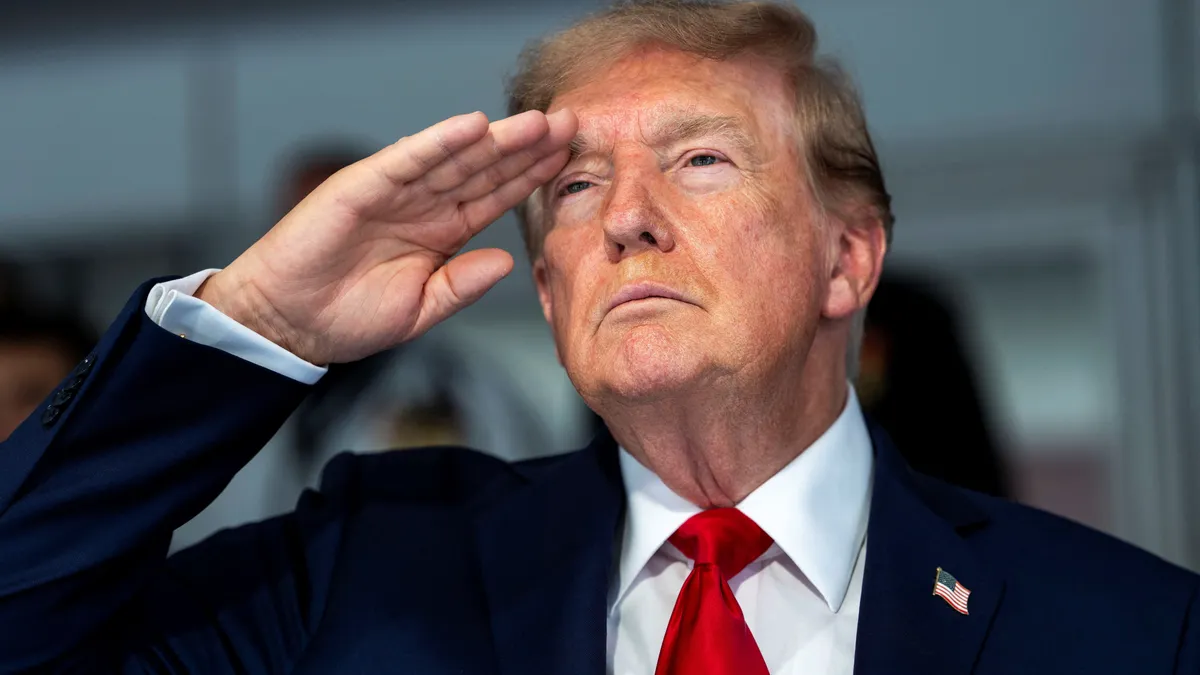
Trump vows to double Canada auto tariffs to 50%, escalating trade war

Daftar Isi
Trade War With Canada Sharpens as Trump Announces 50% Auto Tariff
Cybersecarmor.com – The transborder trade conflict between the United States and Canada escalated dramatically on Sunday when President Donald Trump declared he would double the tariff rate on Canadian-made vehicles and automotive components to 50%. The announcement landed within hours of both governments confirming that ongoing bilateral trade negotiations had collapsed, leaving millions of consumers and thousands of manufacturers facing a prolonged stretch of elevated import costs and supply-chain disruption.
A Sunday Post on Truth Social
Trump laid out the decision in a lengthy Truth Social message dated Aug. 24, framing the move as a long-overdue correction of what he characterized as decades of American economic disadvantage at the hands of its northern neighbor. He accused Canada of imposing “ridiculously high” duties on U.S. agricultural shipments that cross the shared border, and positioned the new auto tariff as a necessary counterbalance.
“Canada has been ripping off the United States of America for years,” Trump wrote in the post.
He specified that the elevated 50% auto tariff would take effect on Jan. 1, 2027, giving vehicle manufacturers, parts distributors, and importers roughly four months to restructure sourcing arrangements or absorb the added cost.
“Build in the U.S. and there are ZERO TARIFFS. Canada will be treated like a State no longer! On Trade, and in other ways, also, they are among the worst Nations in the World to deal with. They feel entitled, and yet, WE DON’T NEED CANADA, THEY NEED US!”
The Collapse of Negotiations
The tariff escalation follows the failure of talks between Trump’s administration and Canadian Prime Minister Mark Carney to produce a bilateral trade agreement. After ordering Canada’s negotiating team back to Ottawa, the White House moved swiftly to impose a broader 50% levy on a wider basket of Canadian products. Those duties took effect just after midnight on Aug. 22, catching many importers and retailers with limited time to adjust pricing or inventory.
Ottawa’s Dollar-for-Dollar Retaliation
Carney responded by vowing that Canada would mirror the American duties “dollar for dollar,” with retaliatory measures scheduled to arrive next month. He indicated that specifics of the Canadian countermeasures would be published within days, though he stopped short of naming particular product categories at the time of his remarks.
What the Existing 50% Tariff Covers
The duties that activated on Aug. 22 reach slightly more than 5% of Canadian exports destined for the U.S. market. Affected categories span wine, dairy products, hockey sticks, and cement, among other goods. Carney estimated that roughly $28 billion in annual trade flows would face the new levy.
Exempted from the tariff are energy products, potash, fish, and critical minerals. Importantly, the duties do not benefit from preferential treatment under the United States-Mexico-Canada Agreement (USMCA), the trilateral free-trade pact that had previously shielded a large share of Canadian merchandise from earlier rounds of American tariff hikes. By carving these goods out of the agreement’s preferential framework, the administration effectively nullifies a core pillar of the deal for the affected sectors.
The Auto Tariff in Broader Context
Trump originally imposed a baseline 25% tariff on imported vehicles and auto parts last year, though the effective rate varies by trading partner depending on bilateral deals his administration has since concluded. In the same Truth Social post announcing the Canadian auto hike, he also stated he would raise the steel tariff on Canada to 50%, although that rate already stands at 50% under existing policy, making the additional declaration largely symbolic.
The automotive sector is particularly exposed because North American vehicle production relies on deeply integrated cross-border supply chains. A single finished car may have its components shuttled across the U.S.-Canada border multiple times during assembly, meaning a 50% duty on parts can compound costs at every stage of production. Canadian provinces such as Ontario and Quebec, which host major assembly plants, stand to feel the disruption most acutely.
Political and Economic Stakes
The timing of the announcement lands squarely in the run-up to the November midterm elections. Democratic lawmakers have seized on the tariff measures, warning that higher import duties will translate into elevated prices at the grocery store, the auto dealership, and the hardware aisle for American households. They argue the policy shift rewards corporate lobbying while penalizing working families at the point of purchase.
For Canada, the economic exposure is substantial. The two countries share the world’s longest land border and maintain trade relationships measured in hundreds of billions of dollars annually. The USMCA, which entered force in 2020 replacing NAFTA, had been designed to lock in preferential access for North American manufacturers and to provide a stable rules-based framework for cross-border commerce. With the new tariffs explicitly excluded from that framework, the agreement’s practical utility for Canadian exporters is being tested in ways its architects never anticipated, raising questions about whether the trilateral pact can survive a sustained period of unilateral tariff action by one of its three signatories.
Related Reading
Frequently Asked Questions
What is Trump vows to double Canada auto?
Trump vows to double Canada auto is the main topic of this guide. The article explains the context, practical details, and next steps readers should understand.
Why does Trump vows to double Canada auto matter?
Trump vows to double Canada auto matters because readers are looking for a useful answer, not just a short summary. Good content should match search intent and help them decide what to do next.