Enes Kanter Freedom removed from Sky-Fever game amid WNBA athlete debate

Daftar Isi
WNBA Game in Chicago Ends in Chaos as Former NBA Star Is Ejected Over Trans-Athlete Dispute
Cybersecarmor.com – A heated confrontation between a courtside spectator and a Chicago Sky guard turned a routine Sunday night basketball game into a flashpoint for one of the most polarizing debates in American sports. On Aug. 23, former NBA center Enes Kanter Freedom was removed from Wintrust Arena after a verbal altercation with Sky guard Natasha Cloud during the third quarter of a contest against the Indiana Fever. The incident unfolded with 1:22 remaining in the period, when Cloud approached the bench area during a timeout and Kanter Freedom rose from his seat, arms extended, moving toward the court. Teammates restrained Cloud while security personnel surrounded Kanter Freedom, who was ultimately escorted from the building.
The game itself ended in a 113-90 defeat for Chicago. Cloud, despite the disruption, played through the full contest and recorded a team-leading 16 points along with seven assists. After the final buzzer, she addressed the frustration of watching sex toys hurled onto the hardwood — another visible symptom of the broader controversy engulfing the league.
The Spectator at the Center of the Storm
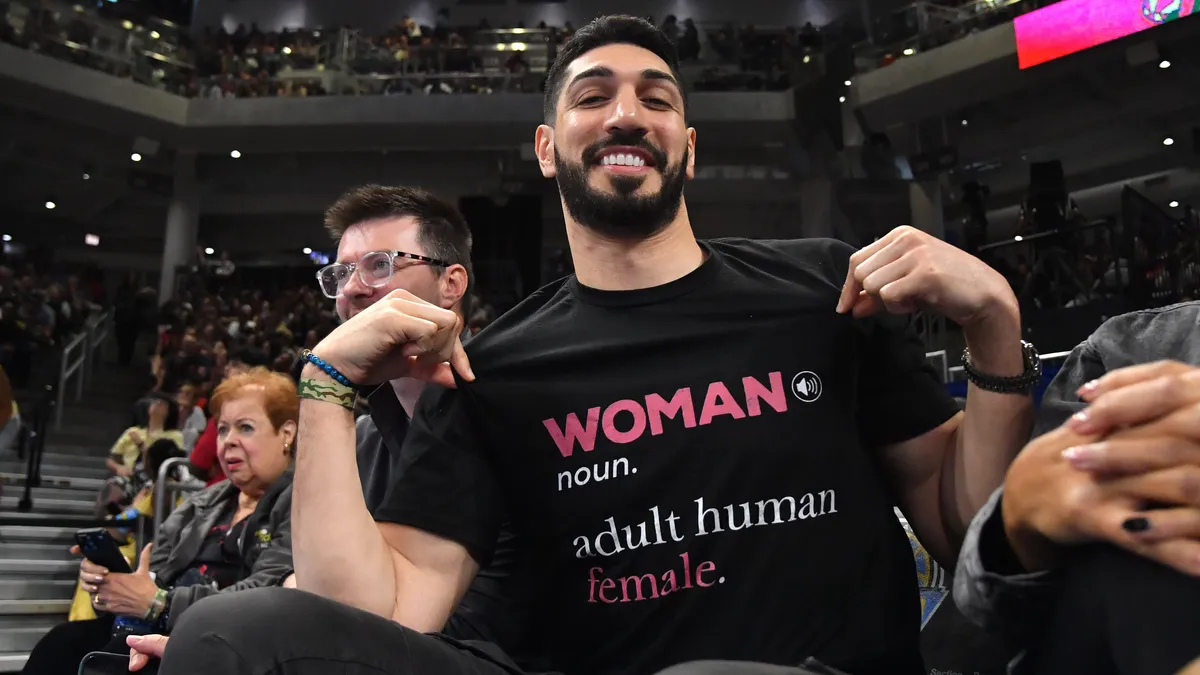
Kanter Freedom, a former NBA player who spent most of his career with the Oklahoma City Thunder and Boston Celtics, had already inserted himself into the WNBA conversation weeks earlier. On Aug. 7, he posted on social media that he identifies as a woman and declared himself eligible for the 2027 WNBA draft. At the Chicago game, he sat courtside wearing a T-shirt bearing the text: “WOMAN noun. adult human female.”
His presence and attire appeared designed to draw attention to his eligibility claim. Chicago Sky head coach Tyler Marsh addressed the matter directly after the game, suggesting that spectators should attend games to enjoy the basketball itself.
“If you come to a game, you should probably come to enjoy the basketball. That seems pretty simple to me. I think these players deserve that, and I’ve earned that. Being a former basketball player, you should probably understand and feel that, too.”
Cloud’s Response and Team Support
Cloud, who has been vocal about her views on athlete eligibility, used the postgame platform to send a message of inclusion directed at transgender young people.
“To every trans kid/person, You are apart of MY community & tribe. You belong. You’re loved. You’re seen. You’re perfect as you are. & you will always be protected by me.”
Marsh praised his player for speaking her mind while also making clear the organization’s backing.
“Tash didn’t want to feel like she was a distraction. I told her she wasn’t … that we all embrace her as someone that protects our team and protects people that need to be protected. Tash’s always gonna stand on that, and we stand for Tash.”
The Policy Vacuum at the Heart of the Dispute
The WNBA’s collective bargaining agreement, in place since the league’s founding, states that “only players who are women are eligible to play in the WNBA.” Beyond that single sentence, no additional definition of womanhood is provided. The league has not published a policy specifically addressing the eligibility of transgender or intersex athletes. This ambiguity has left room for interpretation and, increasingly, for public confrontation.
No transgender women currently compete in the WNBA, yet the league has become the most visible arena for the national debate over sex-based athletic classification. The controversy intensified after Indiana Fever guard Sophie Cunningham, in an ESPN feature, stated that young girls playing sports “shouldn’t have to go against biological men.” She later reinforced the point, drawing sharp pushback from fans and ownership groups.
Escalation Across the League
The fallout has spread well beyond individual games. A Seattle Storm co-owner received a five-game suspension after remarks directed at Cunningham supporters. On Aug. 16, a security guard at an Atlanta Dream versus Indiana Fever contest asked two fans to cover shirts from XX-XY Athletics, a brand founded by former gymnast and ex-Levi Strauss chief marketing officer Jennifer Sey, whose stated mission is to “protect women’s sports and spaces.”
Coaches across the league have weighed in with varying degrees of candor. Minnesota Lynx head coach Cheryl Reeve urged fans to offer “less hate and more love.” Golden State Valkyries coach Natalie Nakase declined to amplify the conversation, affirming that “transgender kids belong.” Dallas Wings coach Jose Fernandez took a more pointed stance, telling reporters he was not participating in what he called “the circus” and noting that comparable public spectacles were not occurring in the NFL, MLB, or NBA.
Commissioner Under Fire and the Legal Backdrop
WNBA Commissioner Cathy Engelbert has faced sustained calls for her resignation and criticism over what detractors characterize as a slow institutional response. On Aug. 12, the league issued a statement condemning “bad faith actors.” Engelbert’s first public remarks came on Aug. 20, in an interview with the Associated Press, where she framed the controversy as an external political project aimed at the league.
“People are trying to use the league to sow divisiveness. … We’re being made the center of a political football by individuals who have never watched the WNBA, never written about it, or reported on it. These voices are using our league as a platform for their own agendas, rather than supporting our athletes and the growth of women’s sports.”
The legal landscape has shifted beneath the debate. The U.S. Supreme Court has upheld states’ authority to restrict transgender girls and women from competing in women’s sports categories, and legislation in 27 states now codifies sex-based eligibility rules for school and amateur athletics. Those rulings and statutes have not yet been translated into WNBA-specific policy, leaving the league’s eligibility question unresolved and the courtside tensions likely to persist.
Neither the WNBA nor the Chicago Sky responded to requests for comment following the Aug. 23 ejection. For now, the question of who may compete under the WNBA banner remains open — and, as Sunday’s incident demonstrated, the answer is being argued not only in boardrooms and courtrooms but on the benches and walkways of arenas across the country.
Related Reading
Frequently Asked Questions
What is Enes Kanter Freedom removed from Sky Fever?
Enes Kanter Freedom removed from Sky Fever is the main topic of this guide. The article explains the context, practical details, and next steps readers should understand.
Why does Enes Kanter Freedom removed from Sky Fever matter?
Enes Kanter Freedom removed from Sky Fever matters because readers are looking for a useful answer, not just a short summary. Good content should match search intent and help them decide what to do next.