Trump, Dr. Oz and the MMR vaccine controversy

Daftar Isi
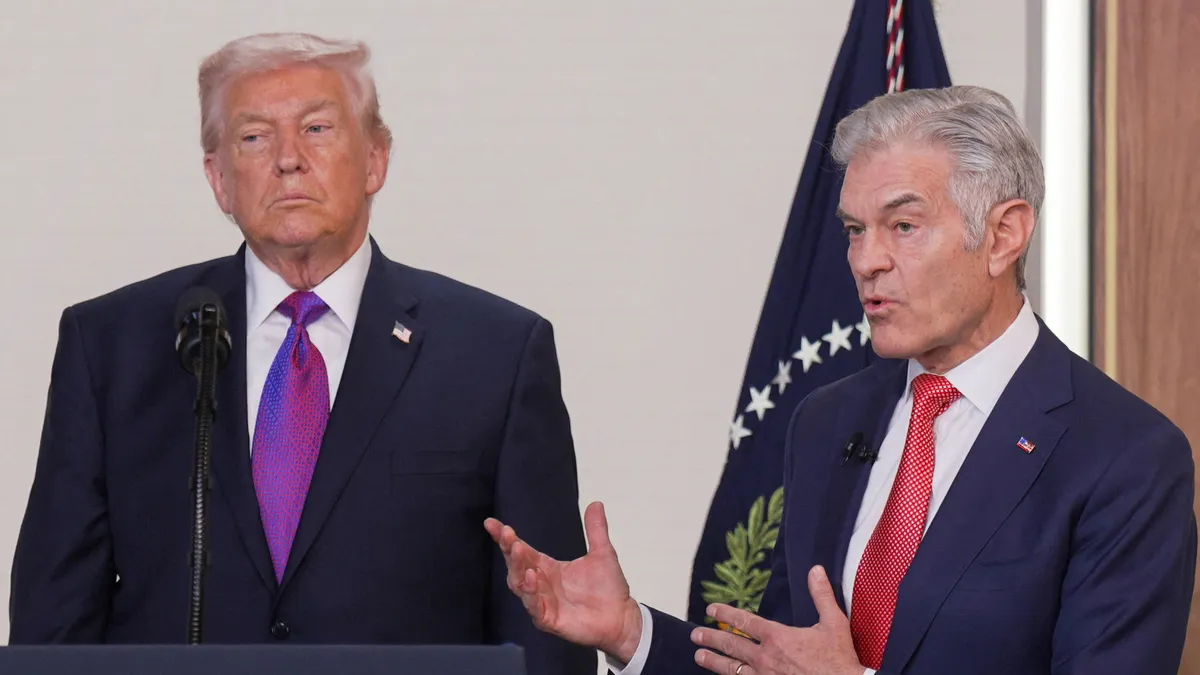
Dr. Oz Pushes Back on Trump’s MMR Claims as Midterm Looms
Cybersecarmor.com – The MMR shot — the routine childhood immunization guarding against measles, mumps, and rubella — has become an unlikely flashpoint between two figures inside the Trump administration. Dr. Mehmet Oz, the cardiothoracic surgeon who now leads the Centers for Medicare and Medicaid Services, publicly pushed back against the president’s recent characterization of the vaccine, doing so on national television just weeks before voters head to the polls in November.
Speaking on the August 23 broadcast of “Face the Nation,” Oz described the MMR as “not a lethal vaccine,” a pointed correction after Trump had suggested the opposite during a series of unverified remarks made while signing an executive order on vaccine policy earlier that month. The disagreement landed at a moment of heightened political sensitivity: Republican Sen. Bill Cassidy and a chorus of medical professionals have been pressing the administration for clarity on its health agenda, and the midterm elections sit roughly two months out.
A Half-Century of Track Record
The scientific consensus on the MMR has been steady for decades. In its current combined formulation, the vaccine has been distributed since 1971, giving it more than fifty years of real-world safety data. Before the measles component entered use in 1963, an estimated three to four million Americans fell ill each year, roughly 500 died, and about 48,000 required hospitalization. Serious adverse reactions — including post-vaccination seizures — remain rare events in a population that has received the shot in the tens of millions.
Medical researchers have reviewed the question of whether splitting the three antigens into separate injections confers any additional health benefit for children. The answer, they say, is no. No peer-reviewed evidence supports the notion that dividing the immunizations improves outcomes, and the individual monovalent shots are not licensed for use in the United States. Even if licensing were pursued, experts estimate it could take years before any single-antigen product reaches the market, and a full three-dose schedule might not be operable for a decade.
What the CDC Still Recommends
The Centers for Disease Control and Prevention, whose guidance page was last refreshed in March 2026, maintains an unambiguous position:
“Children should routinely get 2 doses of MMR vaccine,” with the first dose at age 12 through 15 months and the second at age 4 through 6 years.
The agency adds that two doses are 97 percent effective at preventing measles and urges adults and teenagers to verify their own vaccination status. Insurance carriers, meanwhile, have indicated they will continue covering routine immunizations under existing plans, a point that matters to families weighing cost concerns amid the political noise.
Measles Is Back — and Spreading
The controversy plays out against a backdrop that makes the stakes concrete. The United States is tracking its worst measles resurgence in more than three decades, a surge driven largely by declining vaccination coverage. The country now risks losing its measles-elimination status, a designation that had held for years before the recent uptick in cases.
Dr. Julia Rosebush, an associate professor of pediatric infectious diseases at the University of Chicago, laid out the epidemiology during an August 21 press briefing organized by the Infectious Diseases Society of America:
“A single unvaccinated child in a school full of unvaccinated classmates can start an outbreak that spreads to dozens of families within days.”
She emphasized that measles remains “one of the most contagious diseases we know” and that the MMR vaccine “is safe, effective and remains our single best tool to stop this outbreak.”
Sliding Coverage Numbers
The latest CDC data for the 2025–2026 school year shows kindergarten vaccination coverage dipping another 0.1 percent, extending a downward trajectory that has persisted in nearly every year since the pandemic began. Coverage for the diphtheria, tetanus, and acellular pertussis vaccine (DTaP) sat at 92 percent, while MMR and polio vaccines each registered at 92.4 percent. The CDC reported that MMR, DTaP, polio, and varicella coverage declined in more than half of all states compared with the prior year.
John Grabenstein, a pharmacist who previously directed the Department of Defense’s vaccine programs for service members and their families, framed the trend plainly:
“It’s continuing a long trend in the wrong direction.”
He cautioned against treating the slide as a one-time anomaly. “It’s not like a tipping point,” he added. “If trends hold, we’ll have twice as many measles cases this year as we did the previous year. It’s just going to keep getting worse.”
Why the Timing Matters
The public sparring between the president and his own CMS director arrives in the final stretch before the November midterms, where health-policy messaging will shape voter sentiment across swing districts. For parents enrolling children in schools this fall, the practical question is less about political theater and more about whether their kids are up to date on two doses of MMR. Pediatricians and public-health officials are urging families to check immunization records now, before the next measles cluster turns a neighborhood concern into a county-wide outbreak.
Related Reading
Frequently Asked Questions
What is Trump Dr Oz and the MMR vaccine?
Trump Dr Oz and the MMR vaccine is the main topic of this guide. The article explains the context, practical details, and next steps readers should understand.
Why does Trump Dr Oz and the MMR vaccine matter?
Trump Dr Oz and the MMR vaccine matters because readers are looking for a useful answer, not just a short summary. Good content should match search intent and help them decide what to do next.