Trump calls it ‘a mistake’ for communities to reject data centers


Daftar Isi
Trump Tells Towns Turning Down Data Centers Are “Making a Mistake” as AI Infrastructure Debate Intensifies
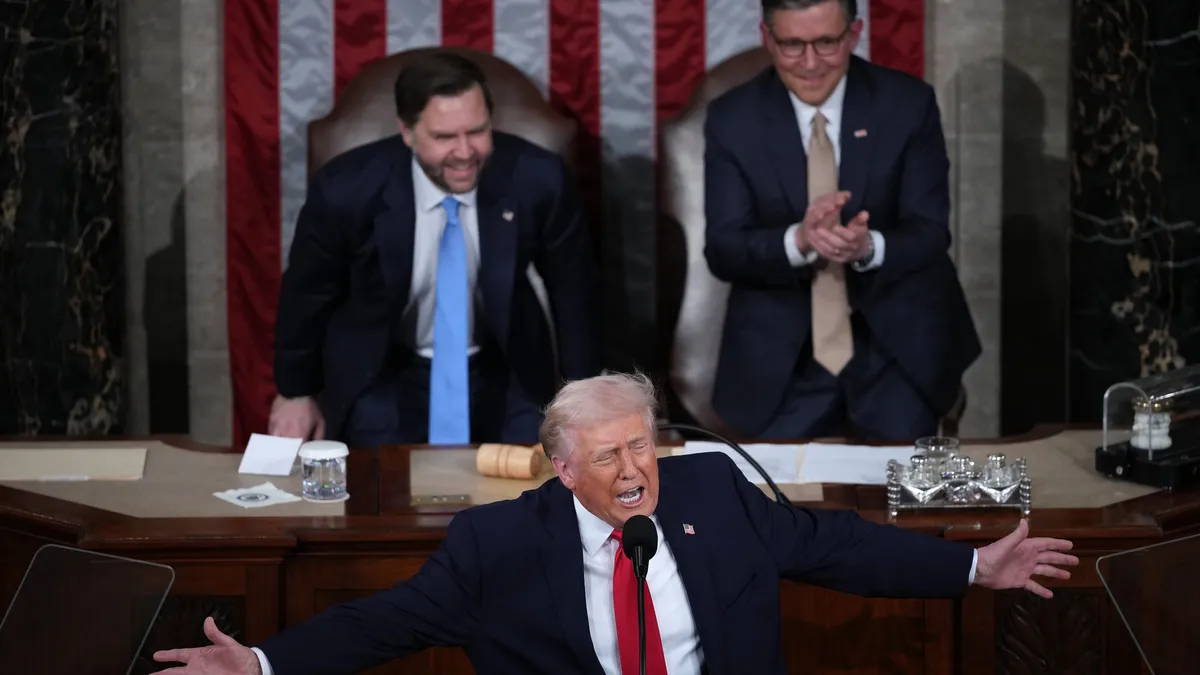
Cybersecarmor.com – The fight over where artificial intelligence gets housed has drawn sharp commentary from the White House. In an interview that aired on August 23, President Donald Trump told viewers that local communities refusing to host new data center facilities are, in his words, “making a mistake.” The conversation, recorded on August 20, featured his former personal attorney and longtime political operative Michael Cohen, and ranged across Trump’s presidential record before settling on the competitive race with China over AI dominance.
“I’m letting them build their own power plants,” Trump said. “Frankly, communities that don’t take a data center, they’re making a mistake because there’s plenty of communities that want them. Because it means jobs, and it means tremendous tax revenue coming into the towns and cities that take them. So you know, it’s like the smart ones are saying, ‘I want them so badly.'”
The president’s framing positions data centers as economic windfalls rather than burdens — a narrative he has pushed repeatedly since taking office. Yet the sentiment collides with what residents in dozens of municipalities are experiencing at their own town halls, where opposition to new facilities has become a defining issue in local elections.
A Pledge, a Pause, and a Political Calculus
The tension played out visibly in July. New York Governor Kathy Hochul announced a one-year moratorium on new data center construction, a move that prompted Trump to post on Truth Social that such facilities represent “one of the biggest Driving Forces in the Future for Jobs … They are big, strong, bold, and Money Machines for the State in which they are built.”
The following week, the president highlighted his Ratepayer Protection Pledge, a commitment signed by 23 Republican governors designed to shield residential households from utility-bill spikes tied to data center energy draw. Speaking at a July 23 event, he urged local leaders to embrace rather than resist the trend.
“You have to convince your community how great these things — You can’t fight it, you have to go with it, and you’re going to have all that protection,” Trump said. “You’re going to make a tremendous amount of money, you’re going to reduce taxes, and you’re going to have something that, if you don’t have it, everybody else wants it.”
Still, the president signaled flexibility on the partisan front. On August 21, he told reporters that he would not penalize a Republican candidate who voices opposition to a particular data center project, acknowledging that the facilities “may not be right for every location.” In a side remark to Cohen during the interview, he added that guardrails exist to manage the downsides.
What Residents Actually See
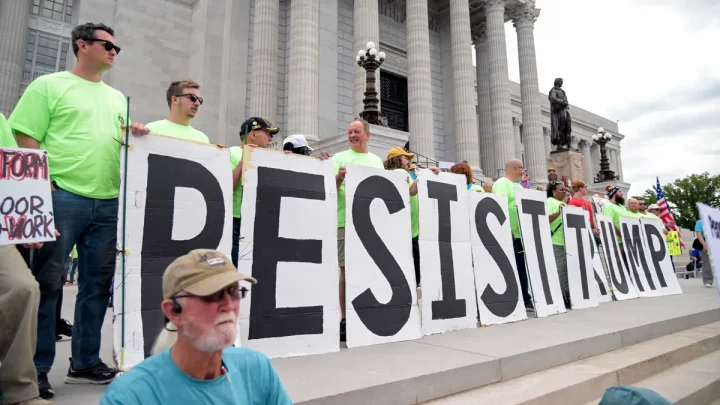
The opposition is not abstract. Palm Beach County, Florida — the state where Trump maintains his Mar-a-Lago residence — has become one of the most visible battlegrounds, with neighbors protesting noise, water usage, and land-use changes tied to proposed facilities. Similar disputes have erupted across Indiana, Ohio, Kentucky, and Iowa, prompting state legislatures and county commissions to draft new permitting rules and environmental-oversight requirements.
A Gallup poll released in May captured the national mood: 70 percent of Americans said they oppose building data centers in their own communities, and nearly half — 48 percent — described their opposition as strong. Environmental groups and anti-AI advocates point to heavy water consumption, substantial energy loads, persistent noise, electronic-waste streams, and a relatively thin pipeline of long-term local employment as reasons to slow or halt construction.
The Scale of the Buildout
The numbers behind the debate are staggering. As of August 19, the global directory Data Center Map counted more than 4,700 operational data centers across the United States. Virginia, frequently called the “data center capital of the world,” hosts over 600 of them, while Texas trails with more than 500. These facilities house the servers, cooling systems, and networking hardware that underpin cloud computing, streaming services, and — increasingly — large-scale AI model training and inference.
Energy consumption is among the most cited concerns. In 2023, American data centers drew 176 terawatt-hours of electricity, representing more than four percent of the nation’s total power consumption that year, per figures from the U.S. Department of Energy. As AI workloads grow, that share is expected to climb, which is precisely why the Ratepayer Protection Pledge and state-level oversight proposals have gained traction.
Citizen Reporting and the Transparency Push
On April 27, environmental advocate Erin Brockovich launched a public website called Brockovich AI Data Center Reporting, inviting residents to log problems they encounter near data center sites — noise complaints, water-quality issues, traffic disruptions, and other grievances. Since going live, the platform’s interactive map has cataloged more than 9,000 AI-related data center entries, spanning operational facilities, projects under construction, and proposals still in planning stages. The tool gives ordinary neighbors a structured way to document what industry advocates describe as essential infrastructure for the AI era.
Industry supporters counter that these facilities generate high-paying construction and operations jobs, anchor tax bases for small towns, and form the physical backbone without which no AI product can function. The debate, in short, pits short-term local quality-of-life concerns against a national narrative of technological competitiveness — and, as Trump’s August interview made clear, the White House intends to keep pushing the latter.
Related Reading
Frequently Asked Questions
What is Trump calls it a mistake for communities?
Trump calls it a mistake for communities is the main topic of this guide. The article explains the context, practical details, and next steps readers should understand.
Why does Trump calls it a mistake for communities matter?
Trump calls it a mistake for communities matters because readers are looking for a useful answer, not just a short summary. Good content should match search intent and help them decide what to do next.