
Hantavirus ship: first group of passengers disembarks in Spain’s Canary Islands
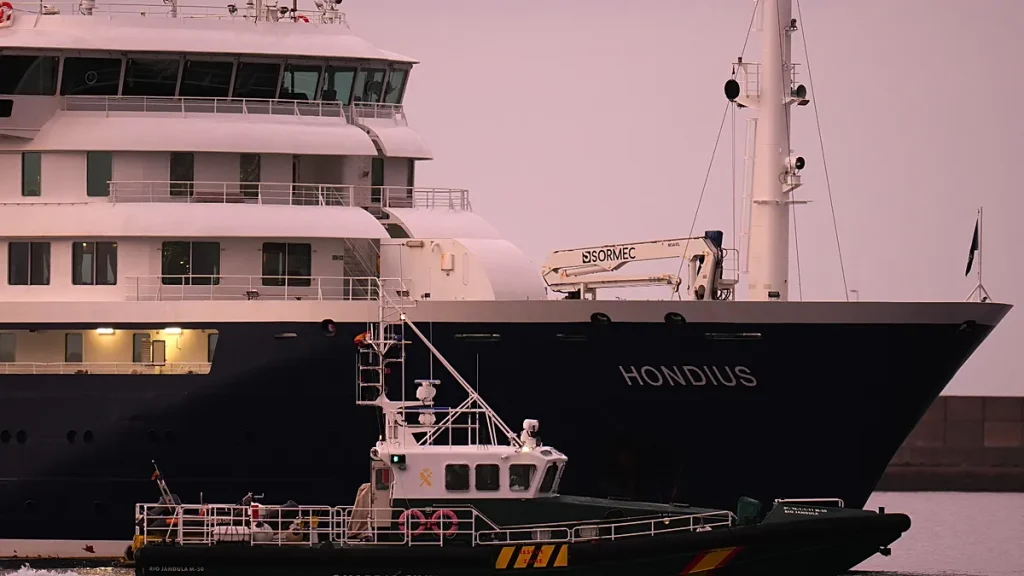
Hantavirus Ship: First Group of Passengers Disembarks in Spain’s Canary Islands
Hantavirus ship – The cruise ship infected with Hantavirus has docked in Tenerife, Spain, as passengers prepare to leave the vessel and return to their home countries. The initial phase of the evacuation involves Spanish nationals and onboard crew, alongside a medical professional from Africa, who will be the first to disembark. This structured departure will occur in cohorts of five individuals, contingent upon the availability of the appropriate aircraft for each group’s nationality. Tenerife South International Airport will serve as the departure point for these flights, ensuring a coordinated and controlled process.
WHO Statements and Risk Management Strategies
Spain’s government has emphasized that the evacuation operation will be conducted in a manner that isolates the affected passengers from the general public, minimizing any risk of transmission. Officials have assured that the process will maintain strict boundaries to safeguard the local community. After the initial phase, the ship will proceed to the Netherlands, where further arrangements for the remaining passengers are expected to be finalized.
“We classify everybody on board as what we call a high-risk contact,” said Maria Van Kerkhove, the director of epidemic and pandemic preparedness and prevention at the World Health Organization, on Saturday. She reiterated that while the presence of the Andes virus—known for its ability to spread between humans—raises concerns, the risk to the broader public and residents of the Canary Islands remains minimal.
Van Kerkhove’s remarks were echoed by Tedros Adhanom Ghebreyesus, the head of the WHO, who arrived in Spain on Saturday to oversee the evacuation. In a letter to the people of Tenerife, Tedros highlighted the importance of distinguishing this outbreak from the previous global pandemic, stating: “I need you to hear me clearly: This is not another Covid.” He expressed confidence in the operation, noting that Spain is fully equipped to manage the situation effectively.
Spread of Hantavirus and Public Health Concerns
The Andes virus, the only strain of Hantavirus capable of human-to-human transmission, has been confirmed among those who tested positive. This discovery has intensified international vigilance, as the disease typically spreads through rodents. Despite the outbreak, the health ministry of the Canary Islands has reported that the public health risk is assessed as “very low,” though precautionary measures remain in place.
As of Friday, the WHO confirmed six cases from a total of eight suspected infections on the ship. No further cases are currently under investigation, according to the organization. The virus’s presence on the vessel has prompted heightened scrutiny, particularly due to its potential for person-to-person spread. The ship’s journey from Cape Verde, where three infected individuals were already evacuated earlier in the week, underscores the global nature of the situation.
Contagion Risks and Quarantine Measures
Four people in Italy have been placed under observation following brief exposure to one of the victims during a flight. This has sparked additional caution in regions connected to the ship’s itinerary. The Canary Islands’ health authorities have reiterated that the virus’s transmission to the local population is unlikely, thanks to the strict protocols in place. All passengers are being monitored closely as they disembark, with specific attention given to those who have been diagnosed or are under surveillance.
The MV Hondius, the cruise ship in question, is now anchored in Tenerife, awaiting the finalization of evacuation logistics. Its journey from Cape Verde to the Canary Islands highlights the challenges of containing the virus across international waters. While the initial disembarkation is set for Saturday, the timeline for the remaining passengers depends on the readiness of transport arrangements and the speed of testing procedures.
Public Reaction and Global Attention
The situation has drawn attention from both local and international health bodies. Tedros Adhanom Ghebreyesus, who has been actively involved in the operation, praised the solidarity of Tenerife’s residents and the swift response of authorities. “Spain is ready and prepared,” he stated during a press conference, underscoring the country’s commitment to managing the crisis without disruption to daily life.
Residents of the Canary Islands have remained calm despite the outbreak, with many expressing support for the measures being taken. The government has implemented a series of protocols to ensure that the evacuation process is as safe as possible, including designated quarantine zones and rigorous health checks. These steps aim to prevent the virus from spreading beyond the ship, which is seen as a critical milestone in containing the outbreak.
Evacuation Phases and Patient Status
Three passengers—specifically, a Dutch couple and a German woman—have succumbed to the Hantavirus, marking the first fatalities linked to the outbreak. The remaining passengers, who have either tested positive or are showing symptoms, are being prioritized for evacuation. The process has been divided into phases to ensure that each group is transported efficiently while maintaining safety standards.
While the focus is on the Canary Islands, the situation is being closely monitored in other regions. The Italian surveillance case is a reminder of the virus’s potential to spread through travel, even briefly. Health officials are working to trace all possible contacts and implement additional screenings at ports of entry. This proactive approach aims to mitigate any chance of further outbreaks in other parts of Europe.
As the first group of passengers steps off the MV Hondius, the world watches with cautious optimism. The Hantavirus, though rare, has demonstrated its ability to cause severe illness and even death, particularly in high-risk populations. The successful evacuation of this cohort could serve as a model for future containment efforts, especially in the context of global travel and cross-border health cooperation. The WHO and Spanish authorities have worked tirelessly to ensure that this operation is a success, setting a precedent for managing similar crises in the future.
The overall strategy has been to isolate the infected passengers and limit their interaction with the local population. This includes the use of specialized aircraft for each nationality group and the implementation of strict hygiene measures on the ship. The Canary Islands, known for their vibrant tourism industry, have managed to balance the need for public safety with the logistical demands of the evacuation. The health ministry has also reassured that all necessary precautions are being taken to protect both the evacuated passengers and the local community.
With the ship’s departure from Tenerife, the next steps will involve ensuring that all passengers are accounted for and that their health status is accurately tracked. The Netherlands is expected to receive the remaining passengers, where further medical evaluations and quarantine measures will be applied. This phased approach reflects the global effort to contain the virus, combining scientific expertise with international collaboration to address the outbreak effectively.
As the crisis unfolds, the focus remains on minimizing the spread of the Andes virus while supporting the affected individuals. The success of the evacuation operation in the Canary Islands will be a key indicator of how well the global health community can respond to emerging threats. The lessons learned from this event will likely shape future protocols for managing infectious diseases on cruise ships and other forms of international travel.

