Mistrial declared in Palisades wildfire arson trial

Mistrial Declared in Palisades Wildfire Arson Trial
Cybersecarmor.com – On June 26, the Department of Justice announced that a mistrial had been declared in the case against Jonathan Rinderknecht, a Florida man accused of starting a wildfire that devastated parts of Los Angeles in early 2025. The decision followed a jury’s inability to reach a unanimous verdict, marking a pivotal moment in the legal proceedings surrounding the catastrophic blaze.
Charges and Legal Context
Rinderknecht, 30, faced multiple charges including destruction of property by fire, arson affecting property, and setting a timber fire. These allegations carry a maximum sentence of 45 years in prison. According to official records, the case had centered on his alleged role in igniting the fire on New Year’s Day 2025, which later expanded into one of the most severe wildfires in Los Angeles history.
Bill Essayli, the First Assistant U.S. Attorney for California’s Central District, emphasized the strength of the evidence linking Rinderknecht to the incident. “The evidence is strong that he started the blaze,” Essayli stated, highlighting the initial spark that evolved into the Palisades Fire. Investigators had initially referred to the fire as the Lachman Fire, but it quickly grew into a massive conflagration, fueled by strong winds and hidden underground embers.
“We fully intend to retry this case before a new jury and obtain guilty verdicts on all charged counts,” Essayli said on social media, underscoring the prosecutors’ commitment to securing a conviction despite the setback.
The Fire’s Unfolding Catastrophe
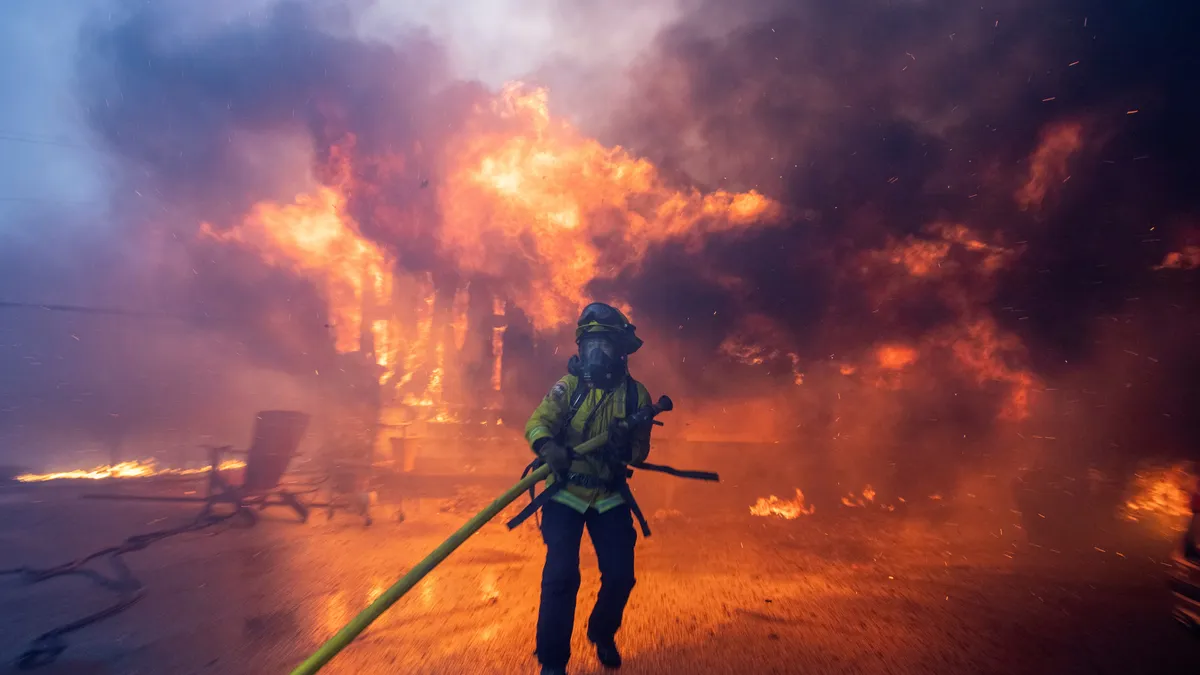
The Palisades Fire, which erupted on New Year’s Day, consumed over 23,000 acres and left 12 lives lost. Nearly 7,000 homes and structures were destroyed, while economic losses exceeded $200 billion, according to CalFire. The fire’s aftermath also sparked significant political fallout, including the controversial dismissal of then-Los Angeles Fire Department Chief Kristin Crowley.
Crowley’s firing became a point of contention, with her legal filing asserting that Mayor Karen Bass had made her a scapegoat for the disaster. “Mayor Bass, who was abroad when the fires began, orchestrated this decision,” Crowley wrote in her statement, suggesting the blame was unfairly shifted to her. This accusation added another layer of complexity to the trial, as the case intertwined personal accountability with broader institutional decisions.
Defense Arguments and Jury’s Dilemma
Rinderknecht’s attorney, Steve Haney, argued that the fire was triggered by fireworks, not deliberate arson. He contended that his client had attempted to prevent the blaze by contacting emergency services immediately. “The Palisades Fire was a separate incident caused by unknown arsonists,” Haney stated, while asserting that prosecutors had not provided sufficient physical evidence to tie Rinderknecht to the event.
Despite these claims, the prosecution maintained that the fire was a calculated act. Assistant U.S. Attorney Mark Williams, during his opening statement, presented security camera footage and cellphone data as proof that Rinderknecht was the sole individual present at the fire’s origin. “There’s no doubt about the connection,” Williams insisted, arguing that the evidence was irrefutable and that the fire’s spread was a direct result of his actions.
The jury, which had appeared poised to deliver a verdict on June 25, instead submitted a note expressing uncertainty. The Los Angeles Times reported that jurors had returned to the courtroom after their deliberations, stating they were “deadset” on opposing sides. This deadlock led to the mistrial, with both sides now preparing for a new trial.
Impact on Community and Legal Process
The fire’s destruction displaced thousands of residents, many of whom faced prolonged recovery efforts. Some families, like those affected by Rinderknecht’s arrest in October 2025, found themselves grappling with the emotional toll of the disaster long after the flames had subsided. The event also sparked a deeper conversation about wildfire preparedness and the role of human error in such large-scale catastrophes.
As the legal battle continues, the mistrial has forced prosecutors to reassess their strategy. With a new jury set to be selected, the case will once again be scrutinized, this time with the opportunity to present fresh arguments. The outcome will not only determine Rinderknecht’s fate but also highlight the challenges of proving arson in cases where fire behavior is influenced by natural factors.
Public Reaction and Case Implications
Public sentiment remains divided. While some community members support the prosecution’s stance, others question whether the evidence is conclusive enough to warrant a conviction. The case has become a symbol of the broader debate around blame and responsibility in the face of environmental disasters.
For Rinderknecht, the mistrial means the trial will resume, potentially with a different jury and a chance to challenge the prosecution’s narrative. His defense team will likely focus on emphasizing the lack of direct evidence, while prosecutors may seek to strengthen their case by highlighting the fire’s rapid spread and the absence of alternative explanations.
As the legal process moves forward, the Palisades Fire’s legacy will continue to shape the trial. The trial’s outcome may also influence future cases involving arson and wildfires, setting a precedent for how such incidents are prosecuted in the wake of massive devastation. With the community still recovering, the case remains a focal point of both legal and public discourse.