Venezuela earthquakes death toll sharply rises as crews search for survivors

Venezuela Earthquakes: Death Toll Soars as Rescue Efforts Continue
Devastating Quakes Strike Southern Venezuela
Cybersecarmor.com – Two powerful earthquakes, measuring 7.2 and 7.5 on the Richter scale, shook Venezuela on June 24, leaving a trail of destruction. The tremors, which occurred within a minute of each other, struck approximately 14 miles southeast of Yumare, a town located 173 miles west of Caracas, the capital. According to the U.S. Geological Survey (USGS), the region has historically experienced seismic activity, but the combination of these quakes—classified as a “doublet”—was particularly severe.
The first tremor, at 6:04 p.m. local time, set off a chain reaction that led to the second, more intense quake just 39 seconds later. While the initial 7.2 magnitude quake served as a foreshock, the 7.5 event was deemed the mainshock, triggering widespread panic and structural collapse. The timing of the quakes, so close in succession, compounded the damage, as buildings and infrastructure were caught off guard by the second, stronger tremor.
Immediate Impact and Casualties
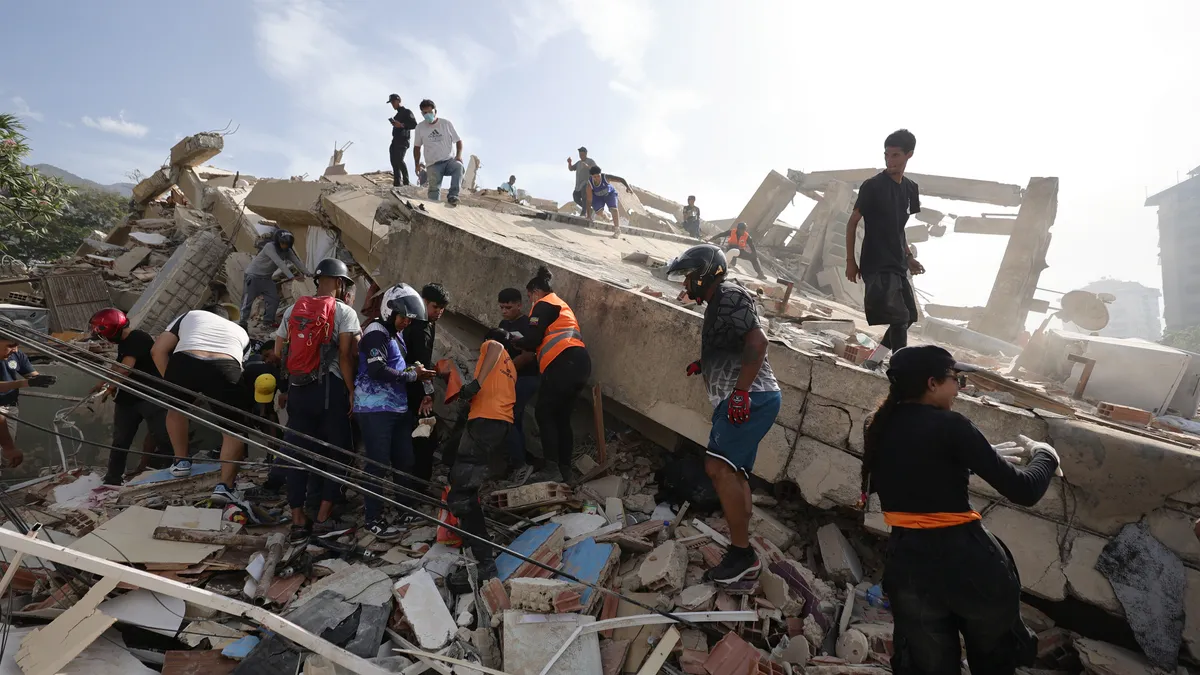
Local residents described scenes of chaos as homes, commercial buildings, and even hospitals crumbled under the force of the quakes. Debris blocked roadways, and entire neighborhoods were left in ruins. The USGS reported that the region had only seen seven earthquakes of 6.0 or higher in the past century, making the June 24 event unusually severe. Officials confirmed at least 920 fatalities as of June 26, with thousands more injured. The death toll, however, is expected to climb further as rescue teams comb through the rubble.
Rescue operations intensified on June 26, with crews working tirelessly to extract survivors from the wreckage. Jorge Rodriguez, head of Venezuela’s national assembly, stated that over 200 individuals were still trapped in the rubble, emphasizing the urgency of the situation. By the afternoon of June 26, more than 800 international rescue workers had arrived in the country, bolstering local efforts. The situation remains critical, with the USGS forecasting that the casualty count could reach into the thousands.
Residents’ Accounts and Emotional Toll
Survivors shared harrowing accounts of the quakes’ aftermath. Yamileth Jimenez, a resident of La Guaira—one of the hardest-hit areas—told Reuters that her 19-year-old son was trapped on the seventh floor of a collapsed building. “He’s under the slabs and there’s no machinery to get him out,” she said, her voice trembling with despair. Such stories underscore the personal devastation wrought by the disaster, as families mourned the loss of loved ones and searched for signs of life in the debris.
Amid the chaos, the government mobilized resources to address the crisis. Interim President Delcy Rodríguez announced that 2,980 people had been injured, highlighting the scale of the emergency. Meanwhile, Secretary of State Marco Rubio confirmed that the United States was among the nations preparing to send its own rescue teams to assist in the recovery efforts. This international collaboration marked a significant step in the response to the disaster.
Seismic Activity and Historical Context
Venezuela’s location in a seismically active zone, where the Caribbean Plate and South American Plate converge, makes it vulnerable to earthquakes. While northern regions have experienced damaging tremors in the past, the immediate area of the June 24 quakes has seen limited seismic activity historically. The USGS noted that only seven quakes of 6.0 or higher have occurred in this specific region within the last century, underscoring the rarity of such an event.
The mainshock of 7.5 magnitude was the most powerful earthquake in Venezuela’s history since the 1900 event that registered 7.7 near Caracas. This comparison highlights the significance of the recent quakes, as they not only surpassed historical records in the region but also triggered a global response. Experts warned that the doublet nature of the quakes—two closely timed events with similar magnitudes—was uncommon, increasing the complexity of the rescue operations and the potential for further damage.
Global Response and Continued Efforts
As the search for survivors persisted, the international community rallied to support Venezuela. Countries like Spain confirmed that three of their citizens had lost their lives in the disaster, while four were still trapped and 99 remained unaccounted for. These figures reflect the far-reaching impact of the quakes, as they affected not only Venezuelans but also residents from neighboring nations.
Rescue crews worked around the clock, facing challenges such as unstable structures and limited access to affected zones. The efforts were aided by advanced equipment and coordination with international teams, who brought specialized tools to navigate the rubble. Despite the progress, the toll of the quakes continued to mount, with officials urging the public to remain vigilant as the search expanded to more remote areas.
Long-Term Implications and Recovery
While the immediate focus remains on saving lives, the long-term implications of the quakes are becoming apparent. The destruction of key infrastructure, including hospitals and transportation networks, has disrupted daily life and hindered the distribution of aid. Communities in La Guaira and Yumare are bracing for the aftermath, as rebuilding efforts begin amid the ruins.
Experts caution that the region’s seismic activity is not over, and the USGS data suggests a possibility of further tremors. This uncertainty adds pressure to the ongoing rescue operations and recovery plans. The resilience of the Venezuelan people, however, remains a central theme as they continue to search for survivors and support one another in the face of unprecedented devastation.
As the days pass, the humanitarian crisis deepens, with families displaced and resources stretched thin. The combination of the two quakes, the speed at which they occurred, and the historical rarity of such events in the area has created a unique challenge. Yet, the determination of rescue workers and the solidarity of the global community offer hope that the situation will stabilize, even as the death toll climbs and the toll on Venezuela’s society becomes more pronounced.