
Why brutalist architecture is the latest travel trend taking over social media
Why brutalist architecture is the latest travel trend taking over social media
Why brutalist architecture is the latest – Since its debut in 2010, Instagram has transformed the way we capture and share our experiences. Once a platform for documenting daily life, it now showcases curated moments—holiday snaps, triumphant milestones, and picturesque locations. This shift has led to a phenomenon where popular destinations are flooded with identical photos, creating long lines at iconic spots like the blue domes of Oia, Santorini, or the Torii gate of Itsukushima Shrine in Japan. Even Barcelona has introduced a dedicated selfie zone adjacent to the Sagrada Família to manage the influx of tourists. Yet, amid this uniformity, a distinct trend has emerged: the allure of brutalist architecture.
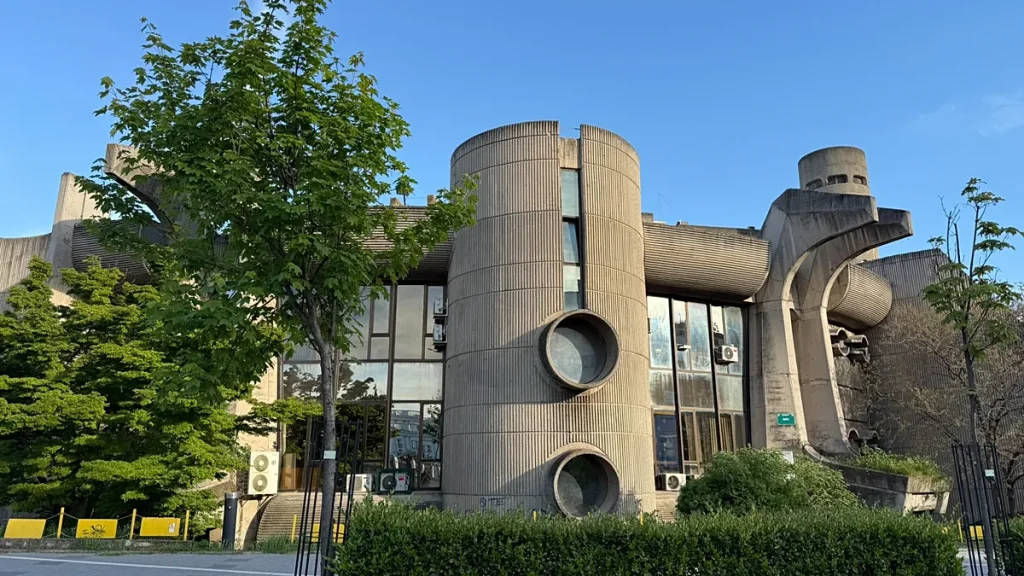
This architectural style, marked by raw concrete and unadorned forms, is gaining traction on social media despite its unassuming appearance. Originating from the post-war era, brutalist structures are now sought after by travelers who appreciate their authenticity. Cities in former socialist countries are witnessing a surge in visitors drawn to these bold, utilitarian buildings. Skopje, the capital of North Macedonia, stands out as a prime example, where the 1963 earthquake left 80% of the city in ruins, prompting a global architectural response that resulted in a diverse array of brutalist designs.
Skopje: A Testament to Post-War Resilience
The devastation of the 1963 earthquake reshaped Skopje’s skyline, but it also ignited a creative rebirth. Architects from around the world rushed to rebuild, blending modernist ideals with local context. The resulting structures, ranging from austere to expressive, now form the city’s distinctive character. Local guide Aleksandra Georgieva, who recently launched a walking tour highlighting these buildings, believes they are more than just concrete blocks—they are a reflection of resilience and innovation.
“The architects of that time played a pivotal role in shaping Skopje’s identity,” she remarked during a recent tour. “Though controversial, these structures symbolize the city’s rebirth after the earthquake.”
The tour includes landmarks such as the Macedonian Academy of Sciences and Arts, which blends brutalist elements with Japanese influences, and the City Trade Centre, a vital part of the city’s infrastructure. These buildings, often overlooked in favor of more ornate designs, are now celebrated for their unique blend of functionality and form. The Post Office’s headquarters, with its imposing scale and geometric precision, is another standout, offering a striking visual for those who appreciate the raw, unpolished aesthetic.
Local Perspectives and the Debate Over Aesthetic Evolution
While brutalist architecture has found a niche among travelers, its place in local culture is more complex. Some critics argue that these buildings should be modernized to align with contemporary tastes. During the Skopje 2014 project, plans were made to replace their brutalist facades with neoclassical designs, aiming to revive the city’s historical appearance. Though the initiative was paused in 2018, several structures—like the Government of the Republic of North Macedonia and the Parliament—have already undergone transformations at considerable cost.
Proponents of the restoration claim this change restores the city to its pre-earthquake appearance, while Georgieva believes it was a missed opportunity to embrace the unique aesthetic that defines Skopje. “I think we missed the chance for Skopje to renovate the city in the neoclassical style immediately after the earthquake,” she added. “In the meantime, brutalism became one of the most important styles of architecture in the city. It might not be the favourite, but it’s very authentic and typical, and it sets Skopje apart from other cities.”
Brutalist Hotspots Beyond Skopje
Skopje is not the only city embracing the brutalist revival. London’s Barbican Centre, a renowned example of this style, has become a destination for architecture enthusiasts. The performing arts complex, with its imposing concrete walls and cavernous spaces, offers a 90-minute tour that delves into its design history. In Yerevan, the capital of Armenia, the Cascade Complex

