NASA will send a soccer ball to the moon if the US wins World Cup

NASA’s Lunar Soccer Ball Initiative Hinges on U.S. Men’s World Cup Triumph
Cybersecarmor.com – Plans are in motion for NASA to commemorate a historic soccer achievement by sending a FIFA World Cup soccer ball to the moon. However, the agency has set a clear condition: the U.S. Men’s National Team must pull off an unprecedented feat in the global tournament. This ambitious proposal, announced by NASA Administrator Jared Isaacman, blends space exploration with a touch of sports ambition, making it a unique intersection of science and athleticism.
Isaacman, the head of NASA, has a personal stake in the endeavor. As a billionaire who has already ventured into space on two privately funded missions, he brings both experience and a bold vision to the table. The promise of a lunar soccer ball is tied to the U.S. team’s potential victory in the 2026 World Cup, a milestone that would mark a significant chapter in American sports history. The competition, co-hosted by the U.S., Canada, and Mexico, has already seen a dramatic shift in momentum, with the nation’s team advancing further than expected.
A Bold Vision for Lunar Exploration
NASA’s Artemis program, which aims to return humans to the moon for the first time in over 50 years, has now added an unexpected twist. The agency’s lunar outpost, tentatively named “Moon Base,” is set for construction by 2032. If the U.S. Men’s National Team achieves its goal, the soccer ball could become part of the moon’s growing list of human-made artifacts. This idea mirrors the agency’s history of tackling seemingly insurmountable challenges, from the Apollo missions to the development of the International Space Station.
Isaacman’s July 1 post on the social media platform X reflected his confidence in the team’s potential. “People said landing humans on the moon was impossible,” he wrote, drawing a parallel between space exploration and sports triumphs. “The U.S. has a rich history of achieving the near impossible.” His statement underscores the symbolic significance of the soccer ball as a representation of American perseverance and innovation. While the exact mission and timeline remain unspecified, the gesture highlights NASA’s willingness to blend its scientific objectives with cultural milestones.
The U.S. space agency is currently engaged in a high-stakes race with China to establish a presence on the moon. As astronauts prepare to live and work in lunar environments, the moon is becoming a hub for both technological and symbolic achievements. Isaacman’s proposal adds a new layer to this competition, suggesting that even the most iconic of Earthly sports could leave a mark on the celestial body. The idea is not only to showcase the U.S.’s capabilities in space but also to celebrate its success on the global stage.
A Historic Soccer Achievement
The U.S. Men’s National Team has demonstrated resilience in the 2026 World Cup, overcoming early challenges to reach the knockout stages. Their July 1 victory over Bosnia and Herzegovina, a 2-0 win, marked a significant milestone. This was the team’s first triumph in the World Cup knockout rounds since 2002, a testament to their evolving strength in international competition. The journey to the final 19 has been marked by hard-fought matches and a blend of skill and determination.
Despite the progress, the road to the championship match at the New York/New Jersey Stadium remains daunting. The U.S. team faces a tough schedule, with their next encounter on July 6 in Seattle against Belgium. Belgium’s recent 3-2 victory over Senegal in extra time on July 1 added to the pressure, as both teams prepare for their respective challenges. The U.S. was ranked 15th at the start of the tournament, a position that places them in the middle of a field heavily favored by the 2022 World Cup champions, France, and Argentina.
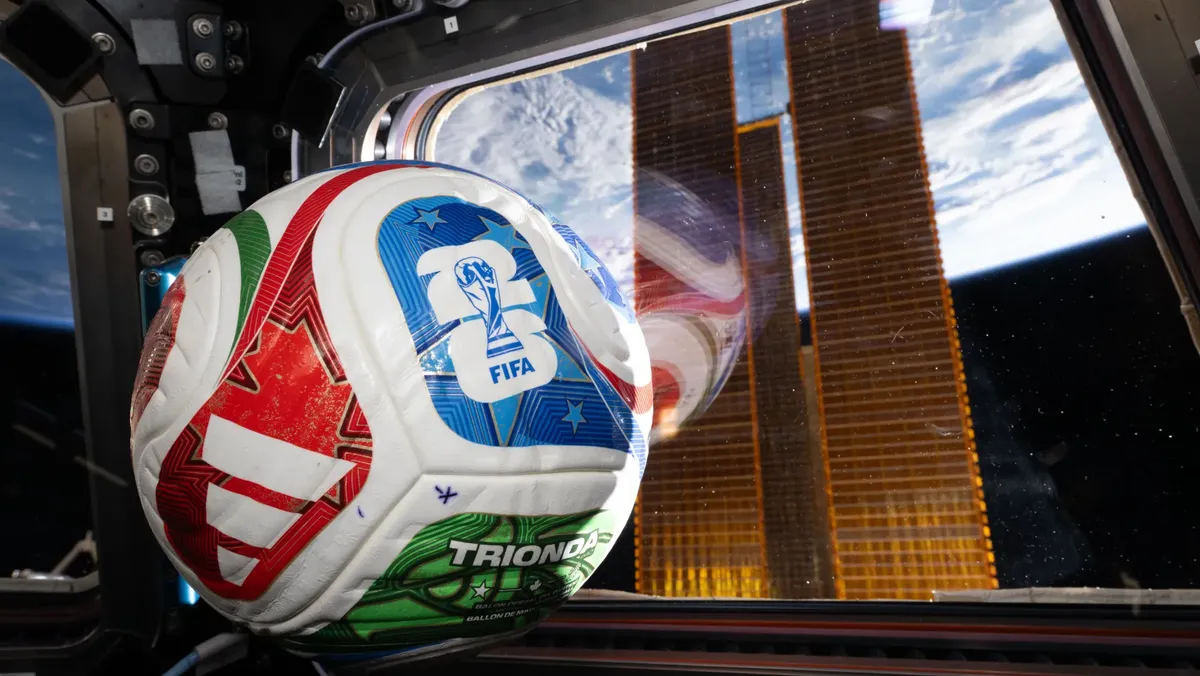
Isaacman’s proposal is not the first time NASA has celebrated sports achievements in space. In September 2025, a FIFA Men’s World Cup ball made its way to the International Space Station, where it became a tool for scientific experimentation. The ball’s presence in microgravity allowed astronauts to conduct unique studies, and a video shared on X in June 2026 showed crew members playing with the ball as it floated effortlessly within the orbital outpost. This initiative demonstrates how space exploration and sports can intersect to create shared moments of human achievement.
Eric Lagatta, the Space Connect reporter for the USA TODAY Network, has covered the intersection of space and sports. His work highlights how NASA’s decisions often reflect broader cultural narratives. The agency’s commitment to commemorating the U.S. Men’s National Team’s success through a lunar soccer ball speaks to the power of symbolic gestures in inspiring public interest. Such efforts not only celebrate athletic achievements but also reinforce the idea that the U.S. is capable of pushing boundaries in both fields.
The U.S. Men’s National Team’s performance in the 2026 World Cup has been a source of both pride and anticipation. Their progression through the knockout stages, despite initial skepticism, has proven that the team is a formidable force. The upcoming matches against Belgium and other top-tier teams will test their ability to maintain this momentum. If the U.S. succeeds in advancing to the championship, the soccer ball will join the ranks of other space artifacts, symbolizing a unique chapter in American history.
Isaacman’s vision for the moon extends beyond mere exploration. By linking the lunar outpost to a potential soccer milestone, he emphasizes the importance of celebrating national pride through science. The idea of a soccer ball on the moon is not just a whimsical notion but a tangible goal tied to the team’s performance. This proposal reflects a broader trend of using space missions to honor significant events on Earth, blending the two domains in a way that captures the imagination of the public.