
New debate over Pluto: Is the dwarf set to become a planet again?
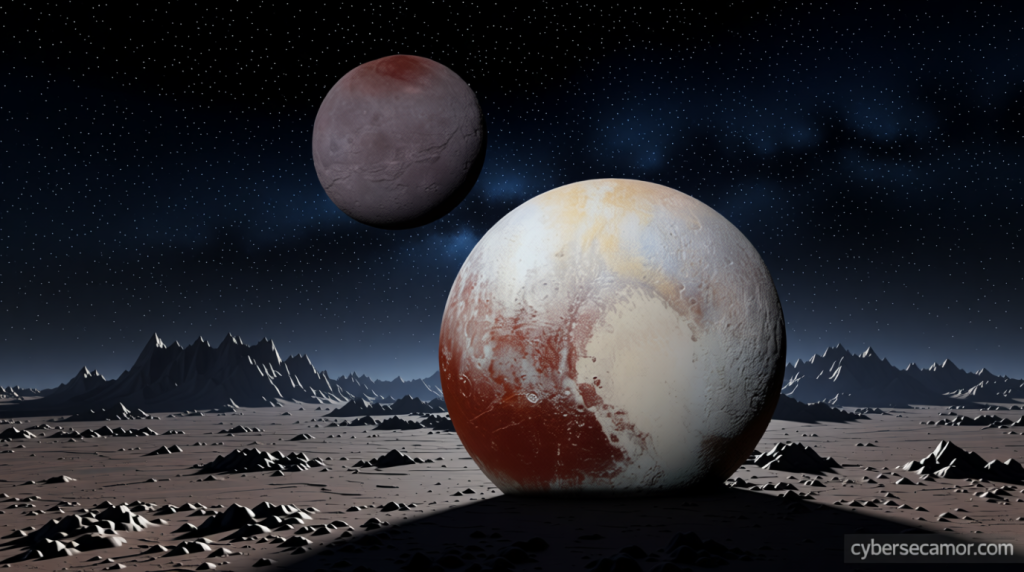
New Debate Over Pluto: Is the Dwarf Set to Become a Planet Again?
New debate over Pluto – In a surprising turn during a Senate session focused on NASA’s 2027 budget proposal, the agency’s top official, Jared Isaacman, reignited a long-standing conversation about Pluto’s celestial status. The discussion, which had been largely dormant since 2006, now centers on whether the dwarf planet should reclaim its title as a full-fledged member of the solar system’s planetary family. This development has sparked renewed interest among scientists and the public alike, challenging the rigid boundaries that once defined what qualifies as a planet.
The IAU’s 2006 Decision and Pluto’s New Identity
Pluto’s journey from planet to dwarf planet began in 2006 when the International Astronomical Union (IAU) introduced a formal classification framework. This decision was based on three specific criteria: the object must orbit the Sun, be massive enough for its gravity to achieve hydrostatic equilibrium (a spherical shape), and clear its orbital path of other debris. While Pluto satisfies the first two conditions, it fails to meet the third, which led to its reclassification. The planet’s position in the Kuiper Belt—a distant region of the solar system teeming with icy, rocky bodies—was a key factor in this ruling. At the time, the IAU emphasized that Pluto’s gravitational influence was insufficient to dominate its orbit, unlike the eight recognized planets.
The shift in Pluto’s status was a contentious move for many astronomers. Prior to 2006, Pluto had been celebrated as the ninth planet, a discovery made in 1930 by American astronomer Clyde Tombaugh. Its demotion to dwarf planet was seen by some as a necessary update to the solar system’s classification, while others argued it was a mistake that undermined decades of astronomical tradition. The debate has since evolved, with new discoveries and scientific advancements fueling calls for reconsideration.
A Political Spark: Senator Moran’s Question
The recent Senate hearing, held in May 2026, provided a platform for this debate to resurface. Republican Senator Jerry Moran of Kansas, a native of the state where Tombaugh was born, raised the issue during the session. His inquiry was not just scientific but personal, highlighting the connection between the dwarf planet and the state’s heritage. Moran’s question prompted NASA’s Administrator Jared Isaacman to respond, stating that he personally supports restoring Pluto’s planetary status. “I am very much in the camp that believes Pluto deserves to be reconsidered,” Isaacman said, adding that NASA is currently compiling scientific evidence to advocate for this change within the broader astronomical community.
Isaacman’s remarks signal a growing divide within the scientific world. While the IAU maintains its authority over planetary classifications, some researchers argue that its 2006 decision was too restrictive. The agency’s criteria, which exclude Pluto, have been criticized for not accounting for the dynamic nature of the solar system. For instance, the discovery of other icy bodies like Eris and Haumea in the outer reaches of space has further complicated the definition of a planet. These objects share Pluto’s characteristics—spherical shapes, orbits around the Sun, and similar compositions—but are not classified as planets. This inconsistency has led to calls for revising the IAU’s standards.
New Horizons: A New Perspective on Pluto
The 2015 flyby of Pluto by NASA’s New Horizons spacecraft played a pivotal role in shifting perspectives. The mission’s images revealed a world far more complex and geologically active than previously imagined. Mountains, glaciers of nitrogen ice, and a diverse array of surface features challenged the notion that Pluto was a barren, small body. These findings have since been used to argue that Pluto’s classification should reflect its unique attributes rather than its size relative to other planets.
Scientists have pointed to Pluto’s potential to harbor subsurface oceans and its atmospheric dynamics as evidence of its planetary qualities. The presence of a methane-rich atmosphere and the possibility of a liquid water layer beneath its icy crust have reignited debates about its role in the solar system’s structure. “Pluto’s complexity is undeniable,” said Dr. Maria Lopez, an astrophysicist at the University of California, “and its classification should align with its physical and geological significance rather than outdated criteria.” Such arguments have gained traction in recent years, particularly as more data from the New Horizons mission is analyzed and shared with the global scientific community.
The Path Forward: A Potential Reevaluation
Despite the IAU’s steadfast position, some within the organization are open to revisiting its decision. The process for reclassification would require a consensus among astronomers, which could take years to achieve. NASA’s involvement in drafting scientific papers to support this case adds momentum to the discussion. “We are building a case that challenges the original IAU definition,” Isaacman explained, “and it’s about time we embraced a more inclusive approach to planetary classification.”
Public opinion has also played a role in this renewed debate. For many, Pluto remains a symbol of cosmic wonder, even after its demotion. The question of whether it should be reclassified as a planet has sparked conversations in schools, social media, and science forums. “Pluto’s status is a matter of perspective,” noted a space enthusiast on Twitter. “It’s not just about size—it’s about the mystery and beauty of our universe.” This sentiment reflects a broader movement to recognize the evolving nature of celestial classifications.
The IAU’s decision in 2006 was a landmark moment, but it has also drawn criticism for its exclusivity. While the agency insists that its rules are scientifically sound, others argue that the definition of a planet should be flexible enough to accommodate new discoveries. For example, the dwarf planet Ceres, located in the asteroid belt, has been a subject of debate for similar reasons. If Pluto’s case gains enough support, it could set a precedent for reevaluating other celestial bodies.
As the scientific community continues to refine its understanding of the solar system, the question of Pluto’s status remains unresolved. The IAU’s decision in 2006 may be seen as a temporary classification, rather than a permanent one. With NASA’s advocacy and the growing body of evidence supporting Pluto’s planetary qualities, the possibility of its reinstatement is no longer a far-fetched idea. Whether this change will happen depends on how the scientific community interprets the data and whether the IAU is willing to adapt its criteria. For now, the debate lingers, a testament to the ever-evolving nature of space exploration and discovery.
The conversation surrounding Pluto’s reclassification also highlights the intersection of science and public engagement. While the IAU maintains its authority, the public’s emotional connection to the dwarf planet has kept it in the spotlight. This dynamic has been evident in the way media outlets and educational programs continue to feature Pluto, even as its status shifts. The debate is not just about science—it’s about how we define and perceive the cosmos. As Isaacman suggested, the goal is to “escalate through the scientific community” and ensure that Pluto’s story is told with accuracy and enthusiasm.
With the Senate hearing and NASA’s proactive stance, the question of Pluto’s status is no longer confined to academic circles. It has become a topic of broader interest, influencing how we teach astronomy and how we view the planets. The potential for Pluto to be reclassified as a planet again underscores the importance of revisiting definitions as new information emerges. As the debate continues, one thing is clear: Pluto’s place in the solar system may be more than just a matter of classification—it could be a reflection of our evolving understanding of the universe itself.

