
Joint ESA–China mission begins mapping Earth’s protective magnetic field
Joint ESA–China mission begins mapping Earth’s protective magnetic field
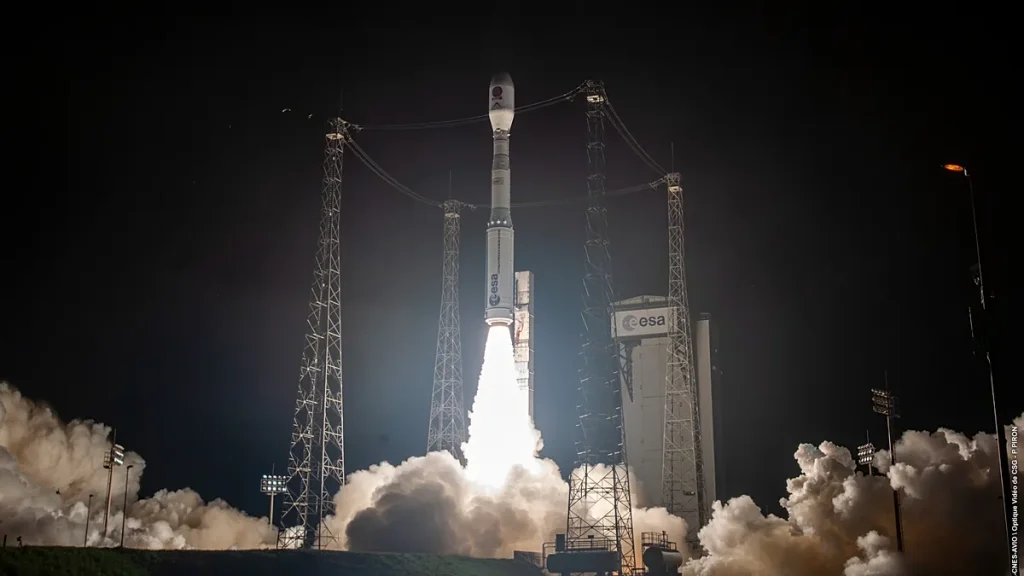
Joint ESA China mission begins mapping – The European Space Agency (ESA) and the Chinese Academy of Sciences (CAS) have launched a groundbreaking mission to study Earth’s magnetic shield, marking a significant step in international space collaboration. This mission, known as the Solar Wind Magnetosphere Ionosphere Link Explorer (SMILE), is designed to explore the dynamics of the magnetosphere, the region of space where Earth’s magnetic field interacts with solar wind. The spacecraft, standing three meters tall, was successfully deployed into orbit on Tuesday from the Guiana Space Centre, a launch site renowned for its strategic location and advanced facilities. This partnership between ESA and CAS underscores a shared commitment to unraveling the mysteries of space and enhancing our understanding of planetary protection mechanisms.
Exploring the Magnetosphere
The magnetosphere plays a vital role in shielding Earth from the relentless assault of charged particles emitted by the Sun. These particles, known as the solar wind, travel at high speeds and could otherwise strip away the planet’s atmosphere and disrupt satellite communications. By mapping the magnetosphere, the SMILE mission seeks to provide insights into how this invisible barrier responds to solar activity, offering critical data for predicting space weather events. Such knowledge is essential for safeguarding both technological infrastructure and human space exploration efforts.
SMILE’s primary objective is to investigate the complex interactions between the magnetosphere and the solar wind. These interactions create a region called the magnetopause, where Earth’s magnetic field deflects solar particles. By tracking these dynamics, the mission aims to fill gaps in our understanding of the solar system’s boundary layers. The data collected could also help improve models that forecast geomagnetic storms, which pose risks to power grids, GPS systems, and astronauts in space. ESA emphasizes that without the magnetosphere, Earth would be vulnerable to cosmic radiation, making its study a priority for planetary defense.
Technical Innovations
The spacecraft is equipped with a suite of advanced instruments, including a cutting-edge X-ray imager and ultraviolet sensors, to capture detailed observations of the magnetosphere. These tools will measure the intensity and distribution of solar wind particles as they collide with Earth’s magnetic field. The mission’s unique design allows it to operate at a distance of up to 121,000 kilometers above the North Pole, reaching one-third of the way to the Moon. This high-altitude orbit ensures the spacecraft can monitor the magnetosphere without interference from Earth’s atmosphere, providing a clearer view of its behavior.
SMILE’s trajectory is meticulously planned to maximize its scientific return. The craft will orbit the Earth, gathering continuous data for up to 45 hours per orbit. This extended observation period enables researchers to study both short-term fluctuations and long-term trends in the magnetosphere’s response to solar wind variations. The mission’s ability to collect soft X-ray and ultraviolet light data is particularly noteworthy, as these wavelengths offer unique perspectives on plasma processes and energy transfer within the magnetosphere.
Collaboration and Global Impact
The joint effort between ESA and CAS represents a fusion of European and Chinese expertise in space science. This collaboration has allowed for the development of a spacecraft that combines advanced European engineering with Chinese technological capabilities. The mission’s success is a testament to the growing synergy between these two space agencies, which have been working together on multiple projects in recent years. By pooling resources and knowledge, they are addressing challenges that no single nation could tackle alone, setting a precedent for future international space endeavors.
ESA highlights the importance of this mission in its broader strategy to protect Earth and space assets from solar threats. The magnetosphere’s role as a natural shield against cosmic radiation is critical, especially as humanity ventures further into space. By understanding how this field behaves, scientists can develop better strategies to protect satellites, astronauts, and even future space colonies from harmful radiation. The data gathered will also contribute to climate models, helping predict how changes in solar activity might affect Earth’s environment over time.
Early Mission Success
Just two hours after launch, SMILE transmitted its first signal to Earth, confirming its successful deployment and initial functionality. This early success is a crucial milestone, as it demonstrates the spacecraft’s ability to communicate with ground stations and begin its scientific operations. Following the signal transmission, the craft successfully unfurled its solar panels, enabling it to harness sunlight for energy. This power source is vital for sustaining the mission’s instruments and systems throughout its extended observations.
The mission’s ability to generate and utilize solar power is a key aspect of its design, ensuring long-term operational capacity. As the spacecraft continues its journey, it will collect and transmit valuable data that will be analyzed by a team of scientists from both ESA and CAS. This data will not only enhance our understanding of Earth’s magnetic field but also provide insights into the broader solar system’s magnetic environment. The findings could have implications for planetary science, astrophysics, and even the search for life beyond Earth.
Significance of the Mission
“If it weren’t for the magnetosphere, life could not survive on planet Earth,” ESA stated in a statement about the mission. This quote encapsulates the critical importance of the magnetosphere in maintaining Earth’s habitability. By studying this protective layer, the SMILE mission contributes to the global effort to ensure the safety of both our planet and future space missions. The collaboration between ESA and CAS is not only a scientific achievement but also a symbol of international cooperation in addressing the challenges of space exploration.
As the mission progresses, scientists anticipate uncovering new information about the magnetosphere’s structure and behavior. The insights gained from SMILE’s observations will help refine existing models and potentially lead to breakthroughs in space weather prediction. This mission also serves as a platform for testing new technologies that could be used in future space missions. With its unique capabilities and international collaboration, SMILE is poised to make a lasting impact on our understanding of Earth’s magnetic field and its role in the solar system.

