
Trump’s rift with Pope is playing out in public – it’s costing him valuable support
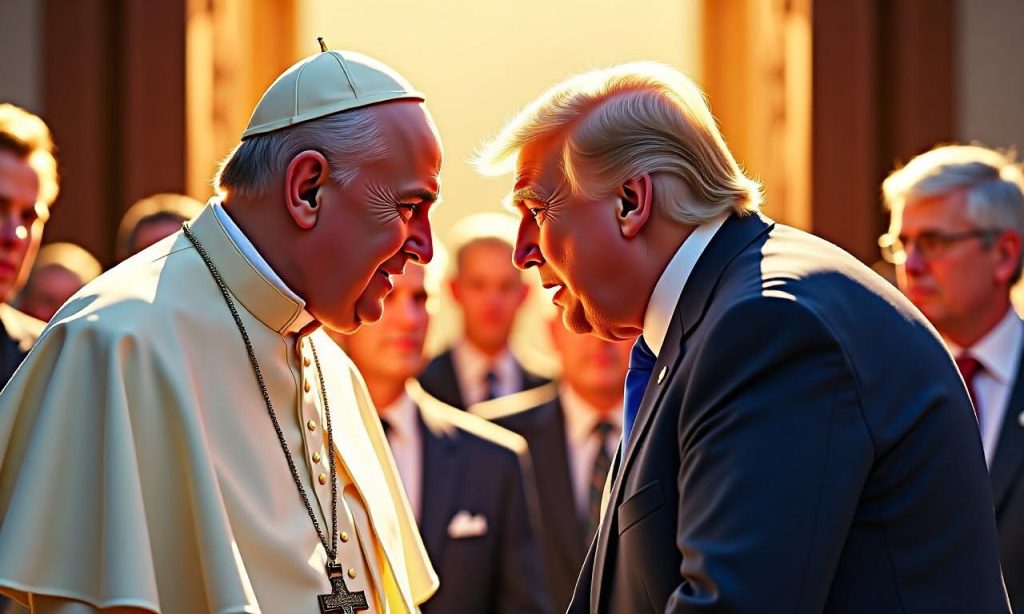
Trump’s Split with the Pope Sparks Divergence Among Catholic Conservatives
President Trump has long drawn scrutiny from Catholic leaders, particularly for his stringent immigration policies that aligned with his campaign promises and pleased his base. Yet recent developments have intensified this divide, as his public clash with Pope Leo and a controversial AI-generated image of him as a Christ-like figure have triggered widespread criticism. This backlash, however, stands out for its origin: it comes not from outsiders but from devoted, right-leaning Catholic allies, signaling a deeper rift over the Iran war.
For months, the tension between U.S. Catholic clergy and grassroots supporters has been palpable. Now, the controversy has escalated, with the president’s sharp critique of Pope Leo and the AI image fueling a noticeable shift in sentiment among conservative Catholics. This change is especially notable given the war in Iran, which has been a focal point for debate. Bishop Joseph Strickland, once a steadfast Trump supporter, has emerged as a vocal critic, challenging the administration’s stance on the conflict.
“I pray that all of this will clarify for people that we don’t look to a national leader, we don’t look to those who have the most money or the most weapons. We look to Christ,” says Bishop Joseph Strickland.
Strickland’s dissent contrasts sharply with his history of endorsing Trump. Just a year prior, he had participated in a prayer event to bless the president’s Mar-a-Lago estate. In 2024, he delivered the keynote speech at CPAC, where Trump was the featured guest. His role also extended to a 2020 rally where supporters called for overturning election results. Despite this, his recent actions suggest a growing concern over how the war is being framed.
Strickland argues that the Iran conflict does not meet the criteria of a just war, aligning with Pope Leo’s call for peace. “It becomes very dark when religion is used to justify immoral behaviour… especially when bombs are dropped under the guise of faith,” he told the BBC. This stance marks a rare departure from Trump’s administration, as he feels compelled to remind the president of the Gospel of Matthew’s teaching that Christ holds ultimate authority over human rulers.
Pew Research Center highlights the political complexities of this shift. While White Catholics still largely favor Trump (62%) over Harris (37%), Hispanic Catholics show a stronger preference for Harris (58%) over Trump (41%). This divide underscores broader partisan splits among Catholics, who often align with their party’s positions on issues like abortion and immigration. Despite these divisions, the recent unity among Catholics on the Iran war is notable, as it reflects a shared critique of the Vatican’s influence.
The Pope’s popularity among Catholic Democrats contrasts with his support among Republicans, according to Pew data. Pope Francis, often viewed as a progressive figure, has sometimes alienated traditionalists through policies like his Latin Mass reforms. Pope Leo, meanwhile, enjoys widespread backing across party lines, as his criticism of Trump’s war approach resonates with many conservative Catholics. Peter Wolfgang, director of the Family Institute, notes that the Pope is not immune to criticism but remains a respected figure for many.
This evolving dynamic underscores how faith and politics intersect for American Catholics. While religious values are important, partisan loyalty often shapes their opinions, making the current alignment of conservative Catholics with Pope Leo a significant development in the 2024 election landscape.

