Trump vs Supreme Court: Who’s the winner in America’s biggest cases?

Trump vs. Supreme Court: A Mixed Bag of Outcomes in Landmark Cases
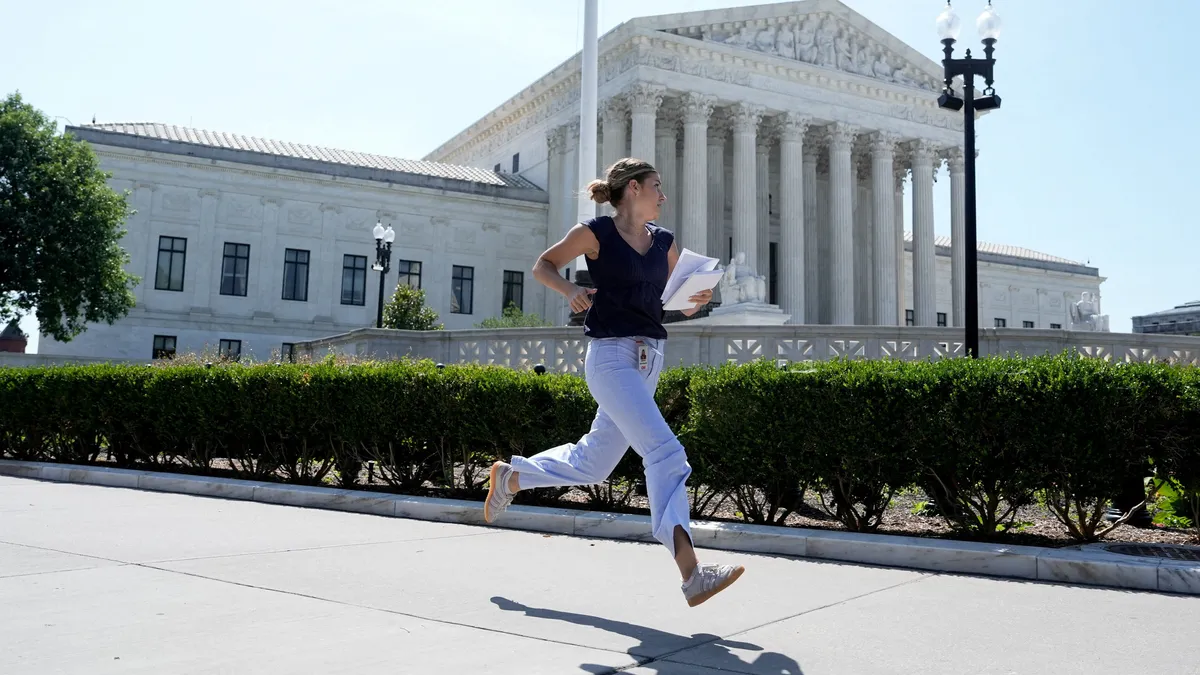
Cybersecarmor.com – Washington, D.C. – The Trump administration’s tenure at the Supreme Court marked a pivotal chapter in American jurisprudence. As the justices returned to the bench in October, the focus shifted to how their decisions would shape the nation’s political and legal landscape. Over nine months of rulings, the 6-3 conservative majority advanced several of Trump’s key objectives while also delivering notable setbacks in his most prominent legal battles.
Presidential Authority and the Unitary Executive
One of the defining themes of the term was the expansion of executive power. The court embraced the “unitary executive theory,” a concept long championed by conservative legal thinkers, which asserts that the president holds broad authority over federal agencies. This principle allowed Trump to remove top officials from independent regulatory bodies, including the Federal Trade Commission, without congressional oversight. However, the justices drew a line when it came to the Federal Reserve, with a majority ruling that the president could not unilaterally fire its governors. Chief Justice John Roberts highlighted Congress’s intent in limiting such powers, stating, “There was good reason for Congress to restrict the president’s ability to remove Federal Reserve officials.”
Election Law and the Voting Rights Act
Trump found solace in several election-related victories. The court’s decision on Louisiana’s congressional map, for instance, significantly weakened a cornerstone of the Voting Rights Act. By striking down Section 2 of the 1965 law, the justices made it harder for racial minorities to challenge voting districts that dilute their influence. This ruling bolstered GOP efforts to reshape electoral boundaries, potentially giving Republicans an edge in the upcoming midterms. Additionally, the court supported Trump’s push to redefine campaign finance rules, enabling candidates to challenge election laws with greater ease. Yet, the administration’s attempt to extend mail-in ballot deadlines faced a hurdle, as the court upheld grace periods for ballots postmarked by election day but arriving later.
Immigration Policy and Birthright Citizenship
Immigration remained a central battleground. Trump’s administration sought to redefine birthright citizenship, arguing that children born to undocumented immigrants in the U.S. could be stripped of their legal status. The court rejected this claim, affirming that the Constitution’s 14th Amendment guarantees citizenship to all individuals born on American soil. This loss marked a significant blow to Trump’s hardline immigration stance, though his broader policies largely survived scrutiny. The justices cleared the path for Trump to dismantle a humanitarian program aiding Haitians and Syrians, while also endorsing his approach to screening refugees at the border. Another ruling permitted stricter scrutiny of green-card holders returning from abroad, reinforcing the administration’s emphasis on immigration enforcement.
Culture Wars and Legal Frontiers
Amid the political and policy battles, the court’s cultural rulings also resonated. A landmark decision allowed states to enact laws banning transgender individuals from competing in female sports, a victory for Trump’s agenda on gender identity. This ruling underscored the justices’ alignment with conservative values, even as they left other issues unresolved. For example, the court’s handling of emergency statutes revealed a divided approach: while Trump successfully used them to impose tariffs on imports, his attempt to redefine birthright citizenship through executive action fell short.
Impact on Millions and the Balance of Power
Despite these victories, the term’s outcomes were far from unanimous. The court’s willingness to overturn key precedents, including the unitary executive theory, sparked debate about its role in shaping governance. Liberal analysts, such as Berkeley Law School Dean Erwin Chemerinsky, noted that while the results were “awful,” they could have been worse. “The court’s decisions reflect a mix of progress and compromise,” Chemerinsky remarked, “with Trump securing some wins but facing resistance on core issues.”
The rulings collectively underscored a shift in judicial philosophy, favoring executive discretion in areas like immigration and election law. However, the justices’ reluctance to fully embrace Trump’s redefinition of birthright citizenship suggested a constitutional boundary they were unwilling to cross. This duality—supporting expansive presidential powers while safeguarding certain constitutional principles—left the court in a complex position.
Legacy of the Term
As the term concludes, the Supreme Court’s role in Trump’s agenda remains a subject of intense scrutiny. The justices’ alignment with GOP priorities in key cases has intensified criticism from Democrats, who argue the court has become a political tool. Yet, the rulings also reflect a broader trend of judicial activism, with the court actively shaping policy through its interpretations of constitutional law. For Trump, the term’s outcomes were a strategic success in many areas, but the loss on birthright citizenship highlighted the limits of his influence.
The decisions will reverberate beyond the courtroom. From immigration enforcement to voting rights, the court’s interventions have set new legal standards. While millions of Americans will feel the impact of these rulings, the balance of power between the executive and judiciary continues to evolve. As the next term approaches, the question remains: will the Supreme Court remain a bulwark for Trump’s vision, or will it reassert its independence in the face of presidential ambitions?
“The court’s decisions on immigration and election law have largely empowered the executive, even as they resisted redefining fundamental aspects of citizenship. It’s a mixed outcome, but one that reflects the justices’ nuanced approach to power and principle,” said a legal scholar analyzing the term’s impact.
With the political stakes high, the Supreme Court’s role in shaping American law will be a defining narrative of the next few years. Whether it serves as a partner to the president or a check on his authority, the rulings of this term will linger as a testament to the evolving relationship between the branches of government.