Trump lost on mail ballots. Is the Supreme Court rejecting him?

Daftar Isi
Supreme Court Delivers Mixed Election-Year Results for Trump and Republicans
Cybersecarmor.com – WASHINGTON — A Supreme Court order preventing the U.S. Postal Service from imposing new restrictions on mail ballots has handed President Donald Trump a notable setback ahead of the 2026 midterm elections. Yet the administration and Republican Party have also secured several consequential victories at the court in disputes involving congressional districts and campaign-finance rules.
The Sept. 14 ruling leaves in place lower-court injunctions against a Postal Service policy that could have affected whether mail ballots were delivered in states that declined to share voter-registration lists with the federal government. The dispute is part of a broader national fight over voter data, citizenship verification and the rules governing absentee voting.
At the same time, the court has sided with the administration in several redistricting matters this year. Those decisions could improve Republican prospects as the party seeks to preserve narrow congressional majorities. Republicans also prevailed in two campaign-finance cases concerning broadcast advertising prices and political-party spending.
Mail-ballot policy remains blocked
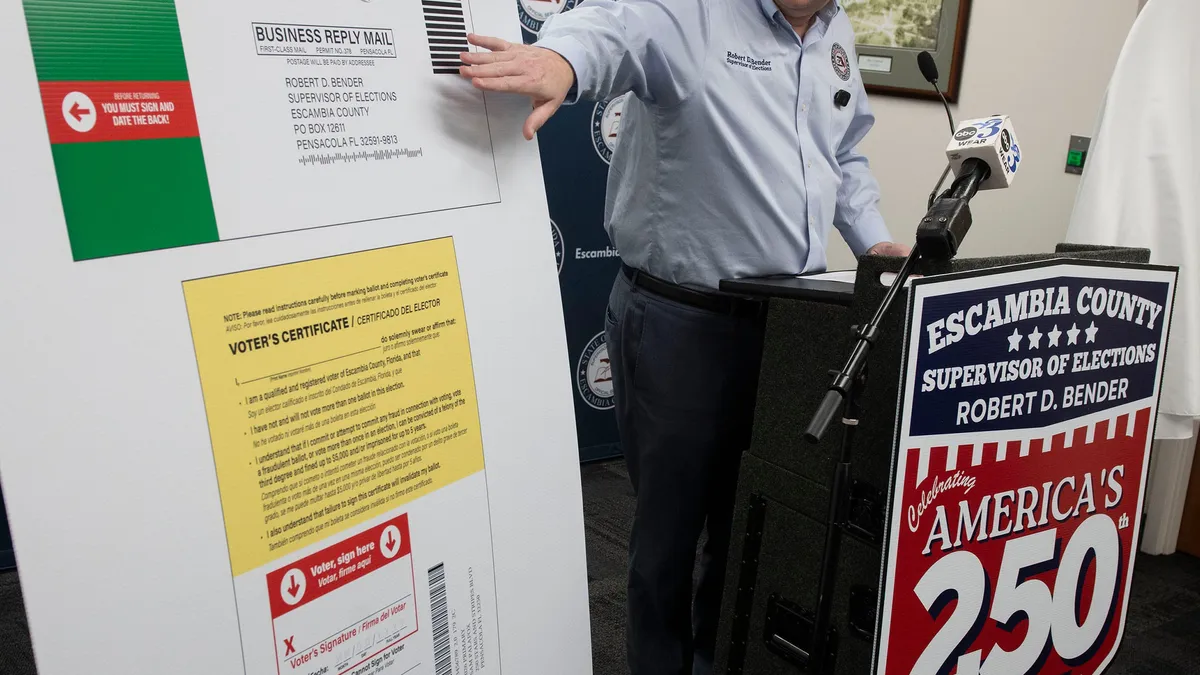
The Postal Service policy would have required states to submit voter lists for comparison with a Department of Homeland Security database. The stated purpose was to review voter citizenship information before mail ballots were delivered. States that did not provide the requested lists could have faced a refusal by the Postal Service to deliver ballots.
Federal judges in Massachusetts and Washington, D.C., blocked the policy in three separate decisions. The administration then sought emergency intervention from the Supreme Court, asking the justices to lift those restrictions.
The court declined. In a short unsigned order, the majority concluded that the government had not met the standard needed for emergency relief.
“The government is unlikely to succeed on the merits of its challenge to the District Court’s preliminary injunction,” the court said in its brief, one-paragraph order.
The justices also kept in place an injunction issued by U.S. District Judge Indira Talwani in Massachusetts. The court wrote that the relevant considerations for granting emergency relief “do not favor” removing the block.
The outcome means states can continue administering mail-ballot systems without complying with the Postal Service’s proposed voter-list condition while the litigation proceeds. For voters, the immediate practical effect is that mail voting procedures are not altered by the challenged federal policy during the midterm season.
Voter-list lawsuits have produced repeated losses for the administration
The mail-ballot dispute follows a larger effort by the Trump administration to obtain voter-registration information from states. The Justice Department has brought dozens of cases seeking access to those lists, arguing that voter names can be checked against the Systematic Alien Verification for Entitlements database, known as SAVE, to assess citizenship.
That campaign has faced substantial resistance in federal court. The Justice Department has lost 23 lower-court cases involving attempts to compel states to provide the lists. Courts have pointed to the constitutional role of states in setting the time, place and manner of congressional elections, while judges have also questioned whether SAVE is reliable enough for the proposed election-related use.
A whistleblower warned that the Postal Service approach could “derail the midterm elections.” Opponents of the policy argued that tying ballot delivery to a state’s submission of voter data could create widespread disruption in an election where mail voting may be important to many voters.
Kristen Clarke, general counsel for the NAACP and a former assistant attorney general for civil rights, called the Supreme Court’s decision an important protection for voters. The NAACP was among the organizations that challenged the policy.
“This decision is a big victory for voters this midterm election season,” Clarke said. “The Supreme Court rightly rejected an effort that would have made it harder for millions of Americans to participate in our elections. Mail voting is safe, secure, and deeply rooted in our nation’s history.”
Two justices dissented as Trump criticizes the court
Justices Samuel Alito and Clarence Thomas disagreed with the court’s decision. Alito noted that the court had previously characterized the claims at issue as a “Hail Mary pass” that “rarely succeeds.”
Trump sharply criticized the outcome, describing it as “another bad decision” and saying it would make the country a “laughing stock.” He appointed three of the court’s nine justices, but none supported the administration’s position in the mail-ballot case.
“This Supreme Court is bullied and cajoled by the Radical Left into making decisions that have set America back at least a hundred years,” Trump said on social media.
Trump also said that rulings involving mail ballots, tariffs and birthright citizenship were “not the people I interviewed to serve.” The comments underscored the political significance of election-law cases even when the court’s orders are procedural and do not resolve every underlying legal question.
Other election disputes remain active
The administration’s voter-data effort has not ended. On Sept. 8, Solicitor General John Sauer asked the Supreme Court in a separate pending case to lift an order preventing states that want to review their lists from using Social Security numbers to search the federal database.
Beyond voting procedures, disputes over congressional maps have become central to the 2026 election cycle. Partisan conflicts over redistricting have unfolded in states across the country because control of Congress may turn on a small number of competitive districts. The Supreme Court has issued decisions favorable to the administration in some redistricting cases, although it has also ruled against the administration over how congressional maps were drawn in California and Missouri.
The court has additionally allowed states to maintain grace periods for counting mailed ballots, another policy Trump personally campaigned against. Together, the cases show that the court’s election decisions have not moved uniformly in either party’s favor.
For the midterms, the clearest lesson is that election rules will continue to be shaped by litigation as well as state-level administration. Republicans have gained important advantages in certain congressional-map and campaign-finance cases, while the administration’s proposed mail-ballot restrictions remain blocked. The legal battles over voter lists, ballot deadlines and district boundaries are likely to remain closely watched as candidates and election officials prepare for 2026.
Related Reading
Frequently Asked Questions
What is Trump lost on mail ballots Is?
Trump lost on mail ballots Is is the main topic of this guide. The article explains the context, practical details, and next steps readers should understand.
Why does Trump lost on mail ballots Is matter?
Trump lost on mail ballots Is matters because readers are looking for a useful answer, not just a short summary. Good content should match search intent and help them decide what to do next.