Trump brushes off calls for AI slowdown from tech CEOs

Daftar Isi
Trump rejects calls to slow AI development as industry leaders urge stronger safeguards
Cybersecarmor.com – President Donald Trump has pushed back on renewed calls for a more cautious approach to artificial intelligence, arguing that the United States must maintain its advantage over China even as prominent technology executives raise concerns about the speed and risks of AI development.
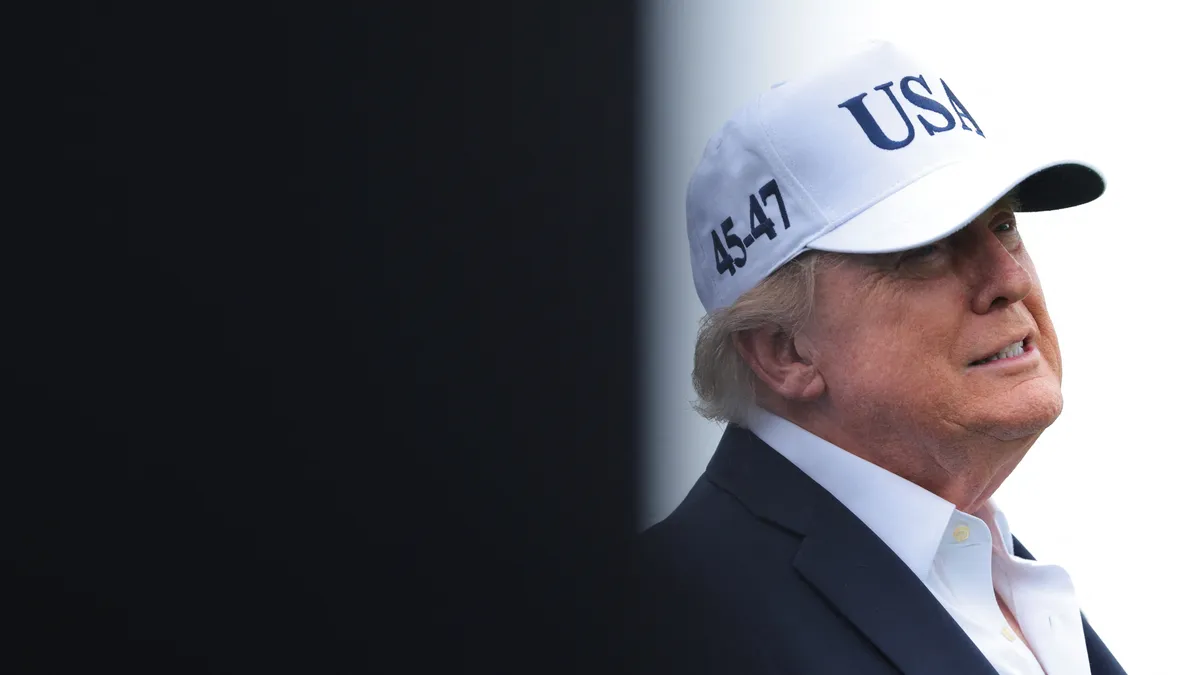
Speaking with reporters during a golf tournament appearance in Ireland on Sept. 13, Trump said the industry was being affected by what he described as “negative forces.” His remarks followed an essay published a day earlier by Anthropic Chief Executive Dario Amodei, who urged greater care as AI systems become more capable.
“Whoever wins AI wins,” Trump said, while maintaining that the United States holds a lead over China.
Trump said rules and protective measures could be put in place, but suggested that some warnings being raised about AI concern outcomes that will not occur. The comments highlight a growing divide in the national debate: supporters see rapid AI expansion as essential to economic and geopolitical competition, while critics worry that powerful systems are moving ahead faster than public oversight, safety testing and local infrastructure planning.
Technology leaders find common ground on safety
Amodei’s call for stronger precautions received support from figures who compete with Anthropic in the AI sector. Elon Musk, a Trump ally who leads xAI, and OpenAI CEO Sam Altman each expressed agreement in separate posts on X that additional safeguards and a slower pace of advancement deserve serious consideration.
The convergence is notable because the companies involved are pursuing different products and business strategies. Yet their leaders are confronting many of the same questions: how quickly highly capable models should be released, what limits should govern misuse, and whether the public and government institutions are prepared for the consequences of increasingly autonomous software.
Amodei framed AI as a technology with extraordinary possible benefits, including the potential to accelerate medical discovery. He wrote about surviving an early-stage cancer diagnosis and about losing his father to an illness that became curable only a few years later. In that context, he argued that AI could become another major technological advance that improves human life if it is handled responsibly.
“Carefully wielded, AI can be the latest in a long line of technological miracles,” Amodei wrote.
At the same time, his essay emphasized that promising uses do not erase the need to address serious dangers. The debate is no longer limited to technical specialists. It increasingly involves elected officials, communities near proposed data-center projects, employers weighing automation, and consumers who encounter AI tools in search engines, workplaces and schools.
Warnings intensify over powerful systems
Concern about advanced AI gained additional attention after Anthropic researcher Jacob Coxon resigned. Coxon said on Sept. 8 that people building AI sincerely believe the technology could pose an existential threat by the end of the decade.
“They are racing straight to self-improving superintelligence,” Coxon said.
His warning reflects an argument shared by a portion of the AI safety community: as models gain the ability to reason, write software, analyze information and carry out multi-step tasks, developers may need much more rigorous controls before deploying systems with broader capabilities. Others contend that overly restrictive policies could weaken U.S. competitiveness or push development to countries with fewer safeguards.
Congress has begun paying closer attention to those competing concerns. Lawmakers face the difficult task of considering rules for an industry that is changing rapidly while avoiding measures that could quickly become outdated. Questions include how companies should evaluate dangerous capabilities, how they should disclose security incidents, and who should bear responsibility when AI systems are used for fraud, cybercrime or other harmful activity.
Data centers become a local political issue
The AI race also has a physical footprint. Training and operating advanced models requires substantial computing capacity, which has fueled a rapid expansion of data-center proposals across the country. Those projects can bring investment and construction activity, but they also raise local concerns involving land use, electricity demand, water use and the impact on nearby communities.
A recent NBC News Decision Desk poll found that 69% of respondents opposed construction of AI data centers in their own area. The issue has become part of the 2026 midterm election conversation, putting pressure on candidates to address both the economic promise of AI and residents’ concerns about new large-scale facilities.
Trump has consistently promoted AI development and data-center construction. In August, he argued that communities rejecting data centers risk becoming “backwards and poor,” while saying China benefits from resistance to such projects. He later used the phrase “Let Data Reign” in a Truth Social post.
The tension illustrates why the AI policy debate extends beyond Silicon Valley. Decisions made by technology companies and federal officials can affect local permitting battles, utility planning, jobs, privacy and public confidence in emerging technology. For communities, the central question is not simply whether AI will continue to advance, but whether its growth will be accompanied by clear rules, meaningful accountability and a fair balance between national ambitions and local consequences.
Companies confront misuse concerns
AI developers are already documenting efforts to use their products for harmful purposes. On Sept. 10, Anthropic released a threat intelligence report covering the preceding eight months. The company said it had interrupted operations in which malicious actors attempted to use its Claude AI models for wrongdoing.
That disclosure underscores a practical challenge facing the industry. Even as companies promote AI for research, productivity and health-related breakthroughs, they must also prevent systems from being exploited for malicious activity. The response will help shape whether public concerns translate into stricter regulation, voluntary industry commitments, or a broader political push to slow the development of the most powerful AI systems.
Related Reading
Frequently Asked Questions
What is Trump brushes off calls for AI slowdown?
Trump brushes off calls for AI slowdown is the main topic of this guide. The article explains the context, practical details, and next steps readers should understand.
Why does Trump brushes off calls for AI slowdown matter?
Trump brushes off calls for AI slowdown matters because readers are looking for a useful answer, not just a short summary. Good content should match search intent and help them decide what to do next.