Supreme Court rejects death row appeal backed by Penn & Teller

Supreme Court Rejects Death Row Appeal Supported by Penn & Teller
Cybersecarmor.com – On June 15, the U.S. Supreme Court dismissed the final appeal of Charles Flores, a death-row inmate in Texas whose case drew public attention from illusionists Penn & Teller. The decision marks the end of a legal battle that has spanned nearly three decades, raising questions about the reliability of eyewitness testimony and the role of scientific methods in capital punishment trials.
Flawed Testimony and Investigative Hypnosis
The case centers on a 1998 murder in suburban Dallas, where Flores was convicted of shooting a woman during an attempted home robbery. His legal team argued that the trial was “so badly compromised by flawed scientific methods and administrative missteps,” highlighting how the use of hypnosis on a critical witness skewed the evidence against him. According to the court filings, the witness had initially described seeing two white men with long hair enter the victim’s house, yet failed to identify Flores in a photo array. A computer-generated composite image of the suspect also did not match his appearance.
During the hypnosis session, the officer questioned the witness about the man’s physical features, including whether his hair was “short, shaved, and neatly cut.” This line of inquiry, the defense claimed, created a subtle but significant shift in the witness’s recollection. The session ended with the officer suggesting that the witness could “recall more details as time progresses,” a statement that, in the eyes of Flores’ attorneys, planted doubt about the accuracy of her testimony.
“Does he have it neatly cut or is it trimmed?” the witness was asked, forcing her to reconsider the description of the man she had previously identified as having long, dirty hair.
Penn & Teller’s Legal Intervention
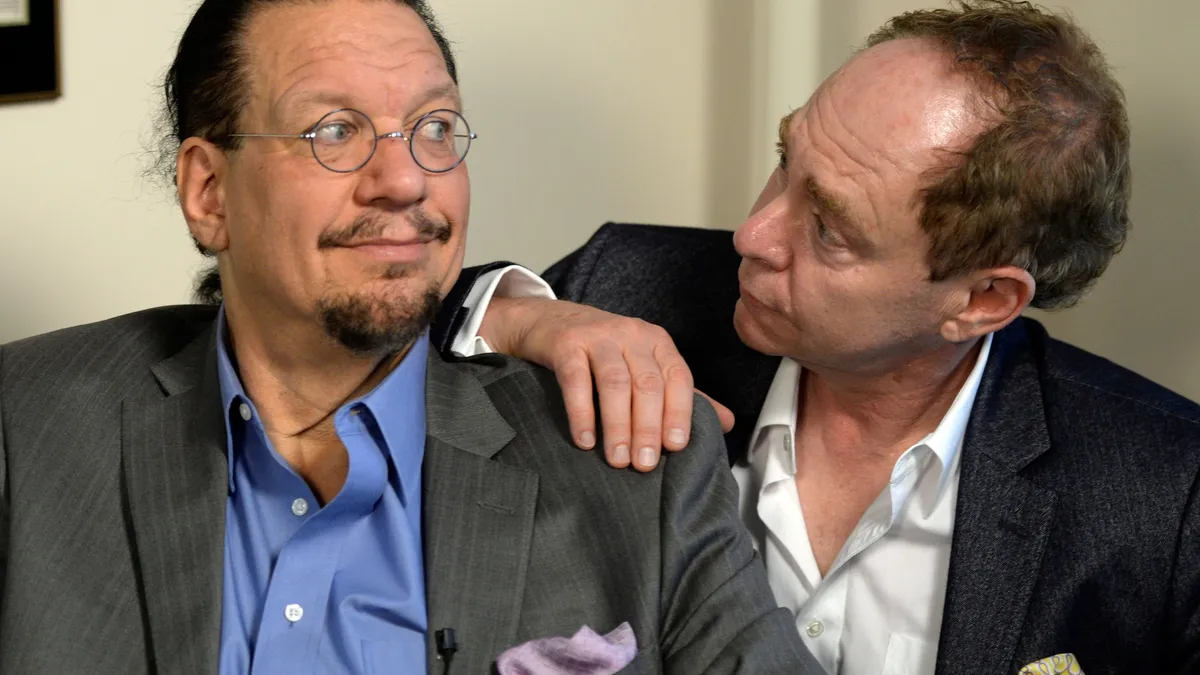
Flores’ appeal gained traction when Penn & Teller, known for their expertise in deception and illusion, joined the case. The duo’s legal brief to the Supreme Court emphasized their unique position as “mastery of perception,” arguing that they have a responsibility to highlight instances where “flim-flam” influences judicial outcomes. In their submission, they noted that investigative hypnosis—often used to enhance memory—could distort reality rather than clarify it.
“Penn & Teller recognize their expertise lies in magic, not law,” their attorney wrote. “Yet, they contend that if the justice system allows hypnosis to alter a key witness’s memory, it fails to uphold the integrity of capital prosecutions.” The magicians’ involvement underscored the broader debate about whether psychological techniques should be admissible in cases with life-or-death stakes.
Scientific Evidence and Legal Challenges
Flores’ legal team presented new scientific findings to support their argument, including a “growing consensus” in the study of eyewitness memory. These studies suggest that hypnosis can create false memories, particularly when combined with suggestive questioning. However, prosecutors countered that Flores had already had ample opportunity to challenge his conviction, pointing out that his latest appeal “merely rephrased the same allegations without introducing fresh evidence.”
The case also revisits a 2013 Texas law designed to help defendants prove their wrongful convictions through discredited scientific practices. Despite this legal tool, the state’s highest criminal court has consistently ruled against death-sentenced individuals who cite it. Flores’ attorneys argued that this pattern demonstrates a systemic issue, where due process is compromised for those facing execution.
A Timeline of Legal Rejections
The Supreme Court first refused to hear Flores’ appeal in 2021, then again in 2022. Each time, the court cited procedural sufficiency, stating that the case did not meet the threshold for review. In 2016, Flores was granted a last-minute chance to raise new concerns about the witness’s identification of him. An evidentiary hearing found no compelling evidence to overturn his conviction, and he was ultimately denied a new trial.
Flores’ case has become a symbol of the challenges faced by death-row inmates seeking justice. His attorneys stress that the use of hypnosis in this case was not an isolated incident but part of a broader trend in law enforcement. “The justice system’s reliance on unreliable methods like investigative hypnosis undermines the fairness of capital punishment,” they wrote in their submission to the court.
Broader Implications for Eyewitness Testimony
The ruling has sparked discussions about the reliability of eyewitness accounts in high-profile criminal cases. Critics argue that the Supreme Court’s decision perpetuates a system that prioritizes conviction over accuracy, especially when scientific advancements have shown the vulnerability of human memory. For example, research indicates that hypnosis can increase the likelihood of false identifications by up to 30%, according to studies cited in Flores’ appeal.
Proponents of the ruling, however, maintain that the legal process is designed to balance competing interests. They point out that the witness’s identification, while potentially flawed, was corroborated by other evidence, including Flores’ presence in the news media during the trial. “The court’s decision reflects the weight of existing evidence and the limits of appeals in capital cases,” one legal expert remarked.
As the final appeal was denied, Flores remains on death row, awaiting execution. His case highlights the ongoing tension between legal tradition and modern psychological insights, with Penn & Teller’s involvement drawing public attention to the human elements that can sway the outcome of a trial. The Supreme Court’s rejection of his appeal may serve as a cautionary tale for future cases where the line between perception and reality is blurred by questionable methods.
Legacy of a Flawed System
Flores’ journey through the courts has exposed the complexities of capital punishment. His attorneys argue that the system’s reliance on unverified testimony—such as the hypnosis-enhanced memory of a single witness—creates a “Texas-sized due process problem.” This issue, they say, affects not only Flores but also countless others who may have been wrongly convicted due to similar procedural lapses.
The case also raises questions about the role of celebrities and public figures in legal advocacy. While Penn & Teller’s brief added a unique perspective, their involvement underscores how public interest can influence the perception of justice. “It’s rare for a case to gain attention from figures like Penn & Teller, but their support highlights the urgency of reforming eyewitness procedures,” said a legal analyst in a recent interview.
With the Supreme Court’s decision, the focus shifts to the state level, where Texas continues to defend its use of hypnosis in capital cases. The ruling may encourage further scrutiny of the practice, but it also reinforces the challenges faced by inmates who rely on evolving scientific understanding to prove their innocence. As the legal system moves forward, the question remains: how can it better protect the rights of those on death row when the tools it uses to convict are not always infallible?