String of plane crashes draws national scrutiny. What we know

A Sequence of Aviation Disasters Sparks National Attention
Cybersecarmor.com – Recent weeks have seen a series of significant aviation incidents across multiple states, prompting widespread concern and scrutiny. Four separate crashes—each involving distinct aircraft, operators, and operational contexts—occurred within a short span of days, raising questions about potential patterns or underlying causes. Despite the timing, experts suggest the events may not be interconnected, highlighting the diversity of factors at play.
Texas Highway Crash: A Business Jet’s Dramatic Descent
A small business jet, identified as a Cessna 680A, crashed onto a highway near Laredo, Texas, on June 16. Authorities reported that the aircraft was en route from San José del Cabo, Mexico, to Austin, Texas, when it experienced mechanical difficulties. The incident unfolded on the northbound side of Texas State Highway Loop 20, where part of the plane collided with a vehicle and ignited a fire before emergency responders arrived.
“The aircraft was traveling under normal conditions until it reported issues, and the crash happened in a very short time frame,” said Laredo Police Department officials. They noted that the plane’s wreckage was visible from a distance, with flames quickly spreading and drawing nearby bystanders to the scene.
At least six individuals were aboard the aircraft, with one fatality confirmed. The victim, Joshua Baer, was identified as the co-founder and CEO of Capital Factory, an Austin-based startup accelerator. Five others, including two pilots and three teenagers, were evacuated and hospitalized. Among the recovered items from the wreckage was a small pet, which was found unharmed by first responders.
California B-52 Incident: A Test Flight Gone Wrong
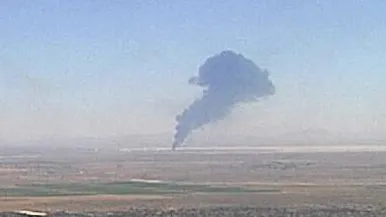
On June 15, a U.S. Air Force B-52 Stratofortress bomber crashed and burst into flames shortly after takeoff from Edwards Air Force Base in Southern California. The aircraft was conducting a test mission as part of a radar modernization program when it descended rapidly. The crash produced a massive plume of smoke, visible from miles away, and claimed all eight lives on board.
“We lost eight great Americans. This crash is deemed to be unsurvivable,” stated Col. James Hayes, a deputy commander at the base, following the incident. Military officials confirmed the crew included a mix of active-duty personnel and civilian contractors, with all victims identified as: Air Force Col. Gregory Watson (53), Lt. Col. Gabriel Estrella (40), retired Lt. Col. Miles Middleton (50), Maj. Alexander Davis (34), Maj. Robert Dee (40), Maj. Brad Hovey (35), Jeromy Smith (32), and Christopher Rischar (41).
While the exact cause of the crash remains under investigation, Hayes estimated the process could take several months. This marks the first fatal B-52 crash in the U.S. in decades, according to previous reports by USA TODAY.
Missouri Skydiving Plane Disaster: A Tragic Loss
Another fatal incident occurred in Missouri, where a skydiving aircraft crashed, resulting in multiple casualties. Though details about the specific model or location were not immediately released, the event underscored the risks associated with general aviation. This crash, like the others, involved an aircraft not subject to the same stringent regulations as commercial passenger planes.
Authorities are currently examining the circumstances, including whether pilot error, mechanical failure, or environmental factors contributed to the disaster. The case highlights the need for heightened safety measures in specialized aviation operations, particularly those involving skydiving and smaller, privately operated planes.
Washington State Jet Incident: Military Operations Under Scrutiny
Meanwhile, a U.S. Marine Corps fighter jet incident in Washington state added to the growing list of aviation emergencies. Though no details about the cause or outcome were specified at the time of writing, the event is being investigated by federal and military authorities. This incident further illustrates the varied contexts in which aircraft operate, from commercial airlines to military forces.
Dr. Kristy Kiernan, associate director of Embry-Riddle Aeronautical University’s Boeing Center for Aviation and Aerospace Safety, emphasized the importance of evaluating each crash independently. “Almost everything that could be different in terms of the context and environment is different,” she explained, noting that the four incidents involved distinct aircraft models, engines, and regulatory frameworks. This diversity, she argued, makes it “extremely unlikely” that a common issue is responsible for all the crashes.
Patterns or Probabilities? The Human Tendency to Seek Connections
The timing of these crashes has naturally sparked public speculation, with many questioning whether a shared cause exists. Kiernan, however, cautioned against jumping to conclusions. “As human beings, we are conditioned to look for patterns… sometimes those patterns exist, and they are real and meaningful, and sometimes they’re the product of probabilities,” she said.
While the media and the public often gravitate toward identifying links between events, Kiernan stressed that each incident must be analyzed on its own merits. “Each single occurrence demands the same level of attention and scrutiny,” she added, advocating for a methodical approach to uncovering the truth.
Regulatory Differences and Safety Implications
One key distinction among these incidents is the regulatory framework governing the aircraft involved. Major commercial passenger jets are subject to rigorous safety protocols, but the crashes in Texas, Missouri, and California were all linked to smaller, non-commercial planes or military aircraft. This difference in oversight raises questions about the broader safety landscape for general aviation.
Despite the varied circumstances, the incidents have collectively highlighted the need for continuous evaluation of safety standards. Kiernan noted that while clusters of crashes can be alarming, they often reflect the complexity of aviation environments. “It’s important to separate the immediate concern from the long-term analysis,” she said, underscoring the importance of transparency and thorough investigation.
As investigators work to determine the causes of each crash, the focus remains on understanding the unique factors at play. The sequence of events, though unsettling, serves as a reminder of the unpredictable nature of aviation. Whether these incidents are isolated or part of a larger trend, the collective attention they have generated underscores the importance of vigilance in air travel safety.