Socialist candidates’ mixed results in Florida primaries: 5 takeaways

Daftar Isi
Florida’s Democratic Primary Upends the Party’s Internal Map
Cybersecarmor.com – The August 18 Democratic primaries in Florida delivered a sharp reminder that the party’s internal fault lines remain as volatile as any external political threat. A progressive state legislator pulled off a stunning Senate upset while two establishment House incumbents held their seats against left-leaning challengers — all within a single evening, all inside a state whose congressional districts had been redrawn just months earlier to hand Republicans a structural edge heading into the fall midterms.
The results underscore a recurring tension in modern American politics: grassroots organizing power versus institutional fundraising advantage, and the question of whether ideological purity can overcome the machinery of name recognition and donor networks.
Nixon’s Upset: Organized Grassroots Outflanks Fundraising Superiority
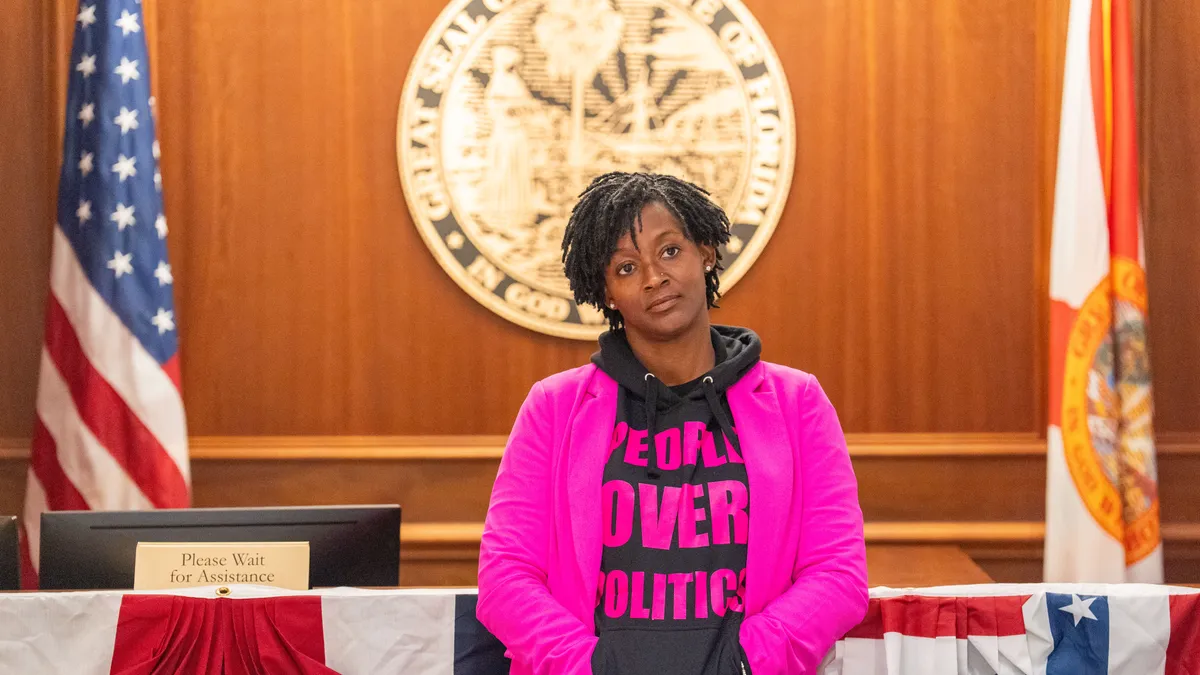
State Rep. Angie Nixon, a 32-year-old member of the Democratic Socialist of America, stunned the political establishment by defeating Alex Vindman in the Florida Senate primary. Vindman, a retired Army lieutenant colonel and former national security official who had testified against President Donald Trump during his first impeachment trial, had outpaced Nixon in fundraising by a wide margin. Polling in the race was sparse, but the prevailing expectation among party operatives was that the former official would prevail.
With roughly 95 percent of precincts reporting, Nixon had secured a lead of approximately 11 percentage points — arguably the most consequential victory for a DSA-endorsed candidate this election cycle.
“We showed the world what organized people can accomplish,” Nixon told supporters during her victory speech.
She followed up the evening’s events with a social media post: “We did it ya’ll… the fight has just begun.”
Nixon’s campaign platform centered on two signature proposals: a single-payer universal healthcare system and a federal minimum wage of $25 per hour. She had already drawn national attention earlier in the year by staging a sit-in at the office of Gov. Ron DeSantis to protest Florida’s redrawn congressional map. That protest now faces judicial scrutiny — she is charged with trespassing and resisting an officer without violence, and the matter is set for trial in September.
The win carries historic weight: Nixon becomes the first Black woman to secure a major-party Senate nomination in Florida. She will face Republican Sen. Ashley Moody in the general election, a contest that forecasters currently rate as solidly Republican. Still, progressive organizers and DSA chapters are expected to frame the primary result as proof that door-knocking and small-dollar mobilization can still punch above their weight in a major state.
The Gerrymandering Backdrop
Every contest on Tuesday’s Florida ballot was shaped by a map drawn at the explicit request of President Trump. The state legislature redrew congressional boundaries to maximize Republican seat advantage in the fall elections. Both Moskowitz and Wasserman Schultz were thrust into freshly created districts that departed from their previous geographic bases. DeSantis, a former presidential candidate now term-limited, also appeared on the ballot as voters selected his successor in the governor’s race.
Moskowitz Holds the 23rd District; Israel Question Dominates
In Florida’s 23rd Congressional District — a newly drawn area that forecasters identify as the state’s only toss-up House race — Rep. Jared Moskowitz defeated Oliver Larkin by nearly 30 percentage points. The district is approximately 25 percent Jewish and contains a high concentration of Holocaust survivors, demographics that shaped the campaign’s central argument.
Larkin, who had gone viral in the weeks before the election for confrontations with conservative commentators over his views on cable television, ran as a sharp critic of Israel. He described the war in Gaza as a genocide and positioned himself as the “anti-Zionist” alternative in the race. Moskowitz, himself Jewish, declined to debate his opponent and accused Larkin of “running against me solely on my religion,” a characterization Larkin publicly denied.
The U.S.-Israel relationship has defined several Democratic primaries across the country this year, and the 23rd District contest was perhaps the most pointed illustration of that dynamic.
Wasserman Schultz and the Diversity Question in the 20th District
Former Democratic National Committee chair Debbie Wasserman Schultz drew scrutiny when she entered the race for Florida’s 20th Congressional District, another newly created seat. The district comprises a plurality-Black area, a fact that raised concerns among Black Democrats already worried about the erosion of diversity initiatives and representation in Congress.
Those anxieties gained new urgency earlier this year when the U.S. Supreme Court narrowed portions of the 1965 Voting Rights Act. Conservatives celebrated the ruling as a marker of a colorblind legal order; civil rights leaders and liberal critics warned it could ultimately reduce the number of Black and Hispanic members of Congress. Wasserman Schultz, who is White, argued that her years of institutional experience would benefit South Florida constituents regardless of the district’s demographic composition.
What the Results Signal
Taken together, the Florida outcomes illustrate a party caught between two gravitational pulls. On one side, organized progressive coalitions demonstrated that disciplined ground operations can overcome fundraising gaps in a single contest. On the other, entrenched incumbents with name recognition, donor infrastructure, and alignment with the party’s institutional center retained their seats even in districts engineered to be competitive. The fall general elections will test whether either advantage translates into seat-level outcomes, or whether the gerrymandered map ultimately neutralizes both.
Related Reading
Frequently Asked Questions
What is Socialist candidates mixed results in Florida?
Socialist candidates mixed results in Florida is the main topic of this guide. The article explains the context, practical details, and next steps readers should understand.
Why does Socialist candidates mixed results in Florida matter?
Socialist candidates mixed results in Florida matters because readers are looking for a useful answer, not just a short summary. Good content should match search intent and help them decide what to do next.