Judges deny last-minute Trump appeal to keep his name on Kennedy Center

Judges Deny Trump’s Last-Minute Appeal to Retain His Name at Kennedy Center
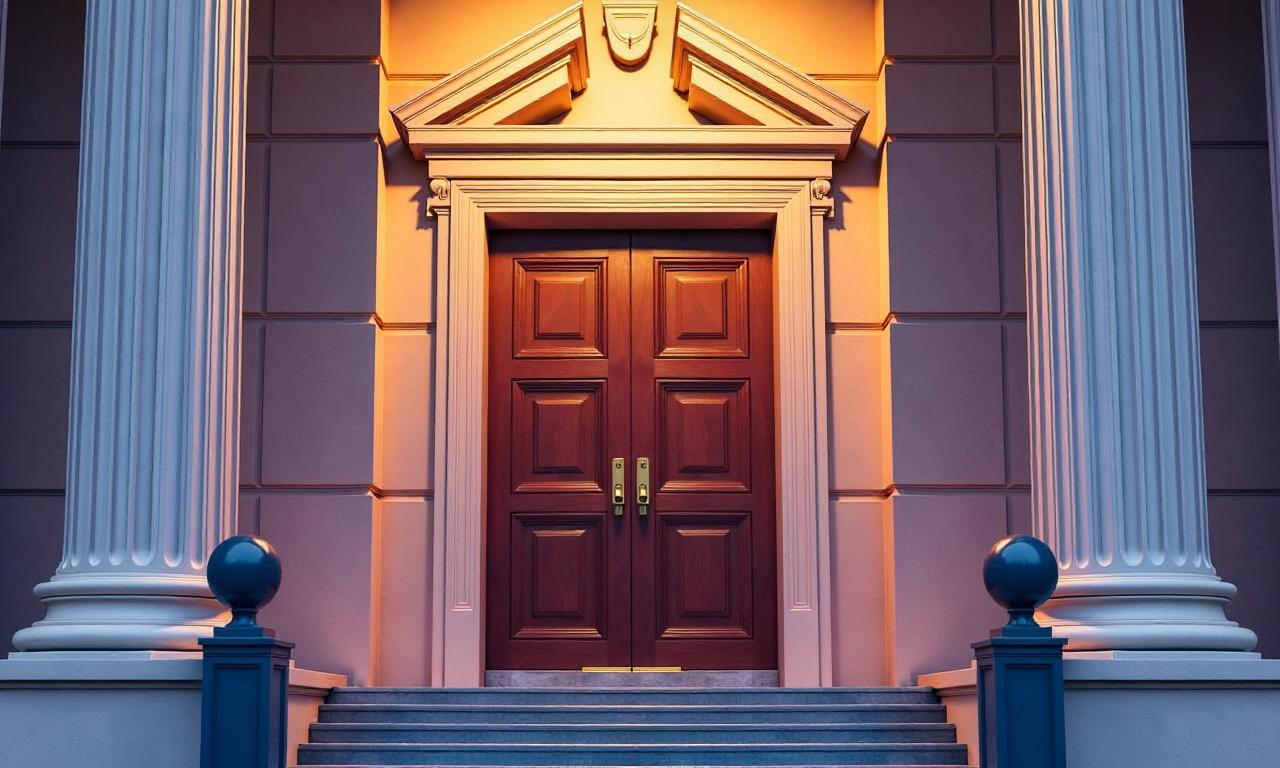
Cybersecarmor.com – On June 12, 2026, President Donald Trump attempted to preserve his legacy at the Kennedy Center by filing an urgent legal request with a higher court. The motion aimed to stop the removal of his name from the iconic Washington, D.C. cultural institution, which had been scheduled for the following day. However, the judges swiftly rejected the plea, allowing the name change to proceed as a group of onlookers gathered to witness the process. Workers had already begun setting up scaffolding by the afternoon, signaling the imminent removal of the presidential moniker.
Despite the weather forecast predicting intermittent storms, the crowd remained undeterred. By late evening, spectators had assembled in droves, eager to observe the symbolic act of erasing Trump’s name from the building’s exterior. Some wore formal attire, while others displayed signs of support for the change, reflecting the polarized reactions to the decision. The scaffolding, a temporary structure, was expected to facilitate the removal of the lettering that bore Trump’s name above that of President John F. Kennedy, whose legacy the center was originally dedicated to.
Public Sentiment and Symbolic Significance
Among the onlookers was Carolina Clarence, a retired educator who resides near the Kennedy Center. She visited the site twice on the day of the removal, accompanied by her dog, Ruffino, to witness the transformation. “We’re going to see this coming down,” she remarked, calling Trump’s initial naming of the center “ridiculous.” She cited his influence on the institution, noting that donations had declined and several events had been canceled due to his policies. “They’re going to destroy the Kennedy Center,” she added, expressing concern over the impact of the name change on the building’s historical identity.
“He has done a lot of hurt… A lot of donations have stopped, and some shows have canceled.”
Another attendee, Katrina Clark, a local artist and performer, carried a sign quoting Shakespeare’s *Hamlet*: “The play’s the thing, wherein I’ll catch the conscience of the king.” The phrase, she explained, underscored her belief that the Kennedy Center should remain a sanctuary for artistic expression rather than a platform for political propaganda. “Adding Trump’s name to a memorial for a slain president is morally and ethically wrong,” she stated. Clark also highlighted the internal strife at the center, noting that staff had been dismissed or laid off, and union disputes had arisen under Trump’s leadership. “This is a step of hope,” she said, emphasizing that the court case demonstrated the resilience of democratic processes.
The Legal Frontlines
The removal of Trump’s name was the result of a legal battle that began in February 2025. At that time, the president ousted the Kennedy Center’s board, replacing its members with loyalists and appointing himself as the new chairman. His administration claimed the changes were necessary to “make the venue less woke,” leading to the cancellation of several performances and the allocation of $257 million in federal funds for renovations. The board, now under Trump’s influence, had voted in December to rename the center the “Trump-Kennedy Center,” a move the president hailed as “unanimous.”
The decision to remove Trump’s name from the building’s facade followed a ruling by U.S. District Court Judge Christopher Cooper, who found that the president’s addition of his name was an illegal act. Cooper’s order allowed the center’s name to be changed, effectively ending Trump’s tenure as its nominal leader. However, the president’s legal team continued to push for a stay, submitting a final appeal to the Court of Appeals for the District of Columbia just days before the removal. The motion was denied, clearing the path for the name to be struck from the landmark’s exterior.
“It’s an artistic home for me,” said Katrina Clark. “This is a step of hope in removing Trump’s name.”
As the workers prepared to dismantle the scaffolding, the public’s anticipation reached a fever pitch. By 4 p.m. ET, the structure had been fully assembled, with crews ready to begin the task of removing the lettering. Observers, including representatives from media outlets like MS Now and The Associated Press, as well as the advocacy group Hands Off the Arts, livestreamed the event, capturing the moment as the name was gradually erased. Some attendees, like Clarence, had braved the rain with umbrellas, symbolizing their determination to see the process through.
Context of the Dispute
The lawsuit that initiated the name change was filed by Democratic U.S. Representative Joyce Beatty of Ohio, who served on the Kennedy Center’s board. Her legal action argued that Trump’s unilateral decision to add his name to the center violated its governance structure and tarnished its historical purpose. Cooper’s ruling aligned with this argument, citing the procedural errors in how the name was appended to the building. The judge’s decision also addressed the broader implications of Trump’s tenure at the center, which had sparked debates about the role of political influence in cultural institutions.
Trump’s legal maneuvering, however, reflected his ongoing efforts to maintain visibility in the arts sector. His administration’s tenure at the Kennedy Center was marked by a shift in priorities, with critics alleging that his presence prioritized political messaging over artistic integrity. The removal of his name was seen as a symbolic victory for those who viewed the center as a tribute to JFK’s contributions to American culture. Despite the denial of his appeal, Trump’s name remained visible on the building’s exterior until the workers completed their task the next day.
The event drew significant attention, with many observers describing it as a pivotal moment in the center’s history. For those who had supported the name change, it represented a correction of what they perceived as an ideological misstep. For Trump’s allies, however, it was a reminder of the challenges he faced in maintaining his influence over public symbols. The process, though physically straightforward, carried emotional weight, as it marked the end of an era where the Kennedy Center was briefly rebranded under a new political banner.
Legacy and Ongoing Implications
The Kennedy Center, established in 1964, has long been a cornerstone of the U.S. arts scene, hosting performances, exhibitions, and educational programs. Its association with JFK, a president celebrated for his dedication to the arts, has made it a site of national pride. Trump’s temporary naming of the center was met with mixed reactions, but the eventual removal of his name has been framed as a restoration of its original purpose. Critics argue that the name change reasserts the center’s commitment to honoring JFK’s legacy, while supporters of Trump see it as a necessary adjustment to reflect changing political landscapes.
The legal battle and public demonstration underscore the intersection of politics and culture. As the scaffolding was dismantled, the focus shifted to the broader debate over the role of public institutions in reflecting the values of their time. The decision to erase Trump’s name, though not without controversy, has become a focal point for discussions about the balance between political representation and historical recognition. For now, the Kennedy Center stands as a testament to the enduring power of judicial decisions and public will in shaping the nation’s cultural narrative.
This story continues to evolve, with further developments expected as the name is officially removed. Gabe Hauari, a national trending news reporter at USA TODAY, has been following the unfolding events. Readers can stay updated by following him on X @GabeHauari or contacting him via email at Gdhauari@usatodayco.com.