Rescue workers pour into Venezuela amid search; deaths top 1,000

Rescue Workers Pour Into Venezuela Amid Search; Deaths Top 1,000
Earthquakes Strike with Devastating Force
Cybersecarmor.com – On June 24, two major earthquakes struck Venezuela, causing immediate chaos and widespread destruction. The first tremor, measuring 7.2 on the Richter scale, was followed within minutes by a second quake of 7.5 magnitude. These seismic events led to the collapse of buildings, homes, and critical infrastructure, including hospitals, leaving communities in disarray. The ground continued to shake in the Caracas capital region on June 26, with a smaller 4.7 magnitude quake rattling the area shortly after 6 p.m. local time, according to the U.S. Geological Survey.
Escalating Casualty Numbers
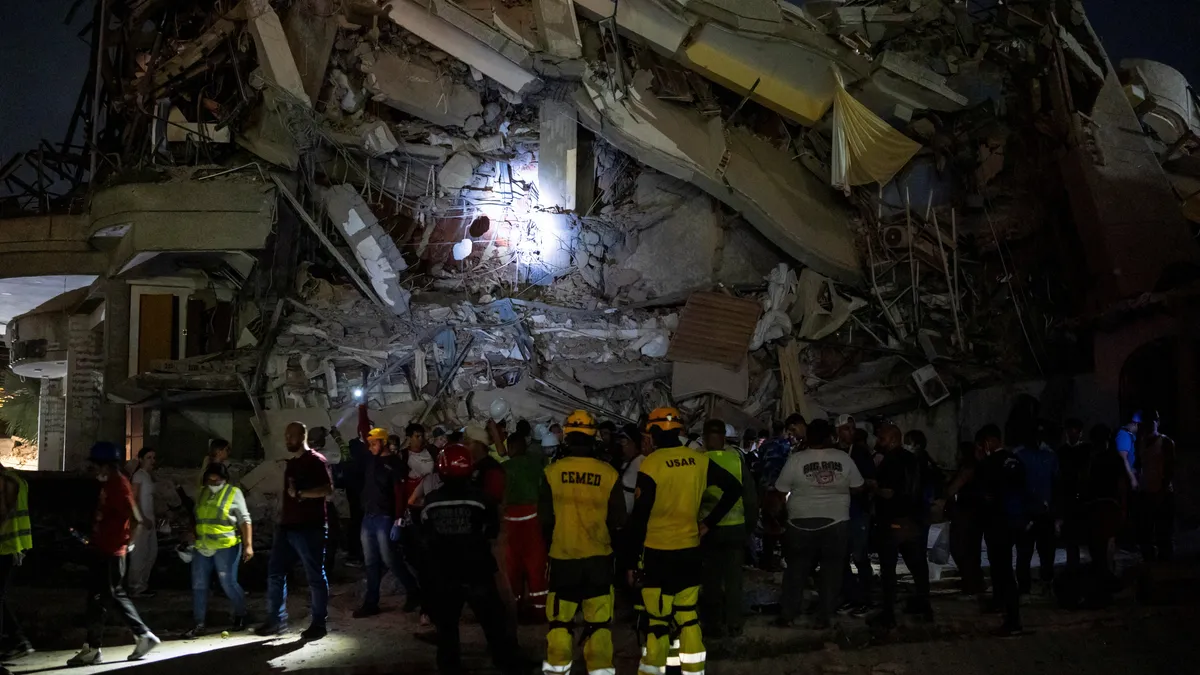
By June 27, Venezuelan authorities confirmed that the death toll from the earthquakes had surpassed 1,400, with over 3,200 individuals reported injured. The ongoing search operations have uncovered additional victims, as rescue crews sift through the wreckage in a desperate bid to save lives. The situation remains dire, with officials acknowledging that the casualty count could rise further as more survivors are found. The United States Geological Survey noted that its data projections suggest the total number of fatalities might reach into the thousands.
Government and Political Responses
Venezuela’s interim president, Delcy Rodríguez, highlighted the international solidarity during a June 26 statement. She revealed that she had spoken with U.S. President Donald Trump and Secretary of State Marco Rubio, who, according to her, “reaffirmed the support of the United States government at this difficult moment for Venezuela.” This exchange underscored the global attention on the crisis, which has drawn aid and resources from various nations. Despite the challenges, Rodríguez emphasized the resilience of the Venezuelan people, stating, “We are determined to rebuild and recover from this tragedy.”
International Aid and Rescue Efforts
As the search for survivors intensifies, the Venezuelan government reported that approximately 1,600 international rescuers had entered the country by June 27. These teams are working tirelessly to navigate the devastation and locate those still trapped. Foreign ministry official Oliver Blanco expressed gratitude for the global response, stating, “We thank the international community for its support and solidarity during these moments of uncertainty for Venezuelans.” This influx of aid includes specialized personnel and advanced equipment, such as drones and thermal scanners, to expedite the rescue process.
Survivors and Unseen Peril
Lawmaker Jorge Rodríguez, speaking on state television on June 27, revealed that over 3,000 individuals had been left homeless by the earthquakes. The destruction has disrupted daily life, with many families forced to seek shelter in makeshift camps or with relatives. Meanwhile, at least 172 people were known to be trapped under collapsed structures as of June 26, a figure that has continued to fluctuate as rescue operations progress. The presence of search dogs and other technologies has improved the chances of locating survivors in the rubble, but the process remains arduous.
Global Solidarity and U.S. Support
The United States has pledged $150 million in emergency aid to Venezuela, along with deploying ships and aircraft to assist in the search and rescue missions. This commitment reflects the nation’s efforts to support Venezuela during its crisis, which has drawn attention from the international community. The U.S. has also coordinated with local authorities to ensure efficient distribution of resources and expertise. Among the foreign teams arriving in recent days was a 50-member group from El Salvador, which began operations in the beachside neighborhood of Los Corales, where the damage was particularly severe.
Voices from the Field
“People have told us they can hear individuals. They call them on the phone and they answer, and they can hear people screaming and calling,” said Roberto Gavidia, leader of the El Salvador rescue team, as reported by Reuters. This firsthand account illustrates the urgency and complexity of the mission, where each discovery brings both hope and heartbreak. The team’s use of drones and thermal imaging has enabled them to scan large areas quickly, while trained dogs help detect signs of life beneath the debris.
Challenges and Uncertainty Ahead
While the rescue efforts have made significant strides, challenges persist. Aftershocks continue to pose risks to both rescuers and survivors, with the potential for further collapses. The USGS has warned that the toll may still climb as more areas are explored, particularly those that remain inaccessible due to damaged roads or unstable terrain. Officials are urging the public to remain vigilant, as the search for survivors extends into the nights and days.
Rebuilding and Future Steps
As the immediate crisis unfolds, the focus is shifting toward long-term recovery. Venezuelan authorities are coordinating with international partners to assess the full scale of damage and plan for rebuilding. The government has announced plans to prioritize the restoration of critical infrastructure, such as hospitals and transportation networks, to stabilize the region. Despite the overwhelming destruction, communities are rallying to support one another, with