Nevada sues Interior over Colorado River water reduction plan

Daftar Isi
Nevada Takes Colorado River Water Fight to Federal Court
Cybersecarmor.com – After more than three years of negotiations failed to produce a consensus among the seven states that depend on the Colorado River, Nevada has turned to the federal judiciary. On Aug. 24, the state filed a lawsuit against the U.S. Department of the Interior, contesting a new regulatory framework that would slash water deliveries to the Lower Basin by roughly a fifth for a two-year period beginning in 2027. The move marks the first formal legal challenge to Interior’s Aug. 21 rulemaking, which was designed to replace an allocation plan set to expire at the end of this year.
The stakes are existential for a region that has grown into one of the most water-stressed urban corridors in the western United States. Las Vegas and its surrounding communities draw nearly all of their supply from the river, and the proposed cuts would push annual deliveries below what local officials say is needed to keep taps running at basic levels.
What the Interior Rule Actually Demands
The framework released by Interior on Aug. 21 mandates a 21% reduction in Colorado River water allocated to California, Nevada, and Arizona for two years starting in 2027. For Nevada specifically, the state’s statutory allocation of 300,000 acre-feet would be trimmed by as much as 213,556 acre-feet under the new rules. That leaves the state with fewer than 86,500 acre-feet annually — a figure that Southern Nevada Water Authority officials, who are named parties in the suit, say cannot cover the region’s minimum domestic and municipal demand.
The gap is stark when measured against actual consumption. In 2024, Las Vegas and its surrounding cities used under 212,500 acre-feet of water, and the Colorado River accounts for approximately 90% of all water consumed in the Las Vegas Valley. In other words, the proposed allotment would fall well short of what the region already draws, before accounting for any growth or seasonal variation.
The Upper Basin Escape Clause
A central grievance in Nevada’s complaint is asymmetry. Under the Interior rules, four Upper Basin states — Colorado, Utah, New Mexico, and Wyoming — are permitted to implement voluntary water reductions rather than mandatory cuts. Those states argued during negotiations that they already face severe supply constraints from the decades-long megadrought gripping the western United States, and they successfully resisted being bound to fixed reduction targets.
Nevada Gov. Joe Lombardo framed the outcome bluntly in a statement accompanying the lawsuit filing:
“We’ve already shown that we’re willing to do our part, but the Colorado River is a shared resource, so the solution needs to involve everybody. Until that happens, we are prepared to fight for as long as it takes.”
Lombardo added that the rules effectively solved the shortage “on the backs of the Lower Basin states” — Arizona, California, and Nevada — while letting the Upper Basin opt out of hard caps.
Conservation Has Limits, Says Southern Nevada
For a quarter century, Southern Nevada has pursued aggressive water-efficiency programs that have cut its Colorado River consumption by roughly 40% even while the metro area added more than 800,000 residents. John Entsminger, general manager of the Southern Nevada Water Authority, highlighted that record in a statement released alongside the suit:
“Over the past 25 years, southern Nevada has become a global leader in water efficiency, reducing our Colorado River consumption by about 40 percent even as the community added 800,000-plus residents, so we have clearly demonstrated our ability to adapt and do more with less. However, conservation has its limits.”
The lawsuit contends that Interior failed to conduct a meaningful analysis of how the mandated cuts would affect Southern Nevada’s economy, and that the agency did not adequately consider less-restrictive alternatives before finalizing the rules. It further alleges violations of federal environmental statutes and of what practitioners call the “Law of the River” — the body of treaties, interstate agreements, and Supreme Court decisions that have governed Colorado River management since the 1920s.
Arizona Joins the Critique
Nevada is not alone in its objections. On Aug. 10, Arizona issued a formal letter objecting to the Interior plan and accusing the department of violating the 1922 Colorado River Compact, the foundational treaty that allocates river flows among the basin states. Experts watching the situation expect additional Lower Basin challenges to follow Nevada’s filing, though no other state had announced a suit as of the Aug. 24 filing.
A River at Record Lows
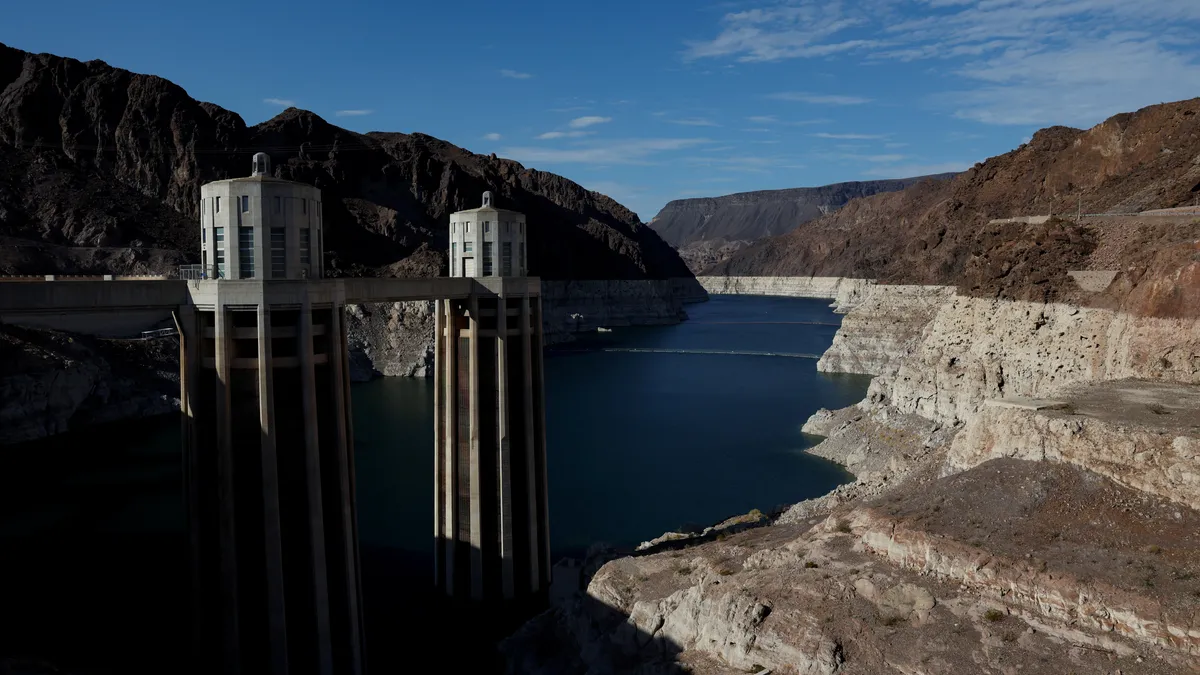
The legal battle unfolds against a backdrop of physical scarcity. Decades of rising demand, compounded by the longest sustained drought in western U.S. history, have driven Colorado River storage to historic lows. In August, both Lake Mead — the reservoir that feeds Southern Nevada through the Hoover Dam — and Lake Powell upstream in Utah fell to record-low levels. The shrinking water bodies underscore why every acre-foot now carries outsized weight in policy calculations.
For the roughly 2.3 million residents of the Las Vegas Valley, the lawsuit is less an abstract regulatory dispute than a question of whether the region will have enough water to sustain its population, its agriculture, and its economy through the next decade. The answer, at least for now, will be shaped by federal judges rather than by the negotiating table where three years of talks produced no agreement.
Related Reading
Frequently Asked Questions
What is Nevada sues Interior over Colorado River?
Nevada sues Interior over Colorado River is the main topic of this guide. The article explains the context, practical details, and next steps readers should understand.
Why does Nevada sues Interior over Colorado River matter?
Nevada sues Interior over Colorado River matters because readers are looking for a useful answer, not just a short summary. Good content should match search intent and help them decide what to do next.