‘Looking for hope:’ In Havana’s darkness, Cubans turn to faith

Daftar Isi
Faith becomes a lifeline as Havana confronts deepening hardship
Cybersecarmor.com – Inside Havana’s Our Lady of Charity Catholic Church, relief from the city’s daily strain can be found in the dim, cool interior of a 19th-century sanctuary. On a recent service day, the Rev. Ariel Suárez Jáuregui prepared in the sacristy, putting on his white robe and green stole before walking into the church.
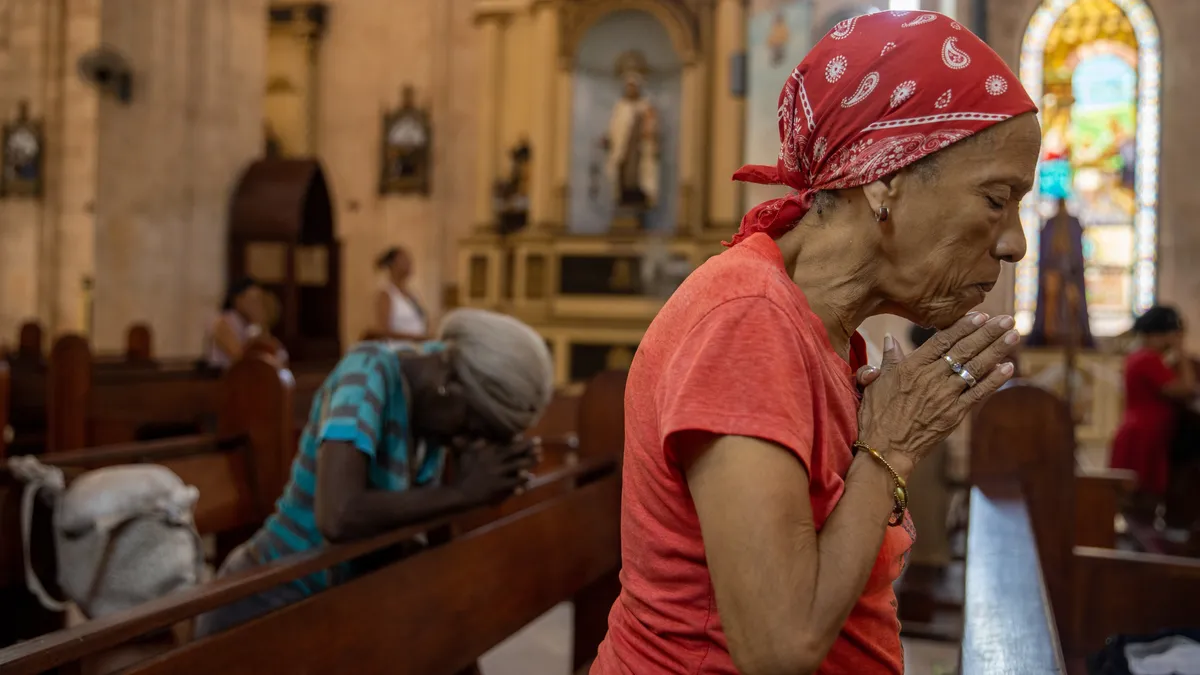
Incense lingered beneath the building’s tall columns and Baroque-style dome. Eight small fans moved air toward roughly 35 people seated in wooden pews, a modest comfort in a capital where electricity is often unavailable. Congregants stood through the heat, listening as Suárez read Scripture, led hymns and called on them to seek guidance from the Holy Spirit amid what he described as the nation’s “grave and urgent problems.”
For many worshippers, Mass was only the beginning of their conversation with the priest. Afterward, they formed a line to speak privately with him, continuing a practice Suárez has observed after every service during his 27 years as a priest. They arrived with fears about illness, housing, family and survival.
Pastoral care meets urgent material needs
One woman asked Suárez to pray for her pregnant daughter after a fall led to an emergency hospital visit. Another, who had traveled from Matanzas to Havana, said she was alone in Cuba and needed help finding somewhere to stay. A man sought medicine for diabetes.
The priest responded in different ways. Some received a blessing as he made the sign of the cross before them. Others were given essentials such as prenatal vitamins or disposable diapers. Every encounter also brought the same spiritual message: hold on to faith and trust that God will help them endure.
For decades, Cuba’s Roman Catholic Church has filled a role that often reaches beyond worship. It has become an informal safety net for people facing economic distress and a voice for Cubans caught between competing political forces. Once viewed as an adversary by the country’s communist and atheist government, the church now works through priests, bishops, nuns and volunteers to support communities across the island.
That responsibility has intensified as the country’s crisis has worsened. Church workers have established soup kitchens, transported clean water, opened laundry services and brought food to people without homes. These efforts address immediate needs, but the scale of the emergency remains far larger than available resources.
“There are miracles happening all the time,” Miami Archbishop Thomas Wenski said. “But it’s a drop in the bucket.”
Wenski has helped oversee aid transportation to Cuba. He has warned that limited storage space and shortages of fuel make it difficult to deliver supplies to the communities that need them. Even when food and household goods arrive, the absence of warehouses and reliable transportation can slow their distribution.
International aid faces difficult conditions
In May, the United States designated $100 million in assistance for Cuba. The Vatican agreed to serve as an intermediary, with Caritas Cuba, a Catholic Church-affiliated organization, handling distribution. During the summer, cargo planes carrying pallets of rice, beans, cooking oil, sugar and toothpaste began arriving on the island.
The shipments offer help, yet they also illustrate the logistical challenges facing the country. Aid requires places to keep goods safely and enough fuel to move them, both of which are difficult to secure amid prolonged power failures and shortages. The church’s local networks can bring support close to residents, but they cannot fully replace a functioning national supply system.
Suárez, 53, was born in Havana, was ordained in 1999 and became parish priest at Our Lady of Charity in February 2015. His years in ministry have included recurring blackouts, economic downturns, large-scale migration and violent protests. He considers the current period the most painful he has witnessed.
“It’s the toughest – and probably the saddest – of all the times I have lived through,” Suárez said. “We are witnessing a growing deterioration in recent months across every aspect of national life.”
On Jan. 29, the United States imposed an oil embargo and increased sanctions on Cuba. The pressure exposed longstanding weaknesses in the country’s electrical grid, contributing to outages that can extend for days and worsening shortages of food and water. For households already coping with limited resources, a loss of power can affect cooking, refrigeration, laundry and access to basic services.
Hope after years of changing conditions
Suárez remembers a more optimistic period after he took charge of the parish. Pope Francis visited Cuba later in 2015, helping improve relations between church leaders and Cuban officials. In March 2016, President Barack Obama announced a rapprochement between Washington and Havana. The shift encouraged private enterprise and brought economic benefits to many Cubans.
“The people and church lived with a certain hope and joy,” Suárez remembered.
That sense of possibility faded after the coronavirus pandemic reduced tourism and damaged the economy. In Suárez’s view, conditions then deteriorated year after year before accelerating after the January oil embargo.
Earlier this year, the parish began expanding practical assistance with support partly raised by the families of parishioners living in the United States. It opened soup kitchens twice each week and created a free laundromat for families without electricity. These services may appear small beside a national crisis, but for people arriving at the church with an empty cupboard, a medical concern or nowhere to turn, they can provide a vital measure of stability.
In Havana’s darkness, the church remains a place for prayer, but it is also a place where faith is expressed through food, water, medicine, shelter and human attention. For Suárez and his congregation, hope is not an abstract promise. It is sustained through the difficult, repeated work of helping one person at a time.
Related Reading
Frequently Asked Questions
What is Looking for hope In Havana s darkness?
Looking for hope In Havana s darkness is the main topic of this guide. The article explains the context, practical details, and next steps readers should understand.
Why does Looking for hope In Havana s darkness matter?
Looking for hope In Havana s darkness matters because readers are looking for a useful answer, not just a short summary. Good content should match search intent and help them decide what to do next.