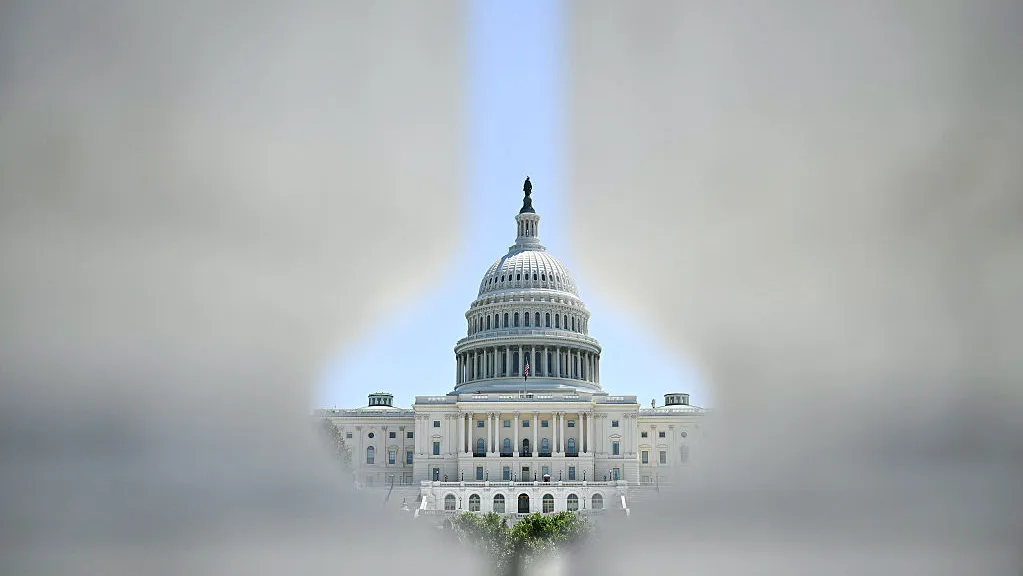
Kennedy Center board votes to add Trump’s name below building’s sign

Daftar Isi
Kennedy Center Board Advances Trump Inscription and Partial Closure Amid Legal Challenges
Cybersecarmor.com – The Kennedy Center’s governing body moved forward with two significant decisions on Wednesday that directly challenge a federal court’s recent mandate. Trustees approved both an inscription honoring President Donald Trump beneath the institution’s primary facade sign and a plan to temporarily shutter most of the performing arts complex for extensive renovation work.
These coordinated actions represent the board’s latest effort to navigate around Judge Christopher Cooper’s May ruling, which explicitly ordered the removal of Trump’s name from the center’s official title, signage, and branding materials. The board’s decisions also revisit a previous closure attempt that Cooper had blocked earlier this year.
Board Deliberations and Decisions
During a closed Zoom session on August 13, trustees cast their votes following private deliberations. A source familiar with the proceedings confirmed that the board’s discussions were first reported by The New York Times before the public announcement.
The majority of board members were personally selected by Trump during his administration. This composition proved influential as the body approved a resolution to install the inscription “Restored and Renovated by President Donald J. Trump” directly beneath the existing Kennedy Center signage. The same resolution formally recognizes Trump’s role in rescuing the institution from what officials described as the “brink of disaster.”
Additionally, the board is considering an alternative proposal to rename the center’s grounds as “the President Donald J. Trump Plaza,” though this remains under discussion rather than final approval.
“This latest development is a transparent effort to circumvent the Court’s ruling, and flies in the face of the statutes that Congress passed. I will continue to fight for this treasured national monument,” said Democratic U.S. Representative Joyce Beatty of Ohio.
Renovation Plans and Legal Context
The renovation initiative, which Trump has publicly stated would require approximately two years to complete, involves closing the Kennedy Center’s main building while maintaining operations at the REACH theater wing. This newer facility is considerably smaller than the primary performance space.
Cooper’s May order addressed multiple aspects of the controversy. Beyond requiring the removal of Trump’s name from official materials, the judge also blocked the board’s March decision to close the center for a full two-year renovation period. Cooper determined that the earlier closure vote lacked sufficient deliberation and careful consideration by trustees.
Rep. Beatty, who filed the original lawsuit that prompted Cooper’s ruling, criticized the board’s latest moves as repetitive behavior. She serves as an ex officio member of the Kennedy Center’s board and is represented in court proceedings by Democracy Defenders Action.
Historical Background and Compliance Issues
Trump’s name was initially added to the Kennedy Center building in December 2025, following his administration’s takeover of the board and the institution’s temporary renaming as the “Trump-Kennedy Center.” Cooper’s ruling emphasized that this action violated the 1964 federal statute establishing the center in honor of President John F. Kennedy.
The judge noted that the original legislation clearly states the Kennedy Center must be named for and meant to honor President Kennedy alone. Any permanent name change would require congressional approval, according to Cooper’s interpretation of the law.
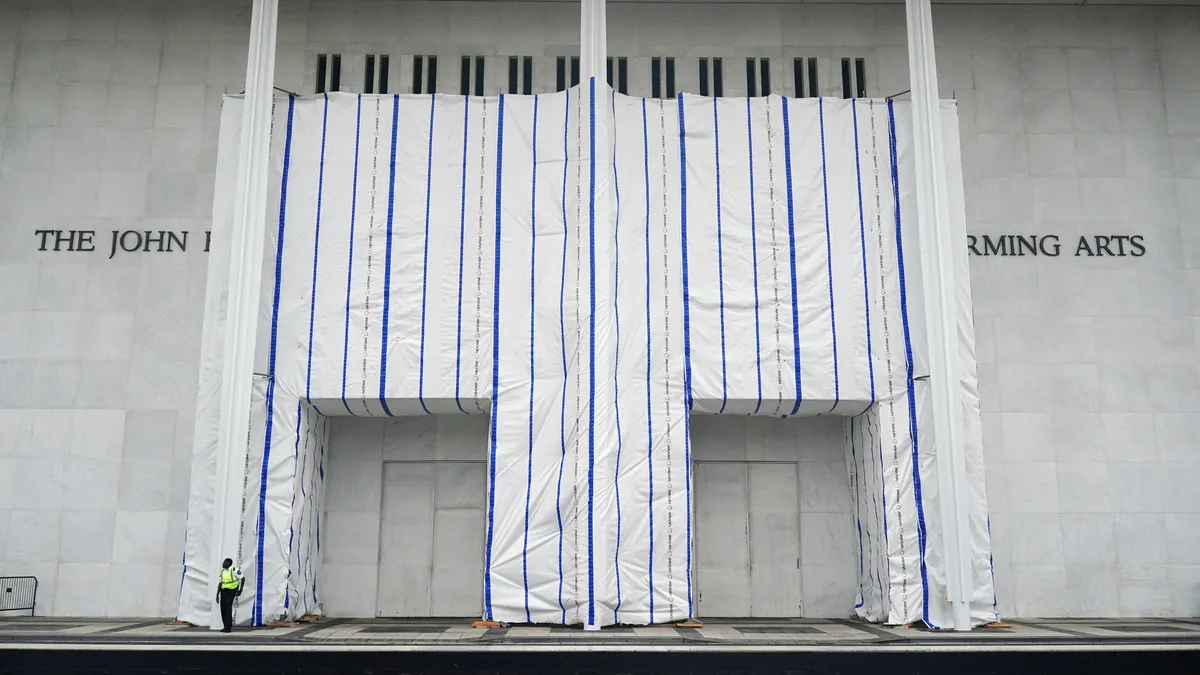
The center demonstrated partial compliance with the judge’s directive on June 13 by removing Trump’s name from the building’s exterior sign. However, this action occurred several hours after the court-imposed deadline had expired. Staff members aligned with Trump left a large tarp covering the facade, preventing public visibility of the sign without Trump’s name. This tarp continues to obscure the facade as of the latest developments.
Looking Ahead
The Kennedy Center’s legal team has maintained that Cooper’s ruling did not prohibit the concept of temporary closure entirely. Instead, they argue that the judge found the board’s March vote inappropriate due to insufficient information gathering, and that any future closure vote must incorporate more comprehensive review and consideration.
The board’s latest decisions will likely face additional legal scrutiny as they move forward with both the inscription and renovation plans. The outcome of these efforts could set important precedents for how federal cultural institutions balance political influence with statutory obligations.
Meanwhile, the center continues to navigate financial obligations, including a recent order to pay $250,000 to a musician who canceled a scheduled performance in protest of Trump’s involvement with the institution.
Related Reading
Frequently Asked Questions
What is Kennedy Center board votes to add Trump?
Kennedy Center board votes to add Trump is the main topic of this guide. The article explains the context, practical details, and next steps readers should understand.
Why does Kennedy Center board votes to add Trump matter?
Kennedy Center board votes to add Trump matters because readers are looking for a useful answer, not just a short summary. Good content should match search intent and help them decide what to do next.