Supreme Court rejects Trump’s birthright citizenship order in major blow

Supreme Court Deals Blow to Trump’s Birthright Citizenship Plan
Cybersecarmor.com – On June 30, the U.S. Supreme Court delivered a decisive verdict, rejecting President Donald Trump’s bid to redefine birthright citizenship. The ruling overturned the key provisions of the birthright citizenship framework, which had been a central element of his immigration policies. This decision marked a major setback for Trump’s agenda, occurring as the nation prepared to commemorate its 250th anniversary. The case, which had already drawn widespread attention, now stands as another significant example of the court’s influence on constitutional principles.
A Repudiation of Expansive Executive Authority
The ruling came months after the court invalidated Trump’s signature tariffs, further diminishing the scope of his claimed executive power. This latest decision underscored the justices’ willingness to curtail his authority, particularly in matters of citizenship. While Trump had previously faced challenges to his policies, the court’s unanimous stance on this issue highlighted a growing resistance to his attempts to reshape immigration law through presidential decree.
However, in other recent cases, including a ruling that permitted Trump to rescind deportation protections for hundreds of thousands of immigrants, the justices demonstrated support for his authority. The inconsistency in their approach has sparked debate about the court’s role in shaping immigration policy. This latest decision, though, seems to signal a shift in their collective interpretation of the Constitution.
The Core of the Ruling
Chief Justice John Roberts, writing for the majority, affirmed that children born to parents unlawfully or temporarily present in the United States are eligible for citizenship under the 14th Amendment. The ruling emphasized that the constitutional guarantee of birthright citizenship remains intact, even as Trump sought to impose stricter criteria. “Citizenship, then and now, was the right to have rights − to freely participate in our political community,” Roberts declared. “The Framers of the Fourteenth Amendment extended that promise to ‘every free-born person in this land.’ We keep that promise today.”
“Citizenship, then and now, was the right to have rights − to freely participate in our political community,” Roberts wrote. “The Framers of the Fourteenth Amendment extended that promise to ‘every free-born person in this land.’ We keep that promise today.”
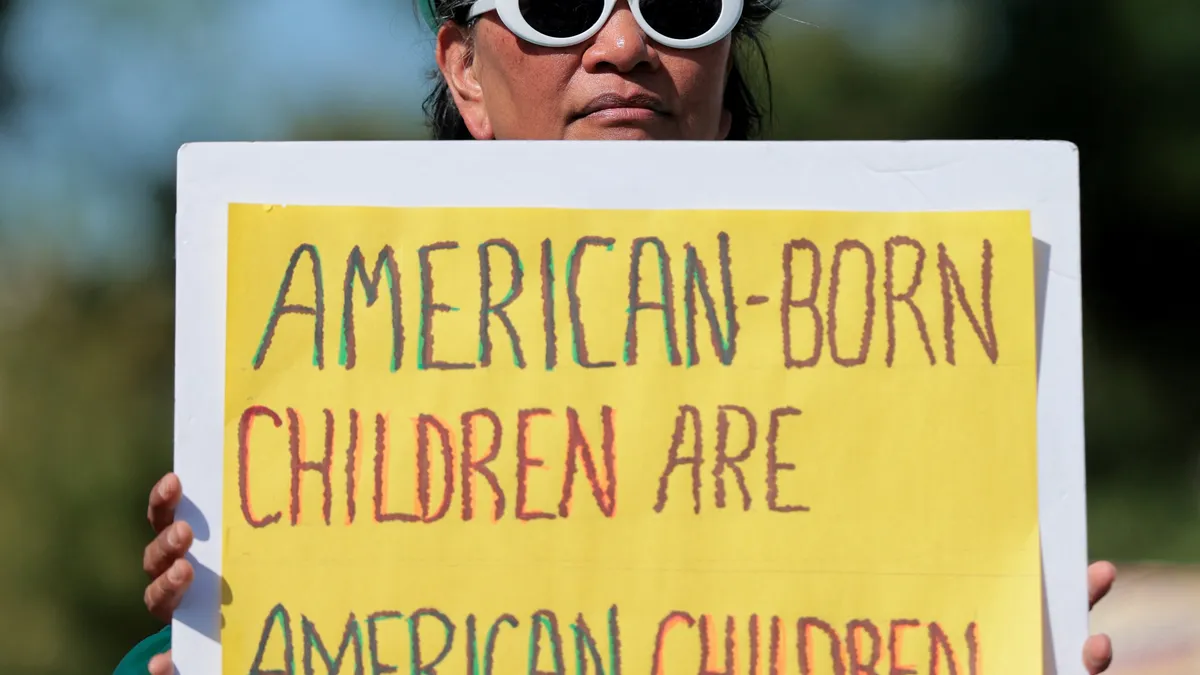
The decision reinforced the historical understanding of birthright citizenship, which has long been considered a foundational aspect of American identity. By upholding the amendment’s clause, the court reaffirmed that the rights of individuals born in the U.S. are not contingent on the status of their parents. This stance has implications for millions of people, ensuring that their eligibility for citizenship remains secure regardless of their parents’ legal status.
Conservative Dissent and Legal Nuance
Three conservative justices − Clarence Thomas, Samuel Alito, and Neil Gorsuch − joined in the dissent, arguing that the ruling “devalues” American citizenship and may not withstand future legal scrutiny. Thomas emphasized the long-term consequences of the decision, stating it could undermine the stability of the nation’s constitutional principles. “The decision devalues American citizenship and is unlikely to stand the test of time,” he wrote.
Brett Kavanaugh, another Trump appointee, offered a narrower critique of the order. While he would have ruled against Trump’s executive action, he noted that it might not directly violate the 14th Amendment. “The order does run afoul of a 1952 immigration law but does not breach the 14th Amendment,” Kavanaugh argued. He highlighted the complexity of the constitutional issue, suggesting it was more nuanced than previously assumed. “As revealed by the Court’s opinion with its detailed account of history and precedent, and by the weighty and thoughtful dissents, the constitutional issue is far more complicated than the statutory issue,” he wrote. “After reading those scholarly opinions, one thing seems evident: The constitutional issue is not straightforward, much as we might want it to be.”
Trump’s Executive Order and Legal Challenges
Trump’s initiative to limit birthright citizenship was launched on his first day back in office, targeting children born to undocumented parents. The order aimed to exclude such individuals from automatic U.S. citizenship, a move that drew immediate opposition from legal groups and state attorneys general. Multiple lawsuits were filed by expectant parents, immigrant advocacy organizations, and 22 states, arguing that the policy violated constitutional rights.
The Supreme Court first addressed the issue in a 6-3 decision last year, focusing on whether lower courts had overstepped by temporarily halting the order. While the court affirmed the legality of Trump’s executive action, it left room for further challenges. The ruling in that case had already set the stage for ongoing debates, and the current decision expands on those arguments. A federal judge in New Hampshire later issued a separate ruling, blocking the order again and citing potential violations of the 14th Amendment and federal law.
Trump’s Argument and Historical Context
Trump had contended that the 14th Amendment’s citizenship clause was misinterpreted. He argued that the clause should not apply to children born to parents who are not citizens or permanent residents, as these individuals may have ties to foreign nations. “No country can be successful with such an anchor wrapped firmly around its neck,” Trump wrote on social media in April, using the term “anchor” to describe the perceived burden of birthright citizenship.
His legal rationale hinged on a 1898 Supreme Court decision, which interpreted the amendment to include children born to parents with a “permanent domicile and residence in the United States.” Trump suggested that this interpretation, while historically accepted, no longer aligns with modern immigration realities. The president’s argument sparked a broader discussion about the balance between national sovereignty and the rights of individuals born on American soil.
The ACLU and the Broader Implications
The American Civil Liberties Union, which represented immigrants challenging the order, praised the ruling as a victory for constitutional principles. “Birthright citizenship is foundational to who we are as a nation,” the organization stated in a press release. “It ensures that every child, regardless of their parents’ status, has the right to belong and participate in the United States.” The ACLU’s role in the case underscored the importance of legal advocacy in defending immigrant rights.
The decision also reignited conversations about the global perspective on birthright citizenship. While the U.S. is not the only country to offer this right, the debate highlights the unique role of American law in shaping identity. The ruling serves as a reminder of the enduring significance of the 14th Amendment, which has been a cornerstone of citizenship rights since its ratification in 1868.
As the nation reflects on its 250th anniversary, the Supreme Court’s rejection of Trump’s order underscores the resilience of constitutional traditions. The decision not only preserves the rights of children born to undocumented parents but also sets a precedent for future debates on immigration policy. While the justices’ interpretation may face continued scrutiny, it reaffirms the central role of the 14th Amendment in defining American citizenship.