
Leo XIV, Pope’s anniversary in Pompeii and Naples: ‘We cannot resign ourselves to death’
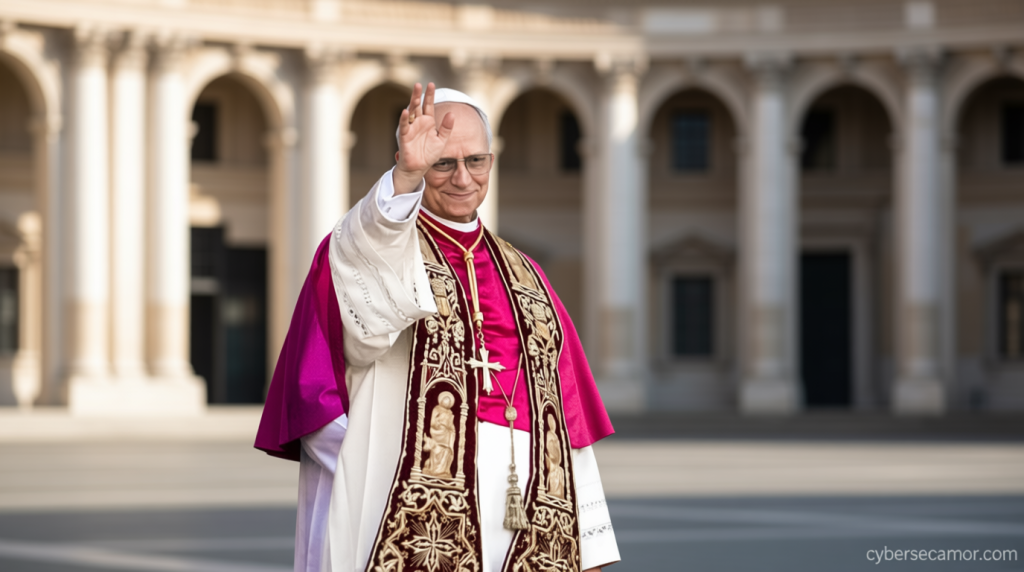
Leo XIV, Pope’s Anniversary in Pompeii and Naples: ‘We cannot resign ourselves to death’
A New Pope, A New Vision
Leo XIV Pope s anniversary in Pompeii – One year into his papacy, Pope Leo XIV has been making his mark in the heart of Italy, where his first anniversary was celebrated in the ancient ruins of Pompeii and the bustling streets of Naples. The newly elected pontiff, Robert Francis Prevost, has sought to harmonize the legacies of his predecessors, Benedict XVI and Francis, by positioning himself as a mediator between tradition and reform. His visit to these historic cities, filled with both cultural heritage and contemporary struggles, underscored his commitment to addressing the spiritual and social tensions that define the modern world.
During his time in Pompeii, the Pope engaged with local volunteers and marginalized youth, emphasizing the need for communal effort and shared responsibility. His message resonated deeply with the faithful gathered in the square, as he called for a renewed sense of compassion and unity in the face of global strife. “May the God of peace pour forth an abundance of mercy,” he proclaimed in a homily, “to soften hearts, reconcile enemies, and guide those in positions of authority toward wisdom.” This statement echoed the urgency of the times, as conflicts in the Middle East and elsewhere continue to cast long shadows over international relations.
The Pope’s Message on Peace
At the core of Leo XIV’s first year has been his advocacy for peace, a theme that has taken on renewed significance amid ongoing wars and geopolitical rivalries. “Peace is not merely a state of calm but a living reality born within the soul,” the Pope asserted, urging both individuals and nations to embrace it as an essential duty. His words contrasted sharply with the apocalyptic imagery of death that dominates daily news cycles, a critique he directed at the media’s portrayal of violence.
“The wars still raging in so many regions of the world demand a fresh commitment—not just in economic and political spheres, but also in the spiritual and religious dimensions,” he said. “We cannot accept the spectacle of death as the only truth of our era.”
His visit to Naples, where over thirty thousand devotees waited in the Piazza Plebiscito, further reinforced this message. Among the crowd, he highlighted the importance of spiritual integrity, cautioning that “many claim to follow Christ but fail to honor Him in their actions.” This sentiment reflected his broader mission to rekindle a sense of mission and purpose within the Church.
Rebuilding Tradition and Balance
Pope Leo’s approach to governance has been marked by a deliberate return to tradition, while also seeking to restore equilibrium within the Vatican. His decision to wear traditional vestments, a stark departure from the simplicity favored by his predecessor, signaled his alignment with the conservative wing of the Church. This choice was seen as a symbolic gesture to bridge the divide between the old and new papacies.
Moreover, the Pope has taken steps to revive the papal flats in the Apostolic Palace, which were previously used as guest quarters. By reintroducing these spaces, he has sought to honor the historical continuity of the Church while providing a more grounded environment for the papal family. This move also highlighted his recognition of the Curia as “the memory of the Church,” acknowledging its role in preserving tradition even as popes come and go.
Leo XIV’s leadership has been characterized by a measured tone and a focus on consensus. While he has not shied away from confronting critics, his responses have been tempered by a calm resolve. In particular, he has addressed accusations of weakness from Donald Trump, who had previously criticized his foreign policy stance. “I am not afraid of the Trump administration,” the Pope remarked, “nor do I see myself as a politician.” This assertion has been central to his image as a leader who prioritizes spiritual clarity over political maneuvering.
A Leader in Transition
The Pope’s path to the papacy was anything but straightforward. As a mathematician and former Prior General of the Augustinian order, Prevost was initially viewed as an unlikely candidate for the papal throne. However, his deep understanding of ecclesiastical structures and his reputation for fostering collaboration among cardinals made him a pivotal figure in the conclave’s decision-making process.
His election was seen as a compromise, reflecting the desire to unify the Church’s factions. With a background in appointing bishops globally, Prevost was well-positioned to address the tensions between progressive and traditionalist factions. This has allowed him to introduce reforms without alienating key supporters, a delicate balance that has defined his early tenure.
One of his most notable gestures was the invitation to Cardinal Raymond Burke, a controversial figure within the US Church, to celebrate a Latin Mass at St. Peter’s in October 2025. This act demonstrated his willingness to reconcile with dissenting voices and underscored his commitment to restoring the Church’s liturgical heritage. Such moves have been part of a broader strategy to strengthen internal cohesion while remaining adaptable to contemporary challenges.
The Weight of Leadership
Despite his measured approach, Pope Leo XIV has not been without challenges. His tenure has coincided with a period of heightened global conflict, including the persistent war in the Middle East. The Pope has acknowledged the impact of these events, stating that “the call for peace remains urgent, even as the world continues to turn its back on it.” This has been a recurring theme in his addresses, especially in light of the bombings by Israel, the United States, Iran, and Russia that have dominated the international headlines.
Yet, the Pope has remained steadfast in his mission, emphasizing that peace is an ongoing process rather than a static goal. “We must labor together to build a Church that is missionary in nature,” he said, “always reaching out to others and fostering dialogue.” This vision has been praised by figures such as Matteo Maria Zuppi, the president of the Italian Episcopal Conference, who wrote in the Avvenire that “Leo is a man of humility, whose voice speaks of love and unity.”
As the first pope from Chicago and the first to hail from the United States, Prevost’s leadership has also been shaped by his unique perspective on global affairs. While he may have anticipated friction with the Trump administration, the challenges he now faces are not solely political but deeply spiritual. His ability to navigate these complexities has positioned him as a leader who remains focused on the Church’s eternal mission, even as the world around it shifts and changes.
Reflecting on the first year of his papacy, the Italian Episcopal Conference highlighted the Pope’s steadfastness in the face of adversity. “His voice has guided us toward the responsibility of peace,” they noted, “not as an abstract ideal, but as a practical call to truth, justice, and dialogue.” This sentiment captures the essence of Leo XIV’s leadership, which seeks to reconcile the past with the present and inspire a renewed sense of purpose for the future.

