
Lamine Yamal’s Palestine flag wave revives debate over politics in football
Lamine Yamal’s Palestine Flag Wave Revives Debate Over Politics in Football
The Moment That Sparked a Firestorm
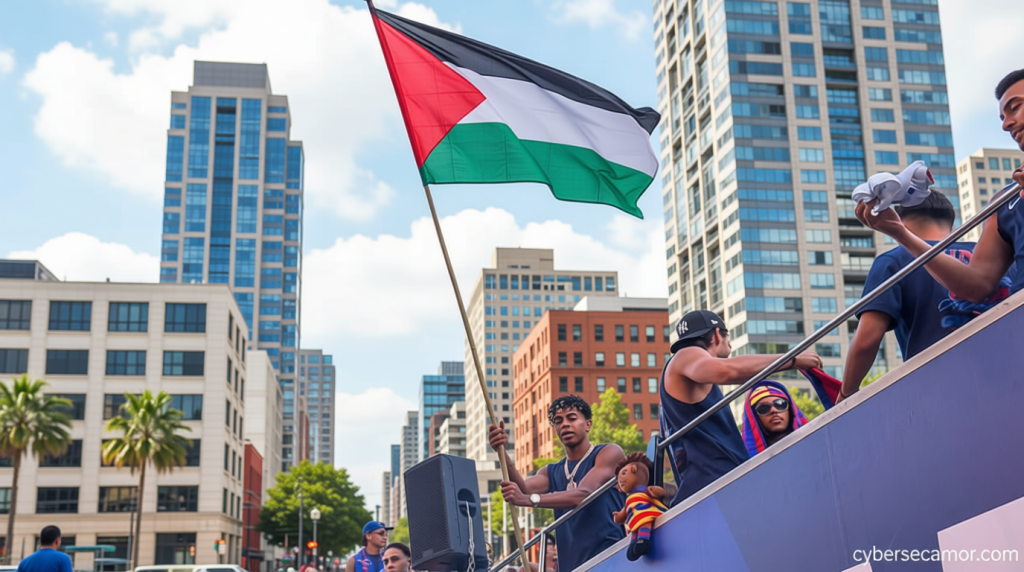
Lamine Yamal s Palestine flag wave – On May 13, 2026, Barcelona’s 18-year-old forward Lamine Yamal became the center of a heated discussion when he raised a Palestinian flag during the club’s celebration of its La Liga title win over Real Madrid. The image, captured as the team paraded through the city in a triumphant procession, quickly went viral. Yamal’s Instagram post, which included several photos of the player holding the flag, amassed over six million likes within hours. The gesture, which symbolized solidarity with the Palestinian cause, sparked a wave of reactions from fans, pundits, and political figures across Europe.
A Symbol of Solidarity or a Political Statement?
While the act itself was brief, its implications were profound. Rima Hassan, a far-left French member of the European Parliament, responded with a Palestinian flag emoji, expressing her approval of Yamal’s choice. Hassan had previously been detained by French authorities for a social media post perceived as inciting antisemitism, underscoring the polarizing nature of political messaging in sports. Meanwhile, Barcelona’s manager Hansi Flick maintained a more cautious stance, asserting that Yamal, at 18, was mature enough to make his own decisions. “I don’t like these things,” Flick stated, “but if he wants to do it, it’s his decision.”
Flick’s comments reflected a broader tension in football about the role of political expression. Pep Guardiola, a celebrated figure in the sport and a former Barcelona player, weighed in, emphasizing the influence of athletes as role models. “A football player is a role model followed by millions, and his opinion is influential, so he should express it when necessary,” Guardiola said in a Tuesday press conference. This sentiment aligned with some fans who viewed Yamal’s gesture as a meaningful act of advocacy, while others questioned whether the player had overstepped by bringing a complex political issue into the spotlight without sufficient context.
The Politics of the Pitch
The incident reignited a long-standing debate about how political messages are perceived in sports. FIFA’s rules, which prohibit team equipment from displaying “political, religious, or personal slogans,” have often been interpreted flexibly. During the 2022 Qatar World Cup, for instance, captains were barred from wearing armbands promoting LGBTQ+ inclusion as part of the OneLove campaign. The move, spearheaded by the Royal Dutch Football Association, drew criticism for its perceived inconsistency, as some players were allowed to show support for other causes, such as gender equality or environmental issues.
FIFA’s stadium code further complicates the matter, banning banners, flags, or flyers of “a political, offensive, and/or discriminatory nature.” These regulations have been a point of contention, with critics arguing that they can be applied selectively. For example, during the 2022 tournament, the use of the OneLove armband was restricted, while other political symbols, like those supporting climate action, were left untouched. This discrepancy has raised questions about whether football’s governing body prioritizes certain narratives over others, and how such decisions impact the sport’s global identity.
Yamal’s Advocacy Beyond the Field
Yamal’s actions are not an isolated event in his career. The young talent, who has already secured major endorsements, has been vocal about issues such as racism and social justice. His mother, Sheila Ebana, hails from Equatorial Guinea, and his father, Mounir Nasraoui, is of Moroccan descent. Yamal has spoken candidly about his early struggles, including the pressure of representing Spain at a young age. Despite his success, he has remained steadfast in his commitment to his national team, stating that his “heart” was always with Spain when approached by Morocco’s squad.
His advocacy extends beyond the pitch. Yamal has criticized fans who targeted his Muslim faith during matches, calling them “ignorant” and “racist.” These comments highlight his willingness to use his platform for broader causes, a trait that has earned him both admiration and scrutiny. The question now is whether his actions align with the expectations of football as a “neutral” space, or if they represent a shift toward greater political engagement in the sport.
Divided Reactions in the Media
The media landscape was split in its response to Yamal’s gesture. Some outlets praised his courage in addressing a sensitive political issue, arguing that athletes have a responsibility to speak out on matters of justice. Others, however, questioned the timing and context of the flag display, suggesting it could be seen as opportunistic or provocative. The debate also touched on the broader role of sports in shaping public discourse, with critics wondering if the football world is becoming too politicized or if it’s simply reflecting the values of its players.
As the World Cup hosted by the United States, Canada, and Mexico approaches, the discussion about political expression in sports is gaining renewed momentum. The event, which will take place in less than a month, presents an opportunity for athletes to influence global conversations. Yamal’s gesture, therefore, is not just a moment in Barcelona’s history but a sign of changing attitudes within the football community. Fans and commentators alike are now debating whether the sport should remain apolitical or embrace the voices of its players as they navigate complex social issues.
The Legacy of Political Activism in Football
Football has long been a platform for political expression, from the anti-apartheid campaigns of the 1970s to modern-day protests for racial equality and climate action. Yamal’s act adds to this legacy, demonstrating how young athletes can leverage their visibility to champion causes that resonate with millions. Yet, it also underscores the challenges of balancing personal beliefs with the expectations of a global audience.
As the debate continues, one thing is clear: football is no longer a passive arena for political discourse. It has become a stage where players, coaches, and fans engage in conversations that extend far beyond the game. Yamal’s flag wave may be a small moment, but it has the potential to shape how future generations view the intersection of sports and politics. Whether this is seen as a bold statement or a controversial move will likely depend on how the broader football community chooses to interpret it. For now, the incident serves as a reminder that the world of football is as dynamic and politically charged as the stadiums it fills.
In the wake of the controversy, Barcelona has remained largely silent on the matter, allowing Yamal’s actions to speak for themselves. This approach reflects a growing trend among clubs to let players take the lead in shaping their own narratives. While some may argue that the moment was impulsive, others see it as a natural evolution of the sport’s role in society. As the World Cup draws near, the question of whether football should embrace political symbolism or maintain its neutrality will likely remain at the forefront of public discourse.

