
Iran preparing for renewed war as military assets remain largely intact, reports warn
Iran’s Strategic Readiness Sparks Concern Over Escalating Conflict
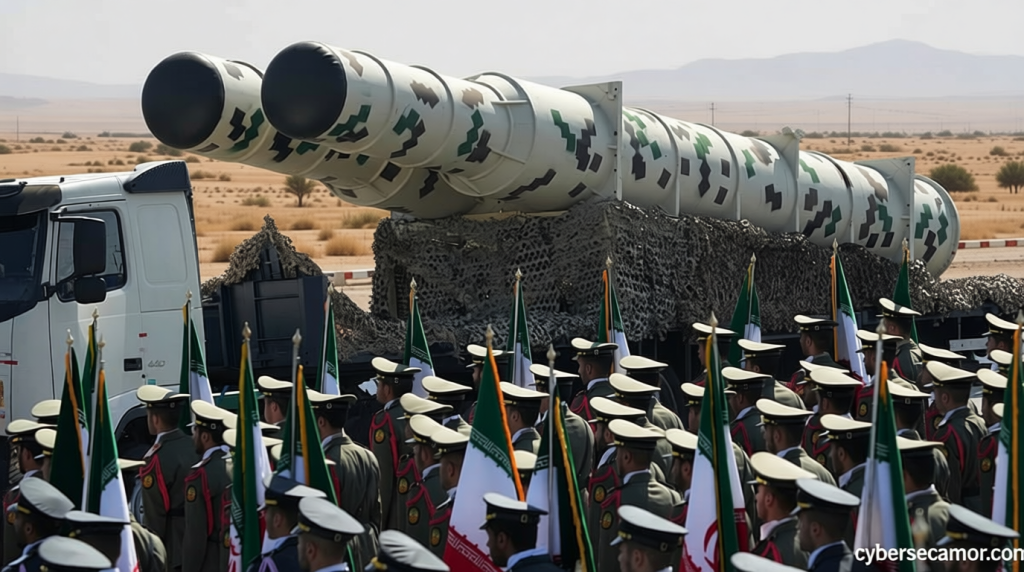
Iran preparing for renewed war as military – Analysts suggest Iran is poised to reignite conflict with the U.S. and Israel, with military movements and internal security drills signaling an ongoing buildup for renewed hostilities. The Institute for the Study of War (ISW), a Washington-based think tank, highlighted these developments in its latest assessment, emphasizing how the Iranian regime intertwines preparations for external warfare with efforts to manage domestic challenges. According to the ISW, the country’s strategic focus on maintaining its military capabilities has not wavered despite the recent ceasefire, raising alarms about the possibility of resumed attacks.
Security Exercises and Naval Drills Highlight Preparedness
Iran’s Revolutionary Guard Corps (IRGC) conducted an internal security exercise in Tehran Province, specifically targeting the Mohammad Rasoul Ollah Unit—a key formation responsible for safeguarding the capital. State media reported that the drills aimed to “confront any movement of the … enemy,” underscoring the regime’s readiness to respond to potential threats. Meanwhile, the Iranian military planned naval exercises at Mahshahr Port, located approximately 100 kilometers from Bubiyan Island. These maneuvers, according to ISW, could serve dual purposes: preparing for operations if the ceasefire deteriorates or dispersing vessels ahead of potential strikes.
The IRGC Navy’s strategic positioning in Mahshahr Port reflects a broader effort to secure maritime assets. Analysts note that Tehran has been relocating critical military installations to regions deemed less vulnerable to U.S. strikes, a move intended to shield them from aerial attacks. This tactical repositioning aligns with Iran’s goal of ensuring operational continuity even if hostilities escalate again.
Missile Stockpiles Survive Aerial Campaign
Recent reports indicate that Iran’s missile arsenal has largely withstood the US-Israeli aerial campaign, which began on 28 February. US military assessments, as published by the New York Times, estimate that Iran retains roughly 70% of its pre-war missile stockpiles. Additionally, the country has restored access to 30 of its 33 missile sites along the Strait of Hormuz, a critical chokepoint for global trade. This resilience in missile capabilities has bolstered Tehran’s confidence in its ability to sustain prolonged conflict.
The survival of these missile stockpiles is seen as a significant advantage for Iran, allowing it to maintain its deterrence posture. The ISW underscores that this preparedness is not isolated; it is part of a coordinated strategy to ensure the regime can respond swiftly to any aggression. The strategic value of the Strait of Hormuz remains central, with Tehran insisting on its sovereignty over the waterway as a key demand in negotiations.
Diplomatic Stalemate and Threats of Resumption
Peace talks between Iran and its adversaries have stalled, with both sides refusing to yield. The IRGC’s consolidation of power under Commander Major General Ahmad Vahidi and his inner circle has intensified internal dynamics, further complicating diplomatic efforts. Tehran has made it clear that it will not negotiate without assurances against future military strikes, particularly targeting the Strait of Hormuz.
US President Donald Trump described the ceasefire as “massive life support” with a “one percent chance” of survival. His remarks came amid growing tensions, as the truce has failed to stabilize the region. The ISW argues that Iran’s pursuit of international recognition for its control of the Strait of Hormuz has been a primary tool of deterrence, though the current stalemate threatens to undermine this strategy.
Iran’s Latest Proposal and U.S. Reactions
In response to an earlier U.S. peace plan, Iran submitted its latest proposal, which includes demands to end the war on all fronts, including in Lebanon, halt the US naval blockade of its ports, and secure the release of assets frozen abroad under sanctions. However, Trump dismissed Tehran’s plan as “totally unacceptable,” claiming the U.S. would achieve a “complete victory” over Iran and that the truce is nearing collapse.
“There is no alternative but to accept the rights of the Iranian people as laid out in the 14-point proposal. Any other approach will be completely inconclusive, nothing but one failure after another,” said Mohammad Bagher Ghalibaf, Iran’s chief negotiator, in a post on X.
Ghalibaf’s statement reflects Iran’s determination to secure its territorial claims, even as the cost of the war continues to rise. The Pentagon reported that the conflict’s financial burden has surged to nearly $29 billion, a $4 billion increase from a previous estimate. This escalation underscores the economic strain on both nations, with the global economy feeling the repercussions despite the ceasefire.
Regional and Global Implications
The war, which erupted more than two months ago, has spread across the Middle East, disrupting economic stability and international relations. While the ceasefire has paused direct hostilities, the ongoing tensions have sown uncertainty in global markets. Analysts warn that the collapse of the truce could trigger renewed strikes, further destabilizing the region.
Tehran’s emphasis on sovereignty over the Strait of Hormuz has positioned it as a critical player in maritime security. The ISW notes that securing this claim would have far-reaching consequences for global trade, especially for Gulf states reliant on the strait for commerce. As the standoff continues, both Iran and the U.S. remain steadfast in their positions, with no immediate signs of compromise.
With the conflict entering its second month, the stakes have grown. Iran’s military readiness, combined with its diplomatic resolve, signals a potential return to war. The ISW’s analysis highlights the interconnectedness of Iran’s strategic goals, from protecting its assets to asserting control over key territories. As the US prepares for its trip to China, Trump’s focus on Iran’s future remains unwavering, even as the international community watches closely for any breakthroughs.
Conclusion: A Precarious Balance
Iran’s preparations for renewed conflict, from military drills to missile stockpile retention, reflect a calculated approach to maintaining its position. The regime’s ability to withstand the US-Israeli campaign has strengthened its bargaining power, but the lack of progress in peace talks suggests the path to resolution is fraught. As the cost of the war climbs and regional tensions persist, the question remains: how long can the ceasefire hold before hostilities resume?
The Iranian Defence Ministry’s spokesman, Reza Talaei-Nik, emphasized that if diplomacy fails, “it will be a certain outcome.” This sentiment echoes the broader perception that the conflict is nearing a tipping point. Whether through renewed strikes or diplomatic negotiations, the future of the Middle East hangs in the balance, with Iran and its adversaries locked in a high-stakes contest for dominance.

