
EU approves sanctions on Israeli settlers after Hungarian backing
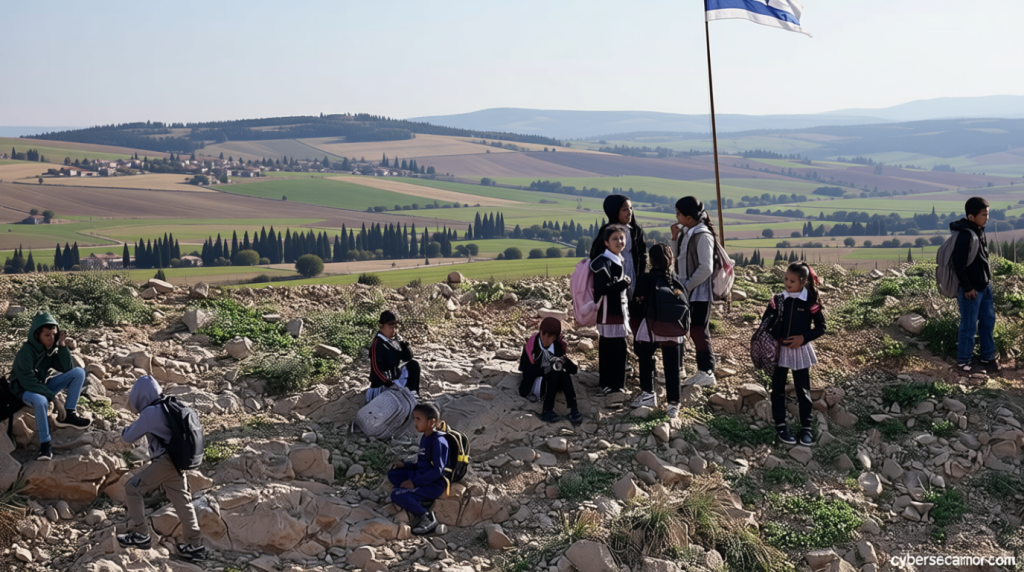
EU Approves Sanctions on Israeli Settlers After Hungarian Backing
EU approves sanctions on Israeli settlers – On Monday, the European Union reached a significant decision to impose sanctions on Israeli settlers accused of violent acts against Palestinians in the West Bank. This move gained momentum following the endorsement of Hungary’s newly elected government, which shifted its stance from previous opposition to support for the measures. The sanctions, which include asset freezes and travel restrictions, aim to hold individuals and groups accountable for their actions, reflecting a growing consensus among EU members to address escalating tensions in the region.
Political Agreement and Extremist Targeting
Kaja Kallas, the EU’s chief foreign affairs representative, announced the agreement in Brussels, emphasizing its importance in breaking a prolonged stalemate. “We have finalized a political agreement to sanction Israeli extremists and entities,” she stated, highlighting that the measures would apply to those responsible for violence and human rights violations. Kallas also noted that the sanctions underscore the EU’s commitment to ensuring accountability for actions that undermine peace efforts.
“Today, we reached a political agreement to sanction Israeli extremists settlers and entities. We move from political deadlock that was there for a long time. Violence and extremism carry consequences.” – Kaja Kallas
The EU’s strategy includes targeting not only settlers but also members of Hamas, which has been designated as a terrorist organization. This dual focus was necessary to secure backing from several member states, who demanded that Hamas be included to justify the broader sanctions. The inclusion of Hamas strengthens the EU’s position by aligning its actions with international designations of the group as a threat to regional stability.
Context of Settler Activity and UN Concerns
The sanctions come amid heightened concern over Israel’s settlement expansion, which the United Nations has described as “unlawful.” UN Human Rights spokesperson Thameen Al-Kheetan recently underscored the issue, stating that the expansion threatens the rights of Palestinians and could lead to the “annexation of large parts of the occupied West Bank.” These remarks align with reports of ongoing violence against Palestinians, which has intensified over the past two months and fueled calls for stricter measures.
Historically, the EU has taken steps against settlers, with a notable example being the 2024 sanctions targeting five individuals and three entities for their role in human rights abuses. Among those sanctioned was Moshe Sharvit, a settler in the Jordan Valley, whose harassment of Palestinian communities escalated significantly since October 2023. These earlier actions laid the groundwork for the current expansion, demonstrating the EU’s willingness to address persistent issues.
Hungary’s Role in Shaping the Outcome
Previously, Hungary’s former Prime Minister Viktor Orbán had blocked similar sanctions, prioritizing strong economic ties with Israel. However, the recent appointment of Péter Magyar as Hungary’s prime minister has altered the dynamic. Magyar, who took office last Saturday, has signaled support for the broader sanctions package, easing resistance within the EU and enabling the measures to pass.
Under international law, settlements in the occupied Palestinian territories are considered illegal, as affirmed by the International Court of Justice. This legal framework provides a basis for the EU’s actions, which are seen as a response to Israel’s continued presence in the area. Recent Israeli policies, such as changes in property law and licensing procedures, have been criticized for contradicting the terms of the Oslo Accords, signed in 1993 to establish a framework for peace between Israelis and Palestinians.
Broader Implications and EU’s Incremental Approach
While the sanctions on settlers are a notable step, they represent a measured response compared to more radical proposals. Several European nations, including Spain, Ireland, and Slovenia, have advocated for suspending the EU-Israel association agreement or sanctioning far-right officials like Itamar Ben-Gvir and Bezalel Smotrich. However, these stronger measures face challenges due to the requirement for unanimous agreement or a qualified majority among EU members.
Despite the current progress, the EU’s decision is seen as an incremental move rather than a comprehensive overhaul of its relationship with Israel. The bloc is also evaluating additional options, such as a trade ban on goods originating from settlements or imposing high tariffs on imports. These proposals aim to make trade with the settlements economically unviable, but their adoption depends on securing support from key member states.
Israel’s Reaction and Political Rhetoric
Israel’s foreign affairs minister, Gideon Sa’ar, swiftly criticized the EU’s decision, calling it “arbitrary.” In a statement on X, he argued that sanctioning Israeli citizens and entities based on their political views lacks a solid foundation. “Israel has stood, stands, and will continue to stand for the right of Jews to live in the heart of our homeland,” Sa’ar wrote, asserting that the Jewish people’s historical connection to the land is unique and irrefutable.
“Israel has stood, stands, and will continue to stand for the right of Jews to live in the heart of our homeland. No other people in the world has a documented and long-standing right to their land in the way the Jewish people have to the Land of Israel.” – Gideon Sa’ar
Sa’ar’s comments highlight the ideological divide within the EU, where some members prioritize human rights concerns over geopolitical alliances. The sanctions also draw attention to the broader debate over Israel’s actions in Palestine and Lebanon, with critics accusing the country of committing war crimes. While the EU’s move is a step forward, it remains to be seen whether it will lead to more decisive actions or further polarization within the bloc.
Future Steps and Consensus Challenges
The EU’s current strategy reflects a balance between firmness and diplomacy, as it seeks to address settler violence without alienating key partners. However, the process of implementing additional measures, such as trade restrictions, will be complex. These proposals require either unanimous agreement or a qualified majority, which means that countries like Germany and Italy may still hold the bloc back. Their reluctance to support more stringent actions underscores the ongoing political challenges in unifying European positions on the Israel-Palestine conflict.
As the EU moves forward, it will need to navigate internal disagreements while maintaining its credibility on the global stage. The sanctions on settlers are a symbolic but impactful step, signaling a commitment to holding individuals accountable. Yet, the broader implications of these measures—whether they will deter further violence or strengthen international pressure on Israel—will depend on the effectiveness of the sanctions and the response from both domestic and international actors.
With Hungary now supporting the initiative, the EU’s ability to act more decisively may improve. However, the path to comprehensive sanctions remains fraught with challenges. The bloc’s approach will be tested by the need to reconcile its values with the realities of geopolitical alliances, ensuring that its actions are both principled and practical in the long term.

