
EU ambassadors hold private discussions on mutual defence clause amid rising geopolitical tensions
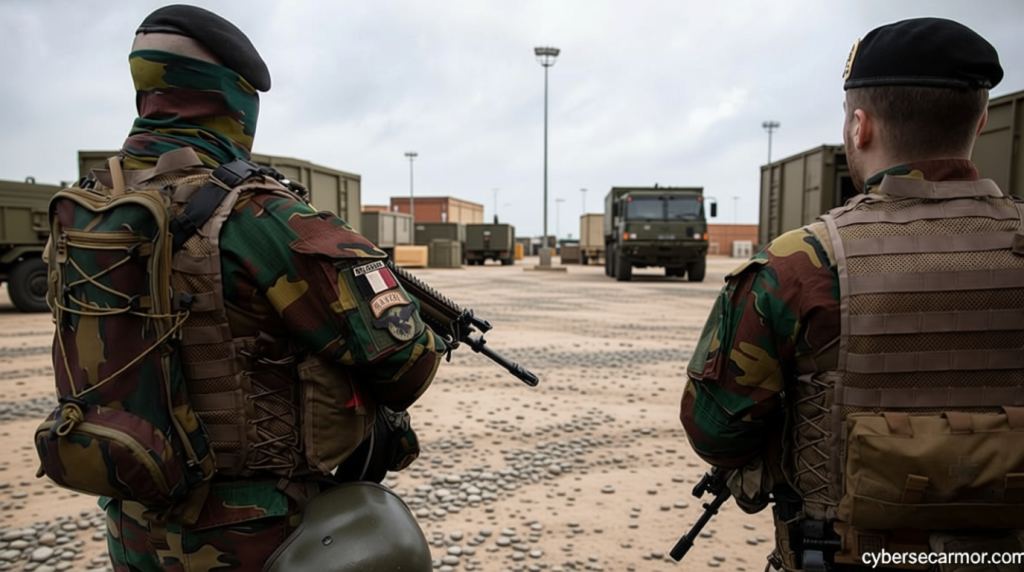
EU Ambassadors Hold Private Discussions on Mutual Defence Clause Amid Rising Geopolitical Tensions
EU ambassadors hold private discussions on mutual – As global tensions intensify, EU ambassadors have convened behind closed doors to deliberate on the specifics of the bloc’s mutual defence clause. The discussions, which have gained momentum in recent weeks, aim to clarify how this provision can be activated to bolster the security of member states. This move marks a shift from theoretical debate to concrete planning within the EU’s institutional framework, signaling a growing awareness of the need for a unified response to emerging threats.
Rising Geopolitical Concerns Spark EU Discussions
The initiative to formalize the mutual defence clause has been driven by the escalating geopolitical landscape. With threats ranging from territorial disputes to hybrid warfare, European leaders are increasingly focused on ensuring the bloc is prepared to act swiftly. The meetings, held within the Political and Security Committee—a body composed of ambassadors tasked with foreign affairs and security—were confirmed by an EU official to Euronews. However, details remained tightly controlled, with the official describing the exercise as a “confidential process” to prevent premature speculation.
The debate gained traction following statements by U.S. President Donald Trump, who emphasized his interest in acquiring Greenland. While he did not explicitly rule out the possibility of a forced military takeover, the remark raised concerns about potential vulnerabilities in the Arctic region. This development prompted both NATO and the EU to reconsider their collective security frameworks, as Greenland, though part of Denmark, holds strategic significance for maritime and air routes.
Cypriot Leadership Drives the Debate
Cypriot President Nikos Christodoulides has emerged as a key advocate for refining the mutual defence clause. His efforts have brought the issue to the forefront of EU political discourse, particularly after an Iranian-made drone struck a British military base on the Mediterranean island of Cyprus. The incident, which occurred a month prior to the recent closed-door meeting, underscored the need for a clear, actionable plan to support member states in times of crisis.
Christodoulides highlighted the importance of defining the clause’s parameters during a gathering of European leaders in Nicosia. “Suppose France invokes the article. Which countries should be the first to respond?” he asked, emphasizing the necessity of a comprehensive blueprint. This would outline the roles and responsibilities of member states, ensuring that the response is both coordinated and efficient. His call for clarity has since been echoed by European Council President António Costa, who noted the “challenging geopolitical and security environment” in his invitation letter to the summit.
Christodoulides’s focus on the mutual defence clause aligns with broader concerns about the EU’s ability to act independently in security matters. While the bloc remains a key pillar of NATO, there is a growing desire to strengthen European autonomy. The European External Action Service (EEAS) is spearheading the tabletop exercise, which seeks to map out the practical steps for implementing the clause. This includes drafting a report that explains the procedural and operational aspects of mutual aid and assistance.
Scenarios Under Scrutiny
During the meeting on Monday, officials explored various scenarios to test the clause’s effectiveness. The European Commission spokesperson, Anitta Hipper, declined to specify the details, stating that the focus was on “how to support member states and the implementation of the mutual assistance clause.” However, previous statements from EU foreign policy chief Kaja Kallas indicated that the exercise would cover three distinct cases.
The first scenario involves an attack on an EU country that is not a NATO ally, such as Austria, Cyprus, Ireland, or Malta. This would test the bloc’s ability to respond without relying on NATO’s collective defence mechanism. The second scenario examines an attack on a member state that is part of both the EU and NATO, evaluating how the two frameworks interact. The third scenario explores hybrid attacks that may not meet NATO’s traditional threshold for collective action, such as cyber operations or economic sanctions.
Kallas has emphasized the compatibility of the EU’s mutual defence clause with NATO’s Article 5, which guarantees collective action in the event of an attack on any member. She stated, “There’s a very strong European pillar in NATO that is there and is actually stronger now because we are all making more investments in our defence.” This highlights the EU’s increasing role in security matters, even as it collaborates with NATO. The exercise aims to identify potential gaps and ensure that the clause can be applied flexibly across different types of threats.
Historical Context and Future Implications
Although the mutual defence clause has not been invoked frequently, it has been used once since its inclusion in the Treaty of the European Union. In 2015, France activated the clause following the terrorist attacks in Paris, prompting other member states to provide intelligence sharing and logistical support. This incident demonstrated the clause’s potential but also revealed the need for clearer guidelines and more defined protocols.
As the EU seeks to enhance its strategic autonomy, the mutual defence clause is viewed as a critical tool. With the global security landscape evolving rapidly, the bloc must be prepared to address a wide range of threats, from traditional military aggression to non-state actors and hybrid warfare. The current discussions are part of a broader effort to modernize EU security policies and ensure they remain relevant in the face of new challenges.
The debate over the mutual defence clause also reflects the EU’s aspirations to act as a unified force in international affairs. While NATO remains the primary collective defence mechanism, the EU aims to complement it with a more tailored approach. This includes scenarios where the EU can respond without triggering full NATO involvement, thereby maintaining flexibility in its security strategy.
As the meeting progresses, the focus will remain on developing a robust framework that balances speed, coordination, and legal clarity. The outcome of these discussions could have far-reaching implications for the EU’s role in global security, potentially reshaping how member states collaborate in times of crisis. The goal is to create a blueprint that not only addresses immediate concerns but also anticipates future threats, ensuring the EU is well-prepared to protect its interests and values.

