
Armenia tests Moscow’s patience with Zelenskyy visit and EU leaders’ summit
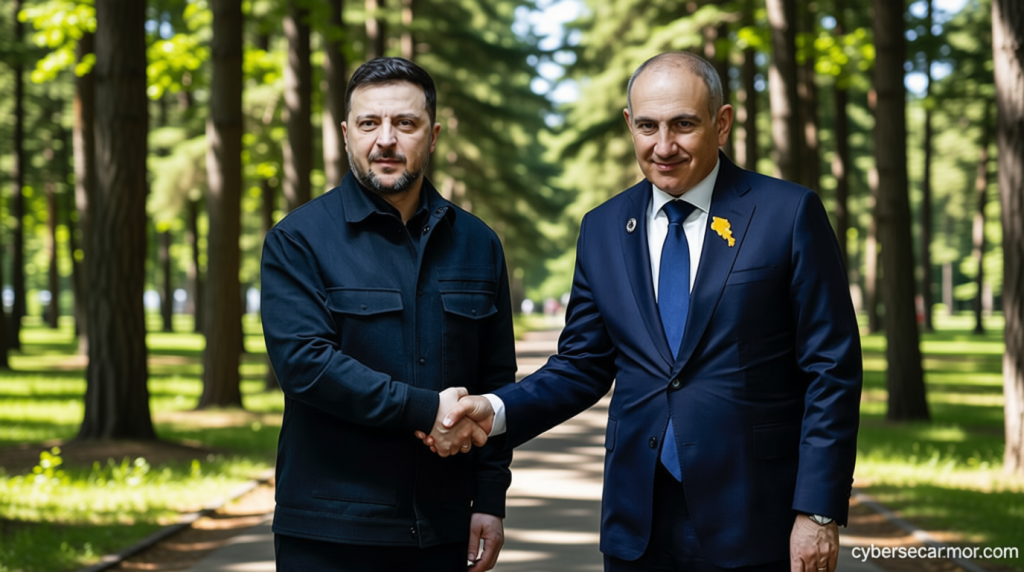
Armenia Challenges Moscow’s Influence with Zelenskyy’s Visit and EU Summit
Armenia tests Moscow s patience – Armenia, once seen as Russia’s steadfast ally in the South Caucasus, now hosts a rare gathering of European leaders, Canada’s prime minister, and Ukraine’s president. The country’s recent decision to welcome the European Political Community summit and a critical EU-Armenia meeting marks a significant shift in its geopolitical alignment. This move has sparked renewed tensions with Moscow, which has long viewed Yerevan as a key player in its regional influence. French President Emmanuel Macron, reflecting on the change, noted the transformation during a recent visit to the capital. “Let’s be honest, eight years ago, nobody would come here,” he said. “At that time, this country was considered a de facto satellite of Russia.”
A Fractured Alliance and Strategic Realignment
Armenia’s relationship with Russia has grown increasingly fragile since the resolution of the Karabakh conflict in 2023. After decades of bloodshed, Azerbaijan and Armenia reached a historic peace agreement, restoring stability to the region and opening new economic opportunities. However, this progress has not shielded Yerevan from Moscow’s growing impatience. The Russian leadership’s reluctance to back Armenia during the 2022 Karabakh escalation led to a dramatic turn in their alliance. In 2024, Yerevan suspended its membership in the Russia-dominated Collective Security Treaty Organisation (CSTO), a move that underscored its diminishing reliance on Moscow.
That decision was followed by even bolder steps. In 2025, Armenian Prime Minister Nikol Pashinyan publicly declared the country’s ambition to join the European Union, a pledge that has further strained ties with Russia. During a tense meeting at the Kremlin in April, Russian President Vladimir Putin warned Pashinyan against pursuing closer ties with the EU, emphasizing the impossibility of dual membership in both the European bloc and the Eurasian Economic Union. “We see that there is a discussion in Armenia about developing relations with the European Union,” Putin said, while noting that Moscow would respond “absolutely calmly.”
The visit by Ukrainian President Volodymyr Zelenskyy to Yerevan has intensified these tensions. For the Kremlin, the presence of a Western leader in the former Soviet ally is a symbolic blow, especially as it represents the first such visit in 24 years. Zelenskyy’s arrival marks a pivotal moment in bilateral relations, with the two leaders engaging in discussions that extend beyond political symbolism. “It was important that we are restoring active dialogue,” Zelenskyy stated during his meeting with Pashinyan, highlighting the strategic significance of the engagement. The leaders also explored the potential for a renewed economic partnership, with Zelenskyy suggesting that the Joint Intergovernmental Commission on Economic Cooperation should resume its work, potentially in Kyiv.
“I proposed resuming the work of the Joint Intergovernmental Commission on Economic Cooperation and holding its next meeting this year in Kyiv,” Zelenskyy added, underscoring his commitment to strengthening ties with Armenia.
Zelenskyy’s focus on security issues further highlights the broader implications of his visit. The two leaders delved into the region’s geopolitical landscape, assessing shared threats and opportunities for collaboration. “We discussed the situation in the region, as well as security challenges and threats,” Zelenskyy explained. “I briefed the Prime Minister on the diplomatic efforts aimed at achieving a real peace.” This exchange comes at a critical time, as the Ukrainian president seeks to expand his influence in the South Caucasus and position Armenia as a key partner in his bid to secure lasting peace in the area.
Russia’s Response: A Clash of Perceptions
While Russian officials have remained relatively quiet about Zelenskyy’s visit, state-controlled media has lashed out, framing the event as a “humiliation” for Moscow. This reaction reflects a deepening divide between the Kremlin’s narrative of regional dominance and the reality of Armenia’s evolving diplomatic priorities. A popular Telegram blogger criticized the Russian defense ministry for failing to “capture” Zelenskyy or intercept his plane, claiming, “I don’t know how much lower Russia can fall on the foreign policy arena. This is the most shameful page in history.”
The criticism is not limited to military circles. Armenian journalists and analysts have also questioned the decision to host Zelenskyy, arguing that it risks further alienating Russia. “This visit is a gut punch from Russia’s strategic partner,” one Russian outlet remarked, highlighting the symbolic weight of Ukraine’s presence in a country that has historically aligned with Moscow. Margarita Simonyan, head of Russia’s RT network, described the event as “such a ungrateful move on the part of Armenia,” underscoring the Kremlin’s frustration with Yerevan’s pivot toward the West.
Despite the backlash, Zelenskyy’s visit has reinforced Armenia’s strategic importance in European diplomacy. The summit in Yerevan has drawn attention to the country’s role as a bridge between the East and West, a position that has become more pronounced since the 2023 Karabakh agreement. This has allowed Armenia to balance its relationships, leveraging its proximity to both Russia and the EU to advance its interests. The choice to host Zelenskyy, in particular, signals a broader effort to align with Western institutions and integrate more deeply into European structures.
A New Era of Cooperation and Tensions
Armenia’s decision to host the EU summit and engage with European leaders has not gone unnoticed. Macron, who praised Pashinyan’s leadership, highlighted the Prime Minister’s role in steering the country away from Russian influence. “He organised the Velvet Revolution and de-risked this country from Russia,” the French president noted, acknowledging the political transformation that has taken root in Yerevan. This shift has also created a ripple effect, as other European nations and organizations seek to deepen their ties with Armenia in response to Moscow’s diminishing hold.
The Zelenskyy visit adds another layer to this dynamic. By meeting with Pashinyan, the Ukrainian leader has expanded the possibilities for regional cooperation, potentially offering a new venue for dialogue with Putin. Earlier in the month, Zelenskyy had already stated his readiness to meet Vladimir Putin in Azerbaijan, following stalled US-led talks. This declaration, made alongside Azerbaijani President Ilham Aliyev in Gabala near the Russian border, suggests a growing recognition of Armenia’s role in mediating between Russia and its neighbors.
For Moscow, the cumulative effect of these developments is a challenge to its traditional sphere of influence. The combination of the EU summit, Pashinyan’s EU aspirations, and Zelenskyy’s diplomatic outreach has forced the Kremlin to reassess its strategic approach to Armenia. While Russia maintains its economic leverage, particularly through gas supplies, the country’s ability to dictate Armenia’s foreign policy is increasingly in question. As Zelenskyy’s visit demonstrates, Yerevan is now positioning itself as a key actor in shaping the region’s future, rather than a passive participant in Moscow’s geopolitical agenda.
The events in Yerevan have also drawn attention to the broader implications for the South Caucasus. With Armenia’s focus shifting toward the West, the region’s political landscape is undergoing a subtle but significant transformation. This change is not without its challenges, but it represents a bold step toward greater autonomy for Yerevan. As the country continues to navigate its complex relationships with both Russia and the EU, the upcoming summit will serve as a test of its ability to balance competing interests while asserting its own identity on the global stage.

