
Brussels instructs EU countries to be tough on net-zero shipping goals at key IMO talks
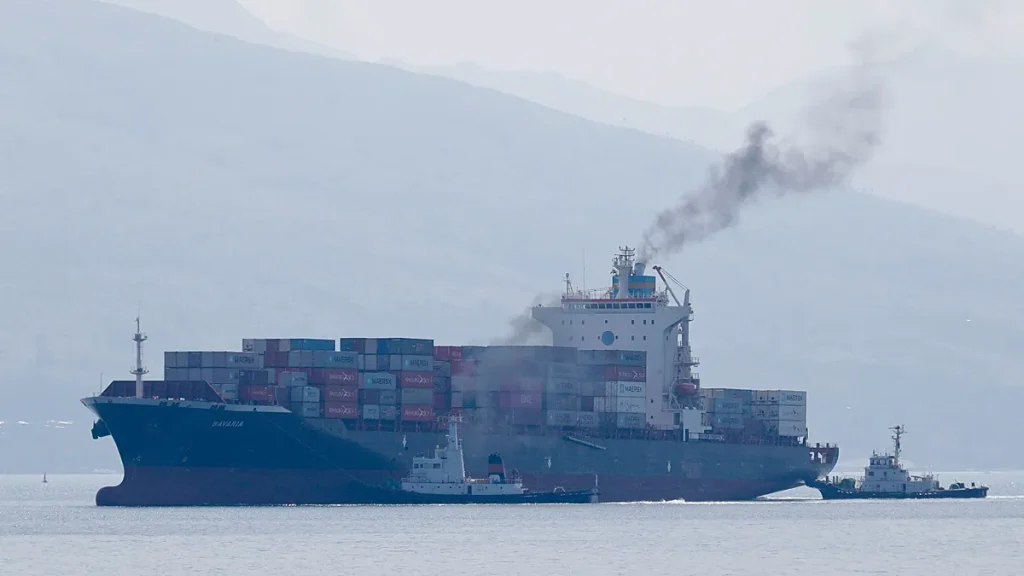
Brussels instructs EU countries to be tough on net-zero shipping goals at key IMO talks
Brussels instructs EU countries to be tough – The European Union has directed its member states to push for stringent measures aimed at achieving net-zero emissions in the shipping sector during ongoing negotiations at the International Maritime Organization (IMO) in London. This effort comes amid growing concerns that the US could once again oppose ambitious climate targets, having previously stalled a global carbon tax in October 2025. The IMO’s “net-zero framework” seeks to establish a system of charges based on carbon dioxide emissions, with rates determined per metric ton of pollution. However, the framework faced significant resistance last year, prompting a one-year delay in its adoption. Countries like the United States, Saudi Arabia, and Russia joined 57 others in voting for the postponement, highlighting the challenges of aligning international priorities on climate action.
EU’s Climate Ambitions
Despite the setback, the EU remains resolute in its push for a global shipping strategy that aligns with its long-term goal of climate neutrality by 2050. A recent letter from Brussels to EU representatives emphasizes the need for unity in opposing attempts to weaken the framework, stating that member states “shall oppose any efforts to dilute the IMO Net-Zero Framework.” The document also urges EU delegations to advocate for measures that protect European maritime industries from unfair competition, ensuring the transition to cleaner practices does not harm the bloc’s economic interests.
The net-zero rules proposed by the EU require a 2% reduction in greenhouse gas emissions for ships over 5,000 gross tonnage by 2025, escalating to 6% by 2030, and gradually reaching 80% by 2050. These targets are part of a broader international agreement, with the IMO aiming to create a unified approach to decarbonizing the sector. While the EU seeks to advance these goals, it has also acknowledged the importance of working with global partners to prevent regional solutions that might undermine the effectiveness of the framework. International shipping contributes approximately 2–3% of global emissions, making it a critical area for collective action.
Global Implications of the Dispute
IMO Secretary-General Arsenio Dominguez has called for a pragmatic and collaborative approach, warning against repeating past disagreements. “There is no need to reenact the October 2025 vote,” he stated on 27 April, where US President Donald Trump had previously blocked the framework. Dominguez noted that the US had pressured several nations to delay the agreement, particularly through threats to impose trade tariffs. He urged delegates to focus on areas of agreement and set a positive example for multilateral cooperation, emphasizing the need to avoid further fragmentation in climate policy.
Environmental advocates have expressed caution about the ongoing stalemate. Anaïs Rios, a policy officer at the NGO Seas at Risk, criticized the US for its opposition to progress in clean energy initiatives, stating that such resistance has left many countries hesitant to commit. “The framework was approved last year, but its adoption remains uncertain,” Rios remarked. “If the US continues to block advancements, the momentum for decarbonizing shipping could stall.” Her comments reflect a broader concern that without strong international support, the EU’s ambitious targets might not materialize, leaving the sector vulnerable to slower progress.
Revised Framework and Regional Caution
A revised compromise text is currently under discussion at the London talks, with the EU expressing optimism about its acceptance. While most member states have shown backing, Greece, Italy, and Malta remain cautious, according to two EU diplomats. These nations are wary of the potential economic impact on their shipping industries, suggesting that the balance between environmental goals and trade competitiveness is a central challenge for the bloc.
The proposed carbon pricing mechanism, if adopted, would generate between $30 billion and $40 billion in revenue by 2030. This funding would support the IMO’s “Net Zero Fund,” intended to finance green shipping technologies and incentivize low-emission vessels. The levy ranges from $100 to $380 per metric ton of emissions, depending on factors such as the type of fuel used and the size of the ship. Environmental organizations estimate that this system could reduce shipping emissions by at least 10%, offering a tangible step toward global climate targets.
Brussels has insisted that any final agreement must meet the net-zero emissions target by 2050, even as it navigates the risk of placing European shipowners at a competitive disadvantage. The EU’s strategy underscores the tension between leading in climate action and ensuring that its maritime sector remains economically viable. If other nations do not adopt similar measures, European companies could face higher operational costs, potentially altering the dynamics of global trade.
The dispute over the framework has deepened the divide between the EU and the US, with the latter continuing to frame the proposal as a “global green new scam.” Trump’s criticism, which argued that the carbon tax would burden American consumers, has echoed in recent discussions. Yet, the EU maintains that the framework is essential for achieving a sustainable future, particularly as it aligns with international commitments to reduce emissions. The bloc’s insistence on climate neutrality by 2050 has positioned it as a key player in shaping the future of maritime transport.
Path Forward and Strategic Balancing
With the April 2026 talks underway, the focus has shifted to negotiating a compromise that satisfies both environmental and economic concerns. The EU’s directive to its representatives highlights the importance of maintaining a cohesive stance, even as individual nations weigh their own priorities. The secretary-general of the IMO has reiterated the need for constructive dialogue, emphasizing that progress is possible if countries prioritize shared goals over conflicting interests.
The framework’s adoption hinges on securing a majority of votes, with the current compromise text seen as a viable path forward. While the initial rejection in October 2025 raised doubts, the revised proposal offers a more flexible approach that may ease concerns about competitiveness. For the EU, this represents an opportunity to reaffirm its leadership in climate policy while fostering international collaboration. However, the success of these talks will depend on whether the US and other nations can overcome their resistance to stringent emission standards, ultimately contributing to a unified global effort.
As the discussions continue, the stakes remain high. The net-zero framework not only aims to curb emissions but also seeks to establish a fair and level playing field for all nations. For the EU, this is a test of its ability to balance ambition with pragmatism, ensuring that its climate goals remain achievable without sacrificing its economic standing. The outcome of these talks will shape the future of maritime emissions and set the tone for international climate negotiations in the years to come.
“Member states, on behalf of the Union, shall oppose any attempts to remove the IMO Net-Zero Framework,” the letter states.
The EU’s determination to enforce its climate goals reflects a broader strategy of aligning with international standards while safeguarding its own interests. By insisting on a global solution, Brussels aims to prevent a scenario where only certain regions adopt strict regulations, creating disparities that could hinder the overall effectiveness of climate action. The compromise text, though not universally accepted, signals a willingness to adapt while staying committed to the core objective of decarbonizing the shipping industry.
With the IMO’s role as a global regulatory body, the success of these talks will depend on the ability of delegates to find common ground. The EU’s leadership in this area is crucial, but it also requires support from key partners to ensure that the net-zero framework becomes a binding international agreement. As the deadline for adoption approaches, the pressure on all nations to reach a consensus intensifies, marking a pivotal moment in the fight against climate change.

