What a Fed rate hike means for credit card debt, car loans and savers

Daftar Isi
Higher Fed Rate Set to Reach Household Budgets
Cybersecarmor.com – Americans with credit card balances, upcoming car purchases or cash held in savings accounts are likely to feel the effects of the Federal Reserve’s latest move in different ways. Policymakers lifted their benchmark short-term interest-rate range by one-quarter of a percentage point, bringing the federal funds rate to 3.75% to 4%.
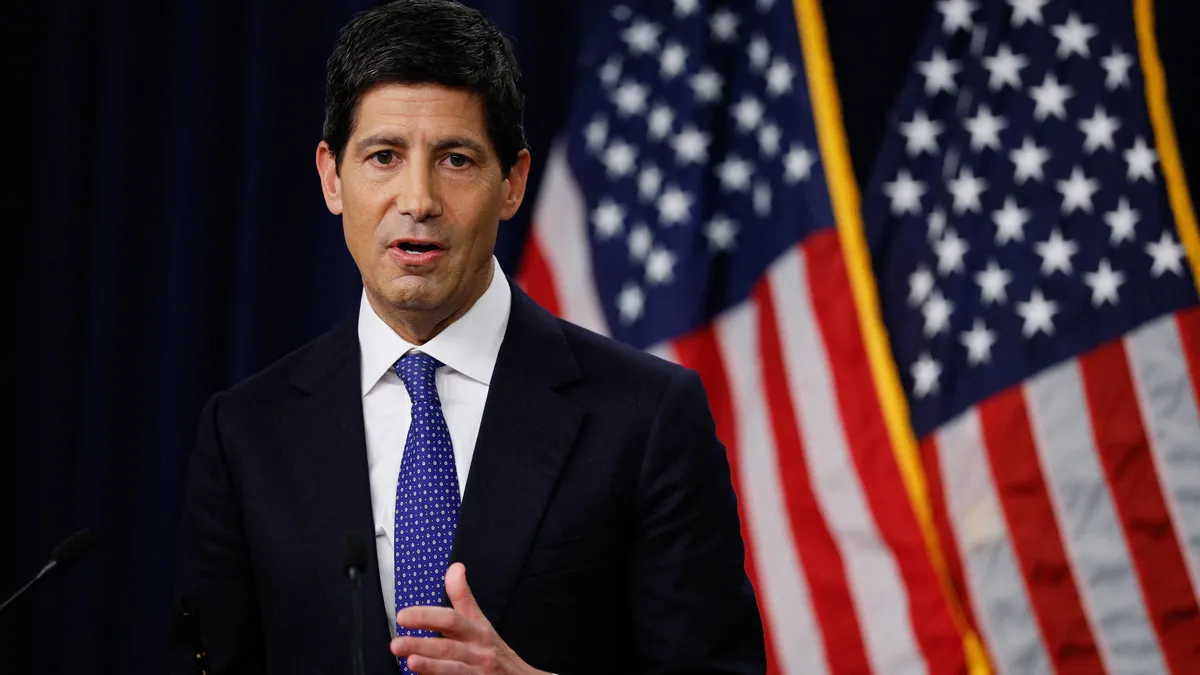
The Sept. 16 action marked the Fed’s first rate increase in three years. Chair Kevin Warsh said persistent inflation in the United States drove the decision. By making borrowing costlier, the central bank aims to cool demand and, over time, ease pressure on consumer prices.
Interest-rate policy has limits, however. The Fed has little control over inflation pressures connected to tariffs, conflict in the Middle East and the expanding AI buildout. That means families may continue to encounter higher costs even as borrowing becomes more expensive.
Borrowers and Savers Face Different Outcomes
The rate increase is not a uniform event for households. People carrying variable-rate debt may see higher payments, while those with money in high-yield savings accounts or certificates of deposit could receive improved returns.
Katie Klingensmith, chief investment strategist at Edelman Financial Engines, described the uneven effects as a “split-screen reality,” in which some parts of the economy appear healthy while others remain difficult for consumers.
“A rate increase does not affect everyone the same way, which helps explain why the economy can look strong in some areas while feeling painful in others, creating a ‘split-screen reality,’” Klingensmith said. “That is why a rate hike should not be viewed as simply good or bad. The impact depends on where someone sits in the economy: borrower or lender, spender or saver, heavily indebted or financially secure.”
Simeon Wallis, chief investment officer and partner at Aprio Wealth Management, sees a similar divide between consumers under financial strain and consumers with more security. Those who are earlier in their careers and earn around median income or less may be more likely to carry floating-rate debt. They can be especially exposed when borrowing costs rise.
“Stretched consumers typically are early and mid-stage in their careers. They likely are in jobs that are paying somewhere around the median income or less, and they often will have more floating rate debt,” Wallis said. “That secure consumer is likely mid- to late career or retired, maybe early years of retirement. They’re sitting on assets. They likely have a home that has a fixed rate mortgage at a low rate. They’re much less impacted.”
For homeowners already locked into low fixed mortgage rates, the immediate effect may be limited. The same can be true for people who have fixed-rate vehicle loans already in place. Yet households with revolving credit-card balances, limited savings and rising everyday expenses may have little insulation from higher rates.
Credit Cards Usually Feel the Change First
Credit card annual percentage rates are among the financial products most closely tied to changes in the federal funds rate. Consumers with variable-rate cards could see APRs climb by roughly one-quarter of a percentage point within one or two billing cycles.
The added dollar cost depends heavily on the unpaid balance. A person maintaining a $100 balance for an entire year might pay roughly 25 cents more in annual interest after a quarter-point increase. For someone carrying $10,000, the annual added interest could be about $25.
Matt Schulz, chief consumer finance analyst at LendingTree, said one increase of this size is unlikely to transform a household budget by itself. Still, the effect matters for borrowers already struggling with debt.
“Chances are, we’re talking about an extra dollar or two a month when it comes to the typical credit card bill, but when you’re struggling with debt, when the prices of seemingly everything are rising, every dollar counts,” Schulz said.
The larger concern is the possibility of repeated increases. A majority of members of the Fed’s rate-setting committee projected at least one additional quarter-point rise before the end of the year. Multiple moves can compound the burden on cardholders, particularly when balances remain unpaid month after month.
“The impact gets bigger with every subsequent increase, and the more that we see, the more it adds up,” Schulz said. “If you’re talking about three or four increases, and a full point over the course of a few months, then that can be pretty significant.”
For readers managing card debt, the key issue is not simply the posted APR but the size and duration of the balance. Reducing revolving debt can limit the portion of a budget exposed to future rate adjustments. Reviewing statements after the next billing cycles may help cardholders see whether their rate has changed and how much interest is being added.
Car Shoppers May Need to Watch Financing Costs
Existing auto borrowers generally will not see their payments change simply because the Fed lifted rates. Most car loans are fixed-rate agreements, meaning the interest rate is set when the loan is signed and does not normally move with later changes in Fed policy.
The situation is different for consumers preparing to finance a new vehicle. Lenders may raise rates on newly issued loans as broader borrowing costs increase. With Fed committee members indicating that further rate increases are possible, Wallis said prospective buyers may want to consider purchasing sooner rather than later.
That does not mean every shopper should rush into a purchase. The overall cost of a car includes its price, loan term, trade-in value, insurance and interest expense. A higher rate can make a long loan more costly, while a shorter term may raise the monthly payment. Comparing offers and focusing on the full financing cost can be more useful than looking only at the monthly figure.
Savers Could See a Brighter Side
Higher rates can offer an advantage to consumers who have cash reserves. High-yield savings accounts and certificates of deposit often become more attractive when interest rates rise, although individual banks and credit unions decide whether and when to adjust what they pay depositors.
That benefit is most meaningful for people who have money available to save. For those living paycheck to paycheck or relying on borrowing to cover regular expenses, higher yields elsewhere may provide little practical relief.
The Fed’s decision therefore reinforces a familiar divide: households with debt may face additional pressure, while households with savings can have an opportunity for better returns. As inflation, borrowing costs and household budgets continue to intersect, the financial impact will depend largely on whether a consumer is paying interest or earning it.
Related Reading
Frequently Asked Questions
What is What a Fed rate hike means?
What a Fed rate hike means is the main topic of this guide. The article explains the context, practical details, and next steps readers should understand.
Why does What a Fed rate hike means matter?
What a Fed rate hike means matters because readers are looking for a useful answer, not just a short summary. Good content should match search intent and help them decide what to do next.