Gas prices are climbing. How it impacts your wallet

Daftar Isi
Pump Prices Climb Past $4 as Iran Ceasefire Collapse Reshapes the Energy Market
Cybersecarmor.com – The 60-day ceasefire between the United States and Iran lapsed on August 17 without a successor agreement, and the financial consequences are already visible at every fuel station in the country. President Donald Trump confirmed on August 18 that no diplomatic negotiations are underway to extend or replace the truce, leaving the energy sector exposed to renewed geopolitical risk at precisely the moment supply chains remain fragile.
For American households already stretching budgets thinner than usual, the timing is punishing. Grocery bills have been climbing for weeks, and now the cost of fuel — the invisible tax embedded in nearly every purchased good — is accelerating upward. The ripple effect of higher transportation costs does not stop at the pump; it propagates through freight, agriculture, retail logistics, and home heating, compounding inflationary pressure across the entire consumer basket.
What the Numbers Show
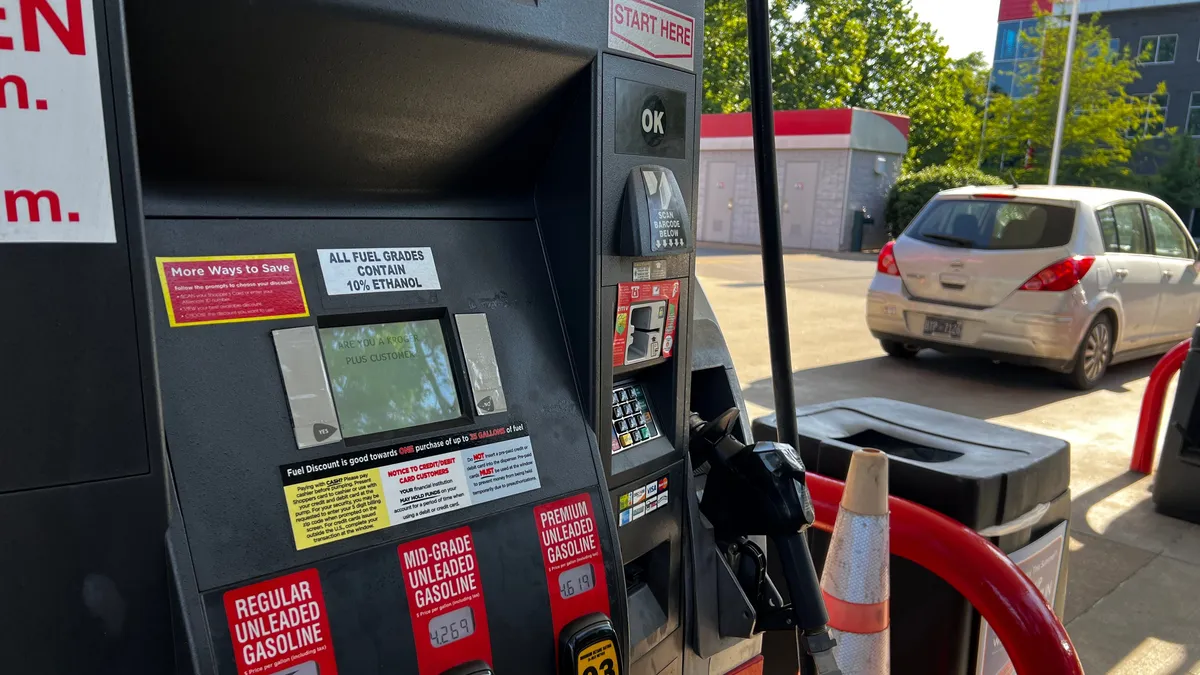
GasBuddy data compiled as of August 17 places the national average gasoline price at $4.02 per gallon, a week-over-week increase of 7.7 cents. Over the past month the average has risen 3.6 cents, and compared with the same period last year, drivers are paying 93.1 cents more per gallon. Diesel tells an even starker story: the national average jumped 14.3 cents in a single week to reach $5.418 per gallon.
Patrick De Haan, head of petroleum analysis at GasBuddy, attributed the weekly spike to two converging supply shocks. In an August 17 market update he noted:
“Average gasoline prices climbed back above $4 per gallon over the last week, with prices rising in slightly more states than they fell, as rebounding oil prices driven by the continued closure of the Strait of Hormuz and ongoing Ukrainian attacks on Russian oil refineries kept upward pressure on the market.”
De Haan acknowledged that the seasonal blend transition to cheaper winter-grade gasoline, expected within the coming month, could shave a few cents off pump prices. Yet he cautioned that the structural drivers remain unresolved:
“The two dominant challenges facing motorists—the closed Strait and the ongoing refinery strikes—show no signs of resolving anytime soon. Until they do, the path for gas and diesel prices remains tilted to the upside.”
Crude Oil and the Futures Signal
West Texas Intermediate crude is trading near $84 per barrel, while futures contracts roughly one year out sit around $73 per barrel. Greg Upton, executive director and associate research professor at the Center for Energy Studies at Louisiana State University, pointed out that this configuration — known as backwardation, in which deferred contracts trade below the spot price — carries a specific market interpretation.
“That indicates that market participants expect today’s supply pressures to ease over time, but prices are not expected to reach levels seen earlier this year before the conflict began in the near future.”
In practical terms, the futures curve suggests traders believe the acute disruption will fade, but they do not anticipate a return to pre-conflict price floors in the near term. Upton added that if the Strait of Hormuz closure persists and Ukrainian strikes continue to knock refining capacity offline, elevated crude and refined-product prices will sustain upward pressure across the board. Conversely, a de-escalation or successful supply-chain adaptation would allow prices to drift lower, a trajectory broadly consistent with what the futures market currently prices in.
The Diesel Crunch and Its Broader Reach
Diesel deserves particular attention because it is not merely a fuel for trucks; it powers freight networks, agricultural equipment, and winter heating systems. Claudio Galimberti, chief economist at Rystad Energy, detailed the mechanics in an August 17 report. He observed that the global diesel squeeze has deepened, with U.S. “crack spreads” — the margin a refinery earns converting a barrel of crude into diesel — hitting record highs in early August. The drivers are the same twin shocks: Ukrainian strikes physically disabling Russian refining capacity and the renewed Hormuz closure choking off a critical transit corridor for Middle Eastern crude.
“That matters well beyond the pump: diesel is the workhorse fuel, running freight, farming and winter heating. Its cost feeds therefore through into core goods and food rather than sitting in the energy line alone.”
The implication for ordinary shoppers is direct. When diesel costs climb, shipping and distribution expenses rise, and retailers pass those costs forward. A gallon of milk, a bag of rice, a box of cereal — each carries a small freight component that is now inflated.
How Consumers Are Responding
Shikha Jain, a Simon-Kucher partner who leads the consumer sector for North America, explained that transportation-cost inflation does not remain siloed in the energy category. It migrates into grocery pricing, delivery fees, shipping charges, and any product whose supply chain depends on trucking or fuel-intensive logistics.
“It’s not just going to be at the gas pump. There might be flow through into the grocery store, but also with anything that has logistics tied to it and anything that’s trucked, anything that uses gas.”
Jain noted that once shelf prices climb, retailers tend to hold them at the new level and rely on targeted promotions to nudge them back down rather than rolling prices back to prior levels. Market research conducted by Simon-Kucher indicates that when prices in a category rise by 10 to 15 percent, consumer behavior shifts measurably: shoppers trade down to cheaper brands, postpone large-ticket purchases, or simply stop buying the item altogether.
“Consumers are starting to really evaluate the cost of living and weigh every purchase decision.”
What Comes Next
The near-term outlook hinges on two variables outside any single consumer’s control: whether diplomatic channels reopen to restore flow through the Strait of Hormuz, and whether Ukrainian military operations continue to degrade Russian refining output. Until at least one of those fronts stabilizes, analysts expect the price trajectory for both gasoline and diesel to remain biased upward. The seasonal blend switch may offer a modest, temporary reprieve, but it does not address the structural supply gap. For households already navigating elevated grocery costs, the coming weeks carry the risk of further compression in disposable income, with the most vulnerable families feeling the squeeze first and hardest.
Related Reading
Frequently Asked Questions
What is Gas prices are climbing How it impacts?
Gas prices are climbing How it impacts is the main topic of this guide. The article explains the context, practical details, and next steps readers should understand.
Why does Gas prices are climbing How it impacts matter?
Gas prices are climbing How it impacts matters because readers are looking for a useful answer, not just a short summary. Good content should match search intent and help them decide what to do next.