‘The Odyssey’ film fuels book sales and this modern translation by a woman leads the pack

Modern Readers Embrace Homer as Nolan’s Epic Revives Ancient Verse
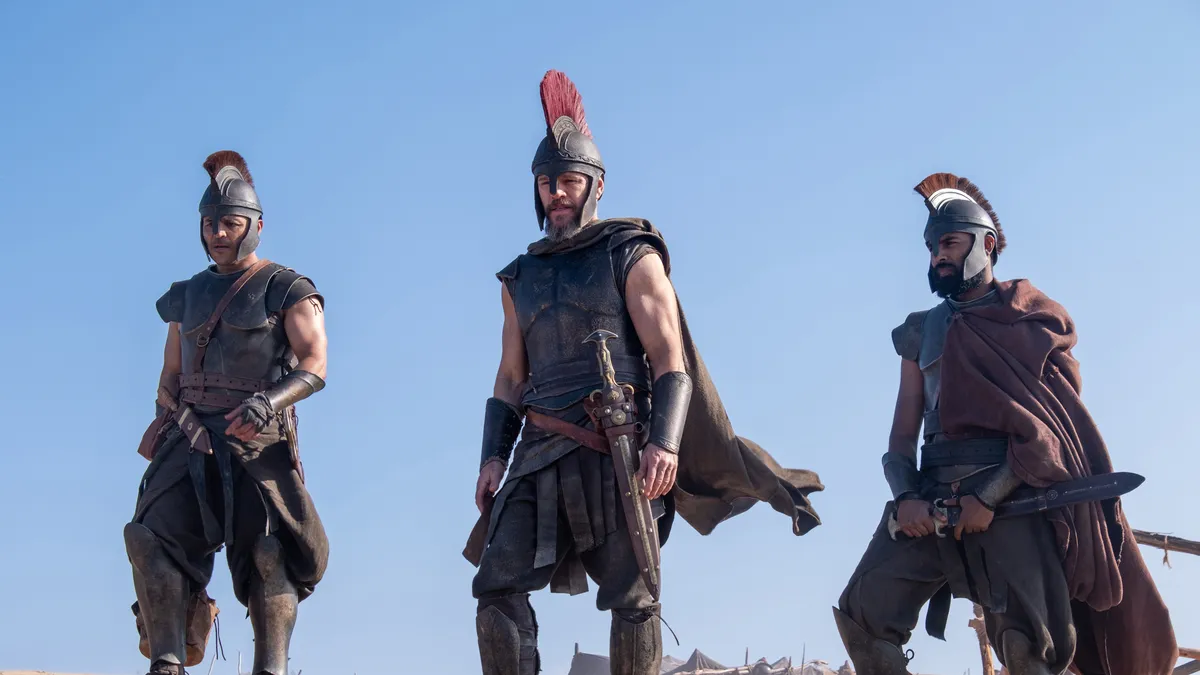
Cybersecarmor.com – While summer vacation may be in full swing, a new generation of book lovers is diving into one of history’s most celebrated works. Christopher Nolan’s latest cinematic masterpiece, an adaptation of Homer’s legendary Greek poem, has sparked unprecedented interest in the original text. Moviegoers eager to understand the source material are flocking to libraries and bookstores, creating a remarkable surge in sales for this millennia-old masterpiece.
The film, currently playing in theaters worldwide, has generated considerable buzz not only for its visual splendor but also for its impressive ensemble cast. Brian Truitt, a critic for USA TODAY, praised the production as “the greatest work on the iconic director’s noteworthy resume,” highlighting how Nolan has brought fresh energy to this timeless story.
A Woman’s Voice in Ancient Translation
Throughout the centuries, Homer’s epic has been rendered into countless languages and versions. Yet, remarkably, only one published English translation was created by a female scholar. Emily Wilson’s groundbreaking 2017 edition has become the definitive choice for modern readers, and its popularity has skyrocketed following the announcement of Nolan’s film adaptation in December 2024.
Nolan drew inspiration from multiple translations while crafting his screenplay, with Wilson’s version playing a particularly significant role. The director even acknowledged her contribution during an interview with Empire Magazine the previous year. Today, Wilson’s translation is moving off bookstore shelves at an extraordinary pace.
Record-Breaking Sales Across Formats
The data tells a compelling story of renewed interest in classical literature. According to Circana BookScan, sales of all translations of this 3,000-year-old epic have climbed 76% compared to the same period last year. Digital platforms are experiencing even more dramatic growth, with e-book lender Libby reporting a staggering 217% increase in checkouts.
Readers are exploring diverse ways to experience the ancient tale. Gareth Hinds’ graphic novel adaptation ranks among the top-selling editions according to BookScan. Meanwhile, Spotify has shared exclusive data revealing that global listens of “The Odyssey” audiobook have surged by more than 300%.
Wilson’s translation has emerged as the clear leader in this renaissance. Emmy Wenstrup, a publicist at W.W. Norton, confirmed that domestic sales of her edition have already exceeded one million copies. The New York Public Library has also felt the impact, with senior public relations manager Connor Goodwin noting that demand for Wilson’s translation “outpaces others.” Within their system, her edition represents 90% of print holds and 57% of ebook and audiobook holds.
Language That Bridges Ancient and Modern
What makes Wilson’s translation particularly distinctive is its accessible, contemporary voice. The text incorporates everyday vocabulary including “daddy,” “crazy,” and “tote bag,” creating an immediate connection between ancient heroes and modern readers. This approach extends to Nolan’s film as well, where Tom Holland’s character Telemachus refers to his father simply as “dad” in the promotional trailer—a choice that initially sparked debate.
Both Holland and Nolan defended the terminology, arguing that the traditional “father” is actually less accurate to the original Greek text. Wilson herself explained this perspective to LADbible: “English – all registers of English, all dialects – is a modern language; authenticity on that level is impossible unless you’re going to compose a script entirely in Homeric Greek – which would be very fun but unlikely to do well at the box office.”
“English – all registers of English, all dialects – is a modern language; authenticity on that level is impossible unless you’re going to compose a script entirely in Homeric Greek – which would be very fun but unlikely to do well at the box office,” Wilson told LADbible.
A Feminist Reimagining
Wilson’s work has received both acclaim and scrutiny as a feminist interpretation of the classic. In a 2017 essay published in The New Yorker, she explained her deliberate choices to help readers experience Penelope’s sorrow authentically rather than “prettifying or trivializing” it as previous editions had done.
Her translation also addresses problematic language in earlier versions. Rather than employing misogynistic terms like “sluts,” Wilson uses “girls” to describe the female slaves. This choice carries particular weight in the scene following Odysseus’s slaughter of Penelope’s suitors, when he instructs Telemachus to execute the women who had relationships with them.
“Contemporary translators and commentators often present the massacre of these women as if it were quite ordinary, and entirely justified,” Wilson writes in the New Yorker. “The murdered slaves are routinely described in contemporary American English translations as ‘disobedient maids’ and are labelled as ‘sluts’ or ‘whores’ – a level of verbal abuse that finds absolutely no analogue in the Greek.”
As this summer draws to a close, the intersection of cinema and literature continues to demonstrate the enduring power of Homer’s epic. Wilson’s translation, with its modern sensibility and scholarly precision, has proven that ancient stories can speak to contemporary audiences in profoundly meaningful ways.