
What is the ‘Thucydides Trap’ that Xi invoked in his meeting with Trump?
What is the ‘Thucydides Trap’ that Xi invoked in his meeting with Trump?
What is the Thucydides Trap that – During the summit between the leaders of the world’s two most influential economies, the topic of discussion was not limited to trade or regional tensions in the Middle East. Instead, it shifted to a historical concept that dates back over two millennia. Chinese President Xi Jinping, addressing U.S. President Donald Trump at the Great Hall of the People in Beijing, referenced the ‘Thucydides Trap’ as a pivotal theme. This reference sparked immediate interest, with searches for the term surging online and analysts debating its implications. Xi’s question to Trump—whether the two nations could avoid the so-called ‘Thucydides Trap’ and establish a new era of major-power cooperation—underscored a strategic focus on the evolving dynamics between China and the United States.
The Origins of the ‘Thucydides Trap’
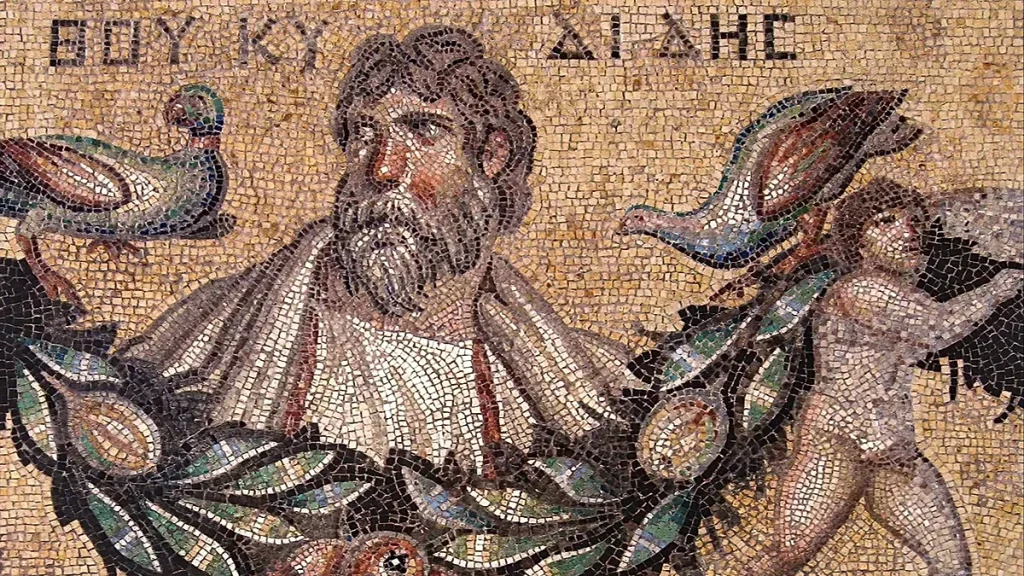
The term ‘Thucydides Trap’ was first introduced by Harvard political scientist Graham Allison in the early 2010s. Allison drew inspiration from the ancient Greek historian Thucydides, who chronicled the Peloponnesian War—a prolonged conflict between Athens and Sparta that began in 431 BC. Thucydides’ analysis of this war highlighted a recurring pattern: the emergence of a rising power and the fear it instilled in an established one often led to conflict. This insight became the foundation for Allison’s modern framework, which examined 16 instances over the past five centuries where a rising power threatened an existing dominant power, with 12 of those cases resulting in war.
Applying this historical model to contemporary geopolitics, Allison positioned China as the rising power and the United States as the established power. The analogy suggests that as China grows economically and militarily, its ascent may trigger anxieties in the U.S., potentially leading to confrontation. However, Xi Jinping has consistently used the concept to argue that such outcomes are not predetermined. He emphasized the importance of mutual restraint and strategic dialogue to prevent war, framing the ‘Thucydides Trap’ not as an inevitable fate but as a challenge that can be overcome through diplomacy.
Xi’s Strategic Use of the Concept
Xi first publicly invoked the ‘Thucydides Trap’ in 2013, using it as a tool to articulate China’s vision for global leadership. In a 2015 speech in Seattle, he explicitly stated that “there is no such thing as an inevitability of conflict.” Yet, he also warned that repeated strategic errors by major powers could lead to self-inflicted traps. This duality in his message reflects both confidence in China’s growth and caution about potential U.S. responses to its rise.
During the 2026 summit, Xi’s reference to the ‘Thucydides Trap’ was followed by a direct warning about the Taiwan issue. He informed Trump that if the political status of Taiwan was mishandled, the two countries “could collide or even come into conflict.” This statement was later echoed by Chinese Foreign Ministry spokesperson Mao Ning, who described “Taiwan independence” and cross-strait peace as “as irreconcilable as fire and water.” The juxtaposition of these remarks highlights how the concept was used to frame both the broader relationship between China and the U.S. and the specific challenge posed by Taiwan.
Xi’s invocation of the historical framework was not without precedent. Throughout Trump’s presidency, figures such as former national security adviser HR McMaster and defense secretary James Mattis had also studied Thucydides’ work, applying it to modern U.S. foreign policy. However, their interpretations diverged from Xi’s. In a 2018 interview, Steve Bannon, Trump’s former chief strategist, used the ‘Thucydides Trap’ to argue for a more confrontational stance toward China, contrasting sharply with Xi’s emphasis on cooperation.
Academic Perspectives and Criticisms
While the ‘Thucydides Trap’ has gained traction in political discourse, it has also attracted academic scrutiny. Critics argue that Allison’s model oversimplifies complex historical interactions, sometimes misclassifying cases where conflict was avoided. For instance, the peaceful transition of global leadership from Britain to the United States in the 20th century is cited as a counterexample, demonstrating that rising powers and established ones can coexist without war.
Some scholars question whether the framework allows for sufficient flexibility in accounting for diplomacy and political agency. They contend that the model’s focus on inevitable conflict may overlook the role of negotiation and cultural shifts in international relations. Despite these criticisms, the concept remains a powerful rhetorical tool, capable of encapsulating the tension between competition and collaboration in the U.S.-China relationship.
Xi’s use of the term aligns with a broader strategy of positioning China as a responsible global actor. By invoking Thucydides, he not only emphasized historical parallels but also sought to project China’s vision of a cooperative future. This approach contrasts with Trump’s more transactional view of international relations, where the ‘Thucydides Trap’ was interpreted as a critique of American decline. In a post-summit message on Truth Social, Trump suggested that Xi’s reference to the U.S. as a “declining nation” was a nod to the Biden administration’s policies, rather than an indictment of America’s current state.
The Broader Implications of the Thucydides Trap
The ‘Thucydides Trap’ has become a lens through which to view the shifting balance of power in the 21st century. As China continues to grow in economic and military strength, the U.S. faces a dilemma: whether to view this ascent as a threat or an opportunity. Xi’s invocation of the concept during the 2026 summit underscores China’s desire to shape this narrative, positioning itself as a partner in global governance rather than an adversary.
Yet, the term also carries a warning. By referencing Thucydides, Xi highlighted the risks of miscalculation and the potential for historical patterns to repeat. This duality—celebrating China’s progress while acknowledging the dangers of conflict—reflects the nuanced approach required in managing major-power relations. The summit’s focus on economic cooperation, as noted in a White House readout, suggests that both leaders aimed to prioritize mutual benefits over immediate confrontations.
Despite the emphasis on collaboration, the ‘Thucydides Trap’ remains a potent symbol of the challenges ahead. It encapsulates the tension between China’s ambitions and the U.S.’s strategic concerns, reminding policymakers of the delicate balance needed to avoid war. As the world watches the evolving relationship between the two superpowers, the historical analogy continues to serve as a reminder of the stakes involved in their interactions.

