
‘Turn off the taps before mopping the floor’: Renewables more cost effective than direct air capture
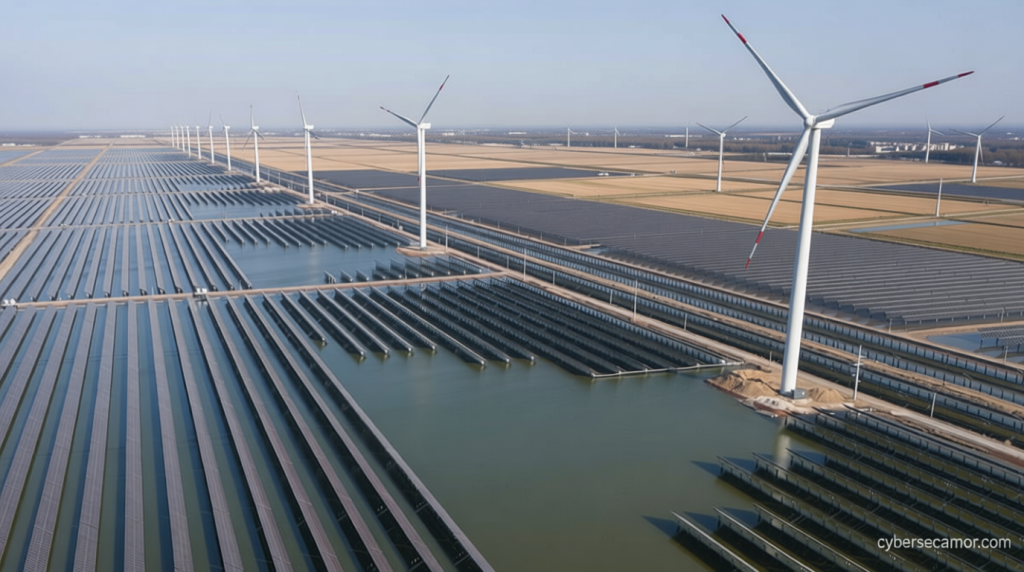
Turn off the taps before mopping the floor: Renewables more cost effective than direct air capture
Turn off the taps before mopping – A recent analysis reveals that investments in renewable energy sources significantly outperform those in direct air capture (DAC) when evaluating cost-effectiveness. This conclusion challenges the growing interest in DAC as a key tool for climate mitigation, highlighting the superior benefits of wind and solar power in reducing emissions and improving public health outcomes. The study, conducted by researchers at PSE Healthy Energy in California, compares the environmental and economic impacts of deploying DAC, utility-scale solar, and onshore wind across 22 US grid regions over a 30-year period, from 2020 to 2050.
The Role of DAC in Climate Strategies
Direct air capture technologies, which remove carbon dioxide from the atmosphere through chemical reactions, have gained traction as part of global climate solutions. Last year, the European Parliament’s research institute published a report emphasizing the necessity of a diverse range of carbon removal methods, including DAC, to achieve the EU’s 2050 climate-neutral target. The study stressed that while DAC is crucial for addressing legacy emissions, it should complement—not replace—efforts to cut emissions at the source. “If the global emission budget is exceeded early, relying solely on removals afterward may not ensure a steady decline in temperatures,” the report cautioned, underscoring the importance of prioritizing emission reductions over carbon capture.
DAC systems, despite their technological diversity, typically involve a few standard steps. First, ambient air is drawn into the system, where carbon dioxide is separated through either chemical absorption or physical filtration. Once isolated, the CO2 can be stored underground in suitable geological formations or repurposed in industrial applications. However, the long-term effectiveness of these methods varies. For instance, materials like concrete can trap CO2 for centuries, while products such as beverages or synthetic fuels might release the gas back into the atmosphere within months. This variability raises questions about the sustainability of DAC as a primary climate strategy.
Cost-Effectiveness of Renewable Energy
The new study, published in the journal Communications Sustainability, found that renewable energy projects provide greater climate and health benefits per dollar invested than DAC technologies. This finding holds true even under the most optimistic assumptions about DAC’s efficiency. Researchers modeled the outcomes of deploying DAC, solar, and wind energy at equal costs, comparing their impact across different regions and timeframes. The results consistently favored renewables, which not only reduce greenhouse gases but also improve air quality by cutting pollutants like sulfur dioxide and nitrogen oxides.
Under current commercial conditions, grid-connected DAC systems actually produce more emissions than they offset by 2050. This occurs because DAC often relies on electricity generated from fossil fuels, which introduces additional air pollutants into local communities. In contrast, renewable energy sources such as wind and solar generate clean power without emitting harmful substances. The study further examined an ambitious progress scenario, where DAC’s energy use drops by over two-thirds and its cost halves—reducing energy requirements to 1,500 kilowatt-hours and lowering the price to $500 per tonne of CO2 captured. Even in this optimistic projection, renewables maintained their edge in both environmental and health metrics.
Breakthrough Scenarios and Regional Impacts
Scientists also explored a “breakthrough” scenario, projecting DAC at the lowest end of existing estimates: 800 kilowatt-hours of energy and $100 per tonne of CO2 captured. In this case, solar and wind energy continued to dominate in most regions of the country, demonstrating their resilience as viable solutions. The analysis emphasized that while DAC can play a supportive role in the future, its current limitations make renewables a more efficient choice for immediate climate action.
The study’s findings suggest that cost-effectiveness analysis is a powerful tool for guiding climate investments. By evaluating which interventions deliver the most benefits for each dollar spent, policymakers can allocate resources more strategically. Dr. Jonathan J. Buonocore, a senior author and environmental health professor at Boston University School of Public Health, noted that the research highlights the potential of such analyses to maximize the impact of climate funding. “There’s a rapidly growing variety of interventions to mitigate greenhouse gases, and some can even improve public health,” he said. “Our work shows how cost-effectiveness analysis can ensure that every dollar invested in climate mitigation has the greatest possible effect while minimizing negative side effects.”
Despite the study’s emphasis on renewables, the authors did not dismiss DAC entirely. They acknowledged that these technologies could still be valuable in the long term, particularly once fossil fuel emissions are largely curbed. “If your sink is overflowing, turn off the tap before you begin mopping the floor,” explained Dr. Yannai Kashtan, lead author and air quality scientist at PSE Healthy Energy. This metaphor underscores the argument that reducing emissions at the source is more critical than relying on carbon removal methods to compensate for ongoing pollution. The researchers concluded that while DAC has a place in climate strategies, its cost and efficiency must be further improved before it becomes a primary solution.
The broader implications of this study extend beyond the US. It reinforces the need for a dual approach to climate action: investing in clean energy to prevent emissions and using DAC as a supplementary tool. By prioritizing renewables, countries can achieve faster emission reductions and healthier environments, while DAC remains a promising option for addressing residual emissions. The findings also align with global trends, as renewable energy continues to expand and become more competitive in cost and performance. As the climate crisis intensifies, the study serves as a reminder that the most effective solutions often lie in the technologies we can deploy today.

