
Israeli army announces targeting of Hamas military chief in Gaza City airstrike
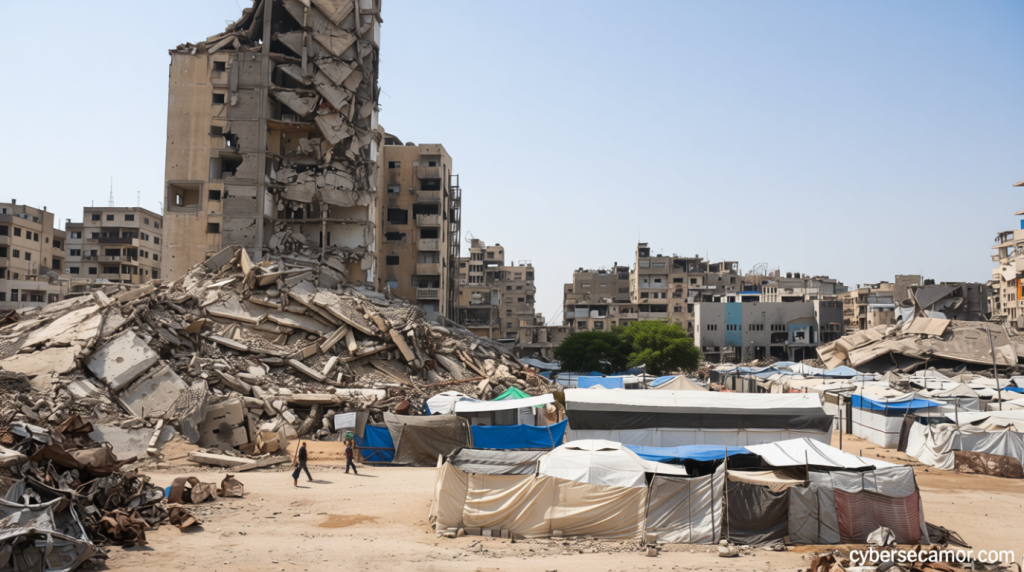
Israeli Army Announces Targeting of Hamas Military Chief in Gaza City Airstrike
Israeli army announces targeting of Hamas – On May 15, 2026, the Israeli military revealed that it had conducted an aerial assault in Gaza City, specifically targeting Izz al-Din al-Haddad, the head of Hamas’ military wing. The operation, carried out by the Israel Defense Forces (IDF), was described as a decisive strike aimed at neutralizing one of the organization’s most influential figures. Al-Haddad, known for his role in orchestrating attacks against Israeli civilians and military personnel, was identified as a key architect of the October 7th massacre that had previously devastated the region.
“As per the orders of Prime Minister Benjamin Netanyahu and Defence Minister Yisrael Katz, the IDF executed a targeted airstrike in Gaza City, eliminating Izzedine al-Haddad, the military commander of Hamas, and dismantling his leadership structure,” the Israeli Ministry of Defence stated. The statement further clarified that the strike was part of a broader effort to weaken Hamas’ capacity to launch attacks and retaliate against Israeli targets.
The October 7th massacre, which occurred in 2023, marked a turning point in the conflict, with Hamas militants infiltrating Israeli communities and executing a coordinated assault that resulted in over 1,200 casualties. Al-Haddad, as a central figure in planning this operation, was blamed for the large-scale violence that had left Israeli families in mourning and the country on high alert. The IDF’s focus on him reflects a strategic decision to dismantle Hamas’ command hierarchy and disrupt its ability to coordinate future attacks.
“The statement emphasized that Al-Haddad was directly accountable for the deaths, abductions, and injuries of thousands of Israeli civilians and soldiers of the Israel Defense Forces (IDF),” the ministry added. His leadership was also linked to the prolonged detention of hostages, the execution of violent operations, and the refusal to comply with previous diplomatic efforts to curb Hamas’ military activities.
Following the October 7th incident, Hamas had been under pressure to agree to a ceasefire and disengage from hostilities. However, Al-Haddad was reportedly instrumental in resisting these overtures, particularly the disengagement plan proposed by former U.S. President Donald Trump. This agreement, which had been presented to Hamas as a path to peace, was said to include provisions for reducing the group’s military capabilities and ensuring the demilitarization of the Gaza Strip. The IDF’s strike on Al-Haddad is seen as a direct response to this failure to implement the plan.
“The ministry highlighted that Al-Haddad had maintained brutal captivity of Israeli hostages, planned multiple terror attacks on IDF installations, and rejected the Trump initiative to disarm Hamas and secure a lasting ceasefire in the region,” officials stated. The decision to target him underscores the Israeli government’s commitment to eliminating threats to national security through military action.
The operation took place in the early hours of Friday, with reports indicating that the strike was precise and minimized civilian casualties. Hamas, however, has yet to confirm the details of the attack or comment on Al-Haddad’s death. Analysts suggest that this move could destabilize the group’s internal structure, potentially leading to a shift in leadership and a reevaluation of its strategies. The impact of such a strike on the ongoing conflict remains a subject of debate, with some viewing it as a necessary step toward peace and others seeing it as a escalation in hostilities.
Al-Haddad’s role as a military chief extended beyond the October 7th attacks. He was responsible for overseeing the training and deployment of Hamas’ armed factions, which have been implicated in numerous rocket launches, ambushes, and cross-border incursions into Israeli territory. His death may weaken the group’s operational capacity, but it is also likely to fuel new cycles of violence as Hamas seeks to avenge his loss. The IDF has been conducting similar strikes in recent weeks, targeting other Hamas commanders and infrastructure in Gaza, which has intensified the cycle of retaliation between the two sides.
“The statement also noted that Al-Haddad’s actions had created a climate of fear among Israeli citizens, with his forces targeting civilians as part of their strategy to sow chaos,” the ministry said. The strike, therefore, is not only a military operation but also a psychological blow to Hamas’ ability to sustain prolonged conflict.
International reactions to the airstrike have been mixed. While

