
Cities must plan for migration as permanent reality, experts say at World Urban Forum
Cities must plan for migration as permanent reality, experts say at World Urban Forum
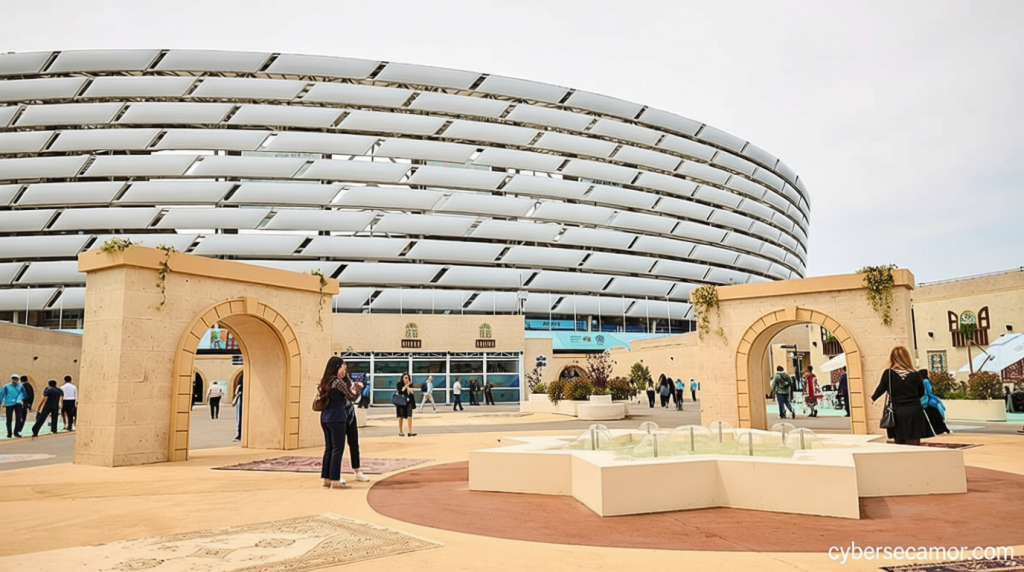
Cities must plan for migration as permanent – The fifth day of the World Urban Forum in Baku brought together global leaders to address the evolving role of migration in urban development. As cities grapple with the realities of displacement, experts stressed the need for long-term strategies rather than reactive measures. International Organisation for Migration (IOM) officials emphasized that governments failing to recognize migration as an enduring aspect of urban life risk creating systems that do not sustain growth or stability.
Migration as a Catalyst for Urban Transformation
Ugochi Daniels, IOM Deputy Director General, underscored the transformative power of migration during the event. “Migration is now shaping cities,” she said, highlighting its integral role in modern urban ecosystems. According to Daniels, well-managed migration can act as a driving force for recovery and economic advancement. “Displaced populations and migrants are not just burdens on urban systems—they are assets,” she added, arguing that cities must harness this potential to thrive.
“There are lots of migrants who can contribute to recovery and to the growth and economic prosperity of cities,” Daniels said.
Infrastructure as the Foundation for Resilience
Azerbaijan’s representatives shared insights on rebuilding post-conflict regions, framing their efforts as a blueprint for others. Emin Huseynov, the Azerbaijani president’s special representative in Aghdam, Fuzuli, and Khojavand districts, stressed the importance of housing as the cornerstone of urban resilience. “Housing must come first because housing restores dignity, stability, and trust,” he explained, pointing to the need for foundational infrastructure to rebuild communities effectively.
Meanwhile, Aydin Karimov, another Azerbaijani official in Shusha, showcased advancements in sustainable urban planning. “We were the first city where we introduced 100% electrical public transport,” he noted. His remarks highlighted the completion of Shusha’s fully electric bus system and a newly constructed waste management network. “Our public buses are 100% electrical, they don’t use fuel,” Karimov emphasized, underscoring the shift toward eco-friendly solutions in the region.
The Challenge of Sustaining Recovery
Rebuilding efforts face significant hurdles, particularly in securing long-term funding. Dr. Lucy Earle of the International Institute for Environment and Development warned against relying solely on temporary solutions. “We have to get out of this temporary mindset,” she urged, arguing that displaced individuals should be integrated into permanent urban frameworks rather than left in transitional shelters indefinitely.
“No country has been able to address housing in a sustainable, long-term way with international finance alone. It requires domestic finance,” UN-Habitat Executive Director Anacláudia Rossbach told delegates.
Rossbach emphasized that while international aid is crucial, it must be complemented by local investment. “I’m sure that $1 billion can become many billions if we are able to establish this social contract,” she added, suggesting that community-driven partnerships are key to scaling up reconstruction projects.
Rebuilding Beyond Just Structures
Uruguay’s Housing Minister, Tamara Paseyro, framed the challenge in broader terms. “Building houses also means building a habitat,” she stated, explaining that infrastructure like roads, utilities, and social services transforms shelters into functional communities. This perspective aligns with the World Bank’s focus on holistic development, which prioritizes not just physical structures but also the systems that support them.
Participants also discussed the balance between rapid reconstruction and quality planning. While speed is vital for restoring normalcy, experts warned against compromising on design and long-term viability. “Cities must be built with vision, not just haste,” said one representative, advocating for integrated approaches that combine zoning, architecture, and resource allocation.
Azerbaijan’s Model for Conflict-Resilient Urban Development
Azerbaijan used the forum to present its Karabakh reconstruction as a case study for other nations. President Ilham Aliyev, in an exclusive interview with Euronews, highlighted the country’s success in revitalizing post-war areas. “We have built a unique experience of how to construct cities and villages from scratch,” he said, citing the return of 85,000 people to the region since the conflict ended.
“Our public buses are 100% electrical, they don’t use fuel,” Karimov said.
The progress in Karabakh includes significant infrastructure milestones, such as 307 megawatts of commissioned electricity, 435 out of 500 bridges completed, and 70 kilometres of tunnels now operational. These achievements reflect a coordinated effort involving both government and private sectors, with Swiss urban planning firm SA Partners playing a pivotal role. The firm described the approach as a unified process, blending visionary planning, zoning strategies, and architectural execution into a cohesive model.
Global Lessons from Local Experiences
The discussions at the World Urban Forum underscored the importance of adapting strategies to local contexts while drawing from shared knowledge. As the forum concluded, participants acknowledged that the future of cities depends on their ability to accommodate migration as a permanent reality. “Migration is not just a challenge—it is an opportunity,” Daniels reiterated, calling for policies that recognize its role in urban evolution.
With over 150 countries represented, the forum became a platform for exchanging ideas on how to turn migration into a catalyst for sustainable growth. From Azerbaijan’s innovative infrastructure projects to Uruguay’s focus on social infrastructure, the diverse perspectives highlighted a common goal: to create cities that are not only physically rebuilt but also socially and economically resilient. As delegates left the sessions, the consensus was clear—planning for migration is no longer optional; it is a necessity for the cities of tomorrow.
Looking Ahead: A Call for Integrated Urban Strategies
The World Urban Forum’s closing remarks reinforced the urgency of integrating migration into urban development. “Cities must be designed with the movement of people in mind,” Rossbach said, urging a shift from fragmented efforts to comprehensive planning. This includes investing in housing, transportation, and public services in tandem, ensuring that all components of urban life align with the needs of a growing and diverse population.
As the forum wrapped up, its attendees left with a renewed commitment to reimagining cities as dynamic spaces that adapt to the realities of migration. Whether through Azerbaijan’s model of rapid reconstruction or Uruguay’s emphasis on social infrastructure, the lessons learned will shape the future of urban planning worldwide. “The path to recovery is not just about rebuilding what was lost—it’s about building something better,” Paseyro concluded, encapsulating the spirit of the event.

