
Beyond meetings: a city where business meets leisure
Beyond meetings: a city where business meets leisure
A dynamic hub for professional and recreational engagement
Beyond meetings – Astana, the capital of Kazakhstan, has transformed into a multifaceted destination that seamlessly integrates professional travel with leisure activities. As the boundaries between work and personal life continue to blur, the city is redefining itself as a place where career-focused gatherings coexist with vibrant cultural and recreational opportunities. With a consistent stream of global events, the urban landscape is no longer just a backdrop for meetings but a living canvas for experiences that cater to both ambition and relaxation.
International events drive economic and cultural momentum
The city’s calendar is packed with international forums, trade shows, and industry conferences, drawing professionals from across the globe. In 2025, over 1.6 million visitors flocked to Astana, with nearly 380,000 being international attendees. This trend is set to grow in 2026, as the city plans to host more than 1,000 events spanning cultural, sporting, and business domains. These gatherings not only bolster Astana’s reputation as a professional travel hotspot but also reinforce its role in the global event tourism market.
Architecture that bridges tradition and innovation
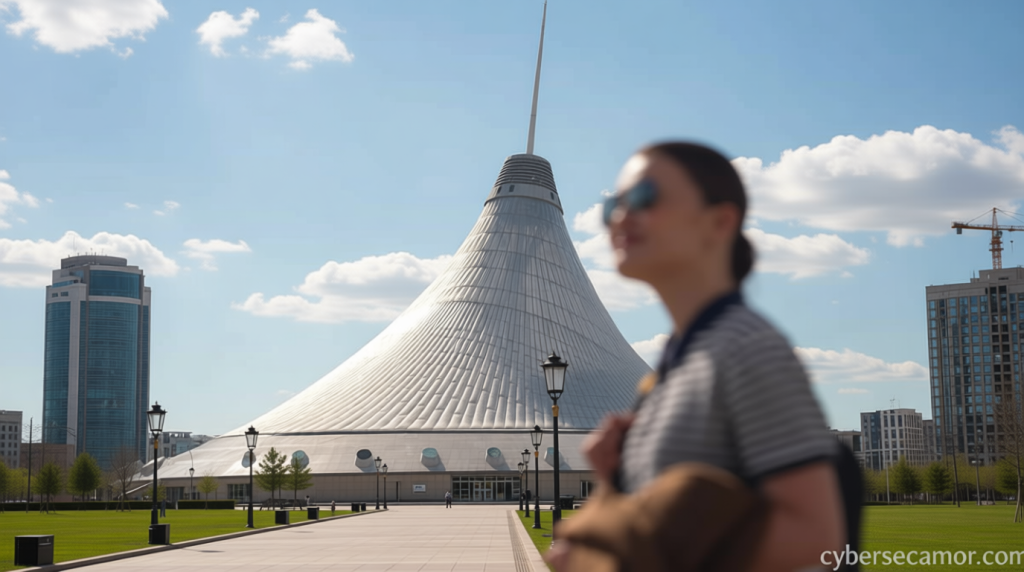
Astana’s skyline, though futuristic, holds layers of cultural significance. For residents, the bold architectural forms are a familiar sight, shaped over nearly three decades as the capital. Yet for outsiders, these structures remain a captivating blend of modernity and heritage. The city’s landmark, Khan Shatyr, designed by British architect Norman Foster, is a striking example. Its tent-like shape evokes traditional nomadic designs, while its glass construction and kinetic lighting create a visually dynamic presence in the skyline. Similarly, the Baiterek Monument, crowned with a golden sphere, symbolizes Kazakhstan’s spiritual and historical roots, rooted in a Turkic legend about the mythical bird Samruk and its golden egg.
From riverbanks to parks: spaces for connection and reflection
Alongside its towering skyscrapers and monuments, Astana’s urban spaces offer a more grounded perspective on its identity. The Ishim Riverbank, a natural boundary dividing the city, serves as a social and cultural nexus. It unites residents from diverse neighborhoods, transforming into a central gathering point that pulses with activity. Near the Kenesary Khan monument, the Arbat pedestrian promenade emerged as a hub for creativity and tradition. Opened before Expo 2017, it hosts street artists, musicians, and craftsmen, with features like yurts and sculptures preserving elements of Kazakhstan’s heritage. Further along, the riverbank flows into a expansive central park, its design echoing New York’s Central Park through ponds, bridges, and open spaces.
Exploring the past: the National Museum’s historical narrative
For those seeking deeper cultural immersion, the National Museum provides an architectural and historical journey. The white structure, resembling a glacier rising from the steppe, houses collections that trace Kazakhstan’s history from ancient nomadic civilizations to modern times. At its core is the Golden Man, a remarkable archaeological find that challenges perceptions of early nomadic societies. Over 4,000 gold artifacts uncovered at the burial site reveal advanced craftsmanship, surprising many who associate such skills with settled urban communities. As Kylyshbek Madi, a local tour guide, explains: “Many people are surprised that 2,500 years ago, nomadic craftsmen could create such fine and detailed work. These kinds of skills are often linked to urban societies.”
Cultural programs and the enduring legacy of horse culture
While Astana’s events calendar is bustling, the city also nurtures a rich tradition of cultural expression. From performances by global superstars like Jennifer Lopez to productions by Cirque du Soleil, the arts thrive alongside international sporting events. This cultural tapestry is further woven with Kazakhstan’s deep connection to horses, a symbol of its historical and contemporary identity. Open-air events frequently showcase traditional practices such as trick riding and horseback archery, while modern horse clubs adapt these traditions for contemporary training and competition. “We have over 100 horses representing more than 20 breeds at our club,” says Azamat Ermekkali, director of Prestige Horse Club. “They range from ponies for young riders to European sport breeds that compete internationally.”
Spaces for renewal: balancing professional and personal life
After a day of meetings and cultural exploration, Astana offers sanctuaries for rejuvenation. Terensai Ethno Spa, for instance, merges ancient practices with modern wellness. As Gulnar Yergazina, managing director of the spa, notes: “All our treatments are based on engaging the five senses, allowing you to immerse yourself in the atmosphere of ancient cities and nomadic life. Everything around us is designed to restore both body and mind.” These spaces reflect the city’s commitment to harmony between productivity and leisure, ensuring that even the busiest professionals can find moments of tranquility.
A city that evolves without losing its essence
Astana’s evolution is a testament to its ability to adapt while preserving its unique character. The skyline, though reimagined through modern design, still nods to the past with structures like Khan Shatyr and Baiterek. Similarly, its cultural practices — from traditional horse events to contemporary art scenes — demonstrate a balance between heritage and innovation. This duality is evident in the city’s blend of international events and local traditions, making it a destination where business and leisure are not just coexist but enrich each other. Whether through the bustling Arbat promenade, the serene central park, or the thought-provoking exhibits at the National Museum, Astana invites visitors to experience a city that is both forward-thinking and deeply rooted in history.
Conclusion: a destination redefining the future of travel
In an era where travel is increasingly about more than just sightseeing, Astana stands out as a model of integration. It offers the convenience of business travel with the allure of cultural and recreational engagement, ensuring that every visit is both productive and memorable. The city’s architecture, events, and community spaces collectively create an environment where professionals can thrive, while locals and visitors alike are inspired by its blend of tradition and progress. As Astana continues to host over 1,000 events annually, it reaffirms its position as a global city that is not just a place to work — but a place to live, connect, and discover.

