Who’s bankrolling the $300 billion redevelopment fund in Trump’s Iran deal?

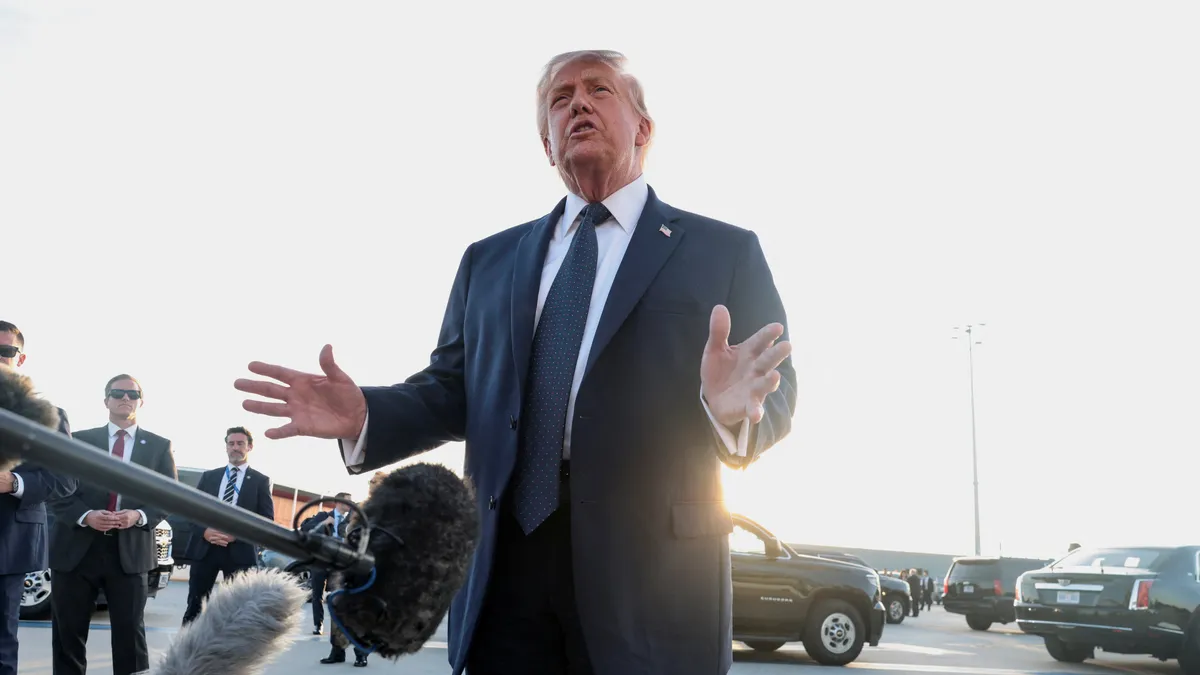
Trump’s New Iran Deal Sparks Debate Over Financial Commitments
Cybersecarmor.com – WASHINGTON – President Donald Trump recently unveiled a new memorandum of understanding with Iran, framing it as a step toward ending the U.S. war in the country. During the announcement, he criticized former President Barack Obama for allocating $1.7 billion in “green cash” under the 2015 Iranian nuclear deal, which Trump had previously abandoned. The current agreement, however, has drawn attention for its potential to provide Iran with a significantly larger financial benefit: a $300 billion redevelopment fund. This raises questions about who will foot the bill and whether the United States could end up sharing the financial burden.
The Fund’s Purpose and Conditions
The recently signed memorandum of understanding, dated June 17, outlines a framework for the U.S. and its Middle East allies to establish a $300 billion fund aimed at rebuilding and revitalizing Iran’s economy. The agreement emphasizes that this financial support would be contingent upon Iran meeting specific conditions, such as halting nuclear weapons development and disposing of enriched uranium. According to the text, the U.S. would lift all sanctions on Iran and unfreeze its assets as part of the deal, but only if Iran fulfills its commitments in the final agreement.
Upon signing the memorandum, the U.S. immediately eased restrictions on Iran’s oil exports, signaling a shift toward economic normalization. The fund, however, is designed to incentivize Iran’s cooperation and stimulate post-war recovery, particularly after the country endured significant damage during the conflict. The exact mechanism for disbursing the funds will be determined in the final agreement, which the Trump administration aims to finalize within 60 days.
Funding Sources Under Scrutiny
Despite Trump’s insistence that the U.S. will not contribute any money to the fund, the question remains: who will cover the $300 billion? The memorandum does not specify the exact sources of funding, leaving uncertainty about the financial commitments of other nations and private entities. Reuters, citing an unnamed source with knowledge of the deal, reported that over half of the fund’s total amount has already been pledged, and it will be entirely funded by private-sector investments.
“We’re not investing. We’re not putting up 10 cents,” Trump said on June 17 during the G7 summit in France. “People can decide to do that but that’s up to them.”
Later, Trump reiterated his stance on social media, stating, “There is no 300 Billion Dollar payment to Iran by the U.S. That’s Fake News! All there is for the U.S. is Success, Lower Oil Prices, and Victory.” This declaration underscores his belief that the deal will yield tangible benefits for the U.S. without requiring significant financial outlay.
Vice President JD Vance echoed Trump’s position during a White House briefing on June 18, affirming that the U.S. will not provide a cent to the fund. “The economic benefits, the sanctions relief that comes along with this bargain, only happen if the Iranians perform,” Vance emphasized. While he did not name specific contributors, he hinted that neighboring countries and private investors would play a role in funding the initiative.
Private Sector Involvement and Regional Interest
Vance suggested that the fund would be supported by a mix of private investors and countries in the Gulf Arab states, Asia, South America, and Africa. The administration views this as a private investment vehicle rather than a government-led reconstruction program. “There is a great desire from the Arab world and from outside the Arab world to actually get involved in Iran if they behave properly,” Vance noted, highlighting the potential for international collaboration.
He cited the United Arab Emirates as an example, explaining that the country has expressed interest in investing in projects like power plant construction. “Let’s just say that they would like to invest in building a power plant. That is actually impossible right now because of the way that U.S. sanctions work,” Vance said. “So what we’re saying is that if you behave and if the Emirates themselves want to build a power plant, then we will do the sanctions relief necessary to make that possible.” This illustrates how the fund could facilitate economic partnerships while aligning with Iran’s compliance.
The current funding structure is still in the early stages, with details to be finalized in the upcoming negotiations. Vance acknowledged that discussions about the fund’s sources are preliminary, stating, “This is so far in advance because it assumes a transformation in Iranian behavior.” The U.S. and its allies are working under the assumption that Iran will meet its obligations, paving the way for substantial financial support.
Obama’s Legacy in the Context of Trump’s Deal
Trump’s criticism of Obama’s $1.7 billion cash payment to Iran under the 2015 nuclear agreement has been a recurring theme in his rhetoric. The Obama administration’s decision to provide the funds was part of a broader effort to ease tensions and secure Iran’s compliance with nuclear restrictions. However, Trump framed this as an example of Obama’s “bad deal,” arguing that it rewarded Iran without sufficient safeguards.
Now, the $300 billion redevelopment fund under the Trump administration represents a potential reversal of that policy. While the previous payment was a one-time sum, the new fund offers ongoing financial incentives tied to Iran’s behavior. This shift reflects a strategic focus on economic cooperation rather than just sanctions relief. The administration’s emphasis on private-sector involvement suggests a desire to create a sustainable funding model that minimizes direct U.S. financial risk.
Yet, the lack of clarity on the fund’s contributors has sparked debate. Some analysts question whether the private sector can truly cover such a massive sum without government backing. Others argue that the U.S. could still indirectly support the fund through diplomatic and regulatory actions. Regardless of the ultimate source, the agreement marks a significant step in reshaping U.S.-Iran relations and setting the stage for a new era of economic engagement.
As the Trump administration moves forward with its plan, the success of the $300 billion redevelopment fund will depend on Iran’s willingness to comply with its commitments and the global appetite for investment in the region. The U.S. remains optimistic about the potential for economic revival and geopolitical stability, though the financial details continue to be a focal point of discussion.
With the final agreement expected to be reached within 60 days, the coming weeks will be critical in determining the scope and structure of the fund. Until then, the question of who will bear the cost of Iran’s reconstruction looms large, highlighting the complexities of this new diplomatic initiative.