Why so many Americans can’t afford housing anymore

Why so many Americans can’t afford housing anymore
The 2026 Report Highlights a Growing Housing Dilemma
Cybersecarmor.com – Housing serves as the cornerstone of daily life, providing shelter, family spaces, and a refuge from the world. Yet, for millions of Americans, securing a place to live has become increasingly difficult. The 2026 edition of the “State of the Nation’s Housing” report, published by Harvard University’s Joint Center for Housing Studies on June 17, paints a troubling picture of the current housing landscape.
According to the report, affordability challenges have persisted, compounded by rising economic uncertainty. The housing market is struggling under the weight of these pressures, with weakening labor markets and declining immigration contributing to slower household growth. As a result, home sales have reached a three-decade low, while inventory levels continue to climb despite the high costs of purchasing property.
“Persistent affordability challenges and rising economic uncertainty are hurting housing markets,” the report states. “Weakening labor markets and plummeting immigration have dampened household growth and mobility. Sales of existing homes sit at three-decade lows and inventories are rising in the face of high homebuying costs.”
Affordability Crisis Deepens Across Income Levels
Statistics reveal a stark divide between income and housing availability. In 2024, 11 million American households fell into the extremely low-income category, earning up to 30% of the area median income. However, only 3.8 million rental units were both affordable and accessible, offering shelter to just 35% of these households. The data underscores a fundamental mismatch between supply and demand, leaving many without viable options.
Among all renters, regardless of income, 49% are moderately cost-burdened, spending 30% or more of their income on housing. A significant portion—26%—face severe cost burdens, allocating at least half of their earnings to rent and utilities. These figures have surged since 2019, reflecting a worsening trend that has left millions struggling to meet basic needs.
The report emphasizes that affordability issues are not limited to renters. Homeowners also face mounting challenges, as the median age of owner-occupied homes is 42 years, while rented properties average 43 years. This means that older housing stock requires more maintenance and investment, driving up costs for both buyers and tenants.
“Owners living in homes built before 1940 spent an average of $6,700 per year on improvements and repairs, about 50% more than those occupying homes built in 2010 or later,” the report notes. This detail highlights how the age of a home directly influences its upkeep, further straining household budgets.
Disproportionate Impact on Vulnerable Populations
The housing crisis extends beyond mere numbers, affecting individuals and communities in distinct ways. The report stresses that the most severe shortage involves units affordable to low- and moderate-income households. In 2024, 11 million such households competed for only 3.8 million rental units, leaving many without secure housing.
People of color are disproportionately impacted by this crisis. For instance, 32% of homeowner households headed by Black individuals face cost burdens, compared to 22% of White-owned households. Similarly, 29% of Hispanic-headed households are cost-burdened, a rate that has grown over time. These disparities reveal systemic challenges in access to housing, which often persist across generations.
The report also points to regional variations in housing affordability. Renters in Florida and Nevada face the steepest challenges, while California and Hawaii remain among the most expensive regions for home ownership. This geographic imbalance complicates efforts to address the crisis uniformly, as solutions must adapt to local conditions.
Long-Term Consequences of an Unstable Housing Market
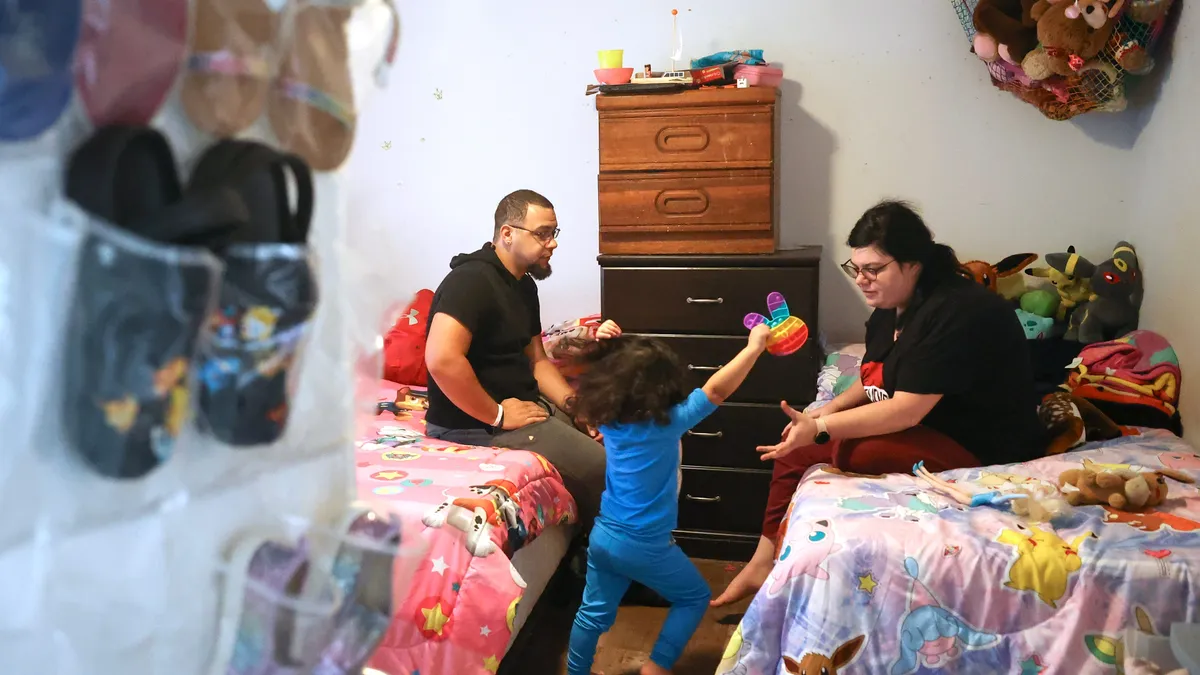
As the report outlines, the current housing landscape is not just a short-term issue but a long-standing problem that has deepened over time. The combination of rising costs and limited availability has forced many Americans to make difficult trade-offs. In some cases, this means choosing between housing and other essential expenses, such as healthcare or education.
For families, the inability to afford housing can lead to instability, with children moving frequently or parents working multiple jobs to cover costs. Even for individuals, the pressure to pay a significant portion of income for housing can limit financial flexibility and savings. These factors create a cycle that is hard to break, especially for those with limited resources.
The report suggests that the housing market’s evolution has outpaced many households’ ability to adapt. With homebuying costs reaching new heights, the dream of homeownership becomes increasingly distant for lower-income families. At the same time, the growing number of rental units, though seemingly positive, does not fully offset the strain on renters who are already overburdened.
As the housing crisis continues to unfold, its effects will likely ripple through the economy and society. Policymakers and housing advocates must act swiftly to address supply shortages, reduce costs, and ensure equitable access to shelter. Without intervention, the current situation may only worsen, leaving millions of Americans unable to afford the most basic aspect of life.