Secret Service kept UFC plot probe secret. Then Kash Patel announced it

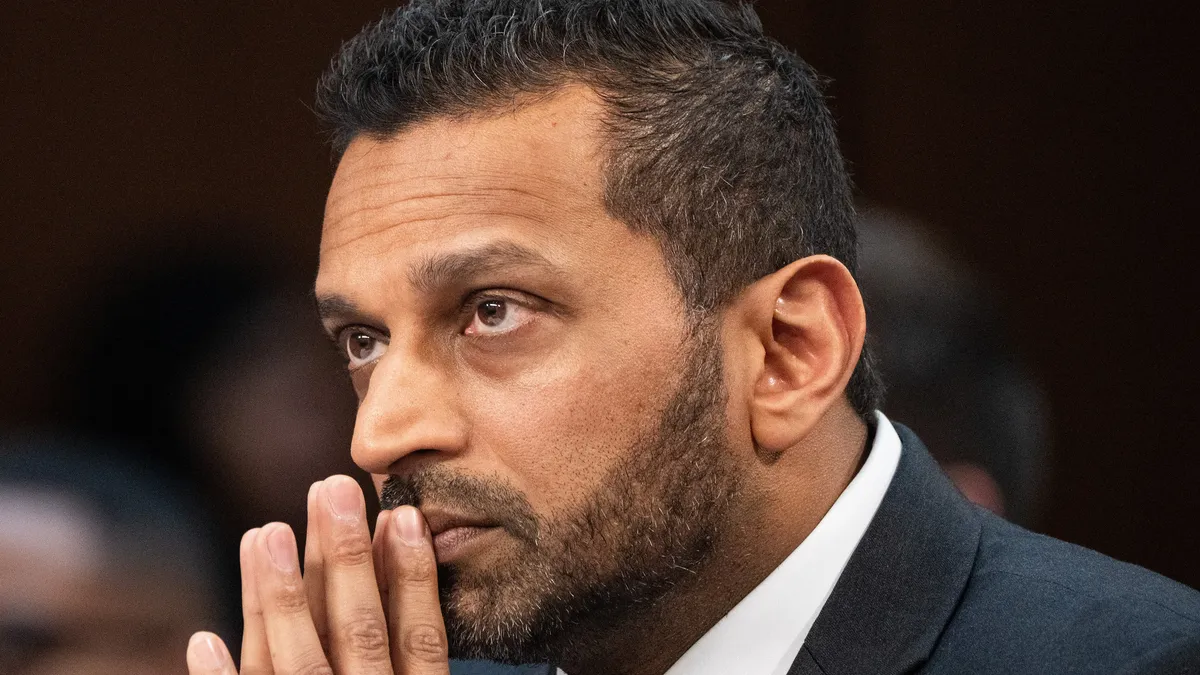
Secret Service Hid UFC Attack Investigation; FBI Director Kash Patel Unveiled It Publicly
Cybersecarmor.com – In a surprising turn of events, the FBI’s public acknowledgment of a potential attack on the Ultimate Fighting Championship (UFC) event at the White House in June 14 overshadowed the Secret Service’s earlier efforts to keep the investigation confidential. A senior official from the Secret Service revealed that the agency had intentionally concealed its probe into the alleged plot until it was no longer necessary. Deputy Director Matthew Quinn emphasized the agency’s proactive approach in safeguarding the event, which drew significant attention due to its proximity to the presidential residence.
The Secret Service and other federal agencies were working diligently to uncover the threat, which targeted the UFC America 250 event. Quinn stated,
“It was an active plot, and it’s ongoing. There are still suspects at large, and we’re going to work it until everyone’s been identified.”
This marked the first public admission of the investigation’s progress, as the agency had previously operated in stealth mode to avoid alerting potential perpetrators.
However, the secrecy was short-lived. FBI Director Kash Patel took to social media on June 16 to disclose the details, claiming credit for the operation’s success. In a statement posted at 6:50 a.m. ET on X, Patel described the FBI’s awareness of the threat, which began on June 10. He noted that “multiple individuals are now in custody” and that “the allegedly planned attacks were stopped cold.” This bold announcement transformed the investigation into a headline, raising questions about the timing of the disclosure.
According to a federal law enforcement official who spoke to USA TODAY under anonymity, the Secret Service had intentionally sealed the case to prevent leaks. The agency, along with other authorities, was in the process of questioning at least 10 more individuals beyond those already charged. The premature release of information by the FBI, however, disrupted the carefully maintained confidentiality of the probe.
Patel’s Style Sparks Debate
Kash Patel’s habit of sharing updates on social media has become a point of contention among law enforcement officials. With over 2 million followers on X, the FBI director is known for his frequent posts about ongoing investigations, a practice that has drawn criticism for potentially compromising sensitive details. Prior to this incident, his approach had already faced scrutiny. For example, in September 2025, Patel prematurely announced a breakthrough in the assassination case of Charlie Kirk, only to have the individual released hours later. This inconsistency has led to accusations that his transparency may interfere with the integrity of operations.
Patel’s tendency to share information publicly has extended to other high-profile cases. His comments about the disappearance of Nancy Guthrie and the shooting at a Dallas Immigration and Customs Enforcement facility were later found to be inaccurate, prompting backlash from other agencies. Critics argue that such disclosures can create confusion and give suspects opportunities to adjust their plans before law enforcement actions are finalized.
The Threat: A Comprehensive Plan
Court documents outline the alleged plot as a complex, nationwide scheme to attack the UFC event on June 14. The plan involved multiple individuals, some of whom had ties to the White House, including President Donald Trump, Vice President JD Vance, Secretary of State Marco Rubio, Pentagon chief Pete Hegseth, and FBI Director Kash Patel himself. The threat was described as a “sprawling plan,” with details indicating that the attackers intended to use drones and snipers to carry out the assault on the South Lawn.
The investigation began when a relative of one of the suspects contacted local police in Ohio. This tipoff allowed the Secret Service’s Advanced Threat Interdiction Unit (ATIU) to trace communications in a Signal chat, which revealed the specifics of the plot. The federal official confirmed that the agency had taken steps to identify the plotters and had not yet finalized all names, highlighting the ongoing nature of the probe.
Quinn, when addressing the matter at an unrelated news conference on June 16, expressed frustration over the FBI’s public disclosure. He asserted,
“Anyone that believes that case was worked in a bubble (by the FBI) is naive. I’ll tell you, the Secret Service led that investigation from the beginning.”
While acknowledging the FBI’s role, Quinn stressed that the Secret Service had been the primary agency responsible for tracking the threat and maintaining the security plan.
Quinn also reiterated the agency’s commitment to the investigation, stating,
“I’ll tell you that it’s ongoing. In order to maintain the integrity of the investigation and the security plan, we chose not to leak it. Look, it was a serious threat. We take all threats of a large nature very seriously, and we investigate them until we can validate 100%.”
This sentiment underscores the Secret Service’s focus on preventing any leaks that might jeopardize the operation’s effectiveness.
Charges and Suspects Spread Across the Country
To date, at least five individuals have been charged in connection with the alleged plot. These include Tycen Proper, Abraham Hermosillo Alvarez, Bryan Omar Roa, Michael Alan Thomas, and Daniel K. Eskridge. The suspects are believed to be spread across various states, with ties to Missouri, Ohio, and California. This geographic diversity suggests that the planning network was well-organized and possibly operating in multiple locations to avoid detection.
The UFC event, held on the South Lawn of the White House, had been a focal point for security concerns. The Secret Service’s Advanced Threat Interdiction Unit played a critical role in uncovering the details, leveraging technology and surveillance to trace the suspects’ activities. The agency’s decision to file the case under seal was a strategic move to ensure that no information could be prematurely released, potentially alerting the plotters to their imminent exposure.
Despite the FBI’s public announcement, the Secret Service maintains that it was the lead agency in the operation. Quinn’s statement at the news conference emphasized this point, stating that the FBI’s involvement was collaborative but the Secret Service had been the driving force. This dynamic highlights the interplay between agencies in high-stakes security scenarios, where coordination is essential but the lead role can become a source of contention.
Patel’s social media post not only exposed the threat but also positioned the FBI as the central figure in the operation. This has led to debates about the appropriate timing for releasing information. While some argue that public updates are necessary for transparency, others contend that they can undermine the secrecy required to protect an ongoing investigation. The UFC incident serves as a case study in this evolving balance between disclosure and discretion within federal law enforcement.
As the investigation continues, the focus remains on identifying all remaining suspects and confirming the full scope of the plot. The Secret Service’s earlier efforts to keep the probe under wraps underscore the importance of strategic communication in national security. Meanwhile, Patel’s public approach has sparked discussions about the role of social media in shaping the narrative of law enforcement actions. Whether this style of communication strengthens or complicates the investigative process remains a topic of debate among officials and analysts alike.