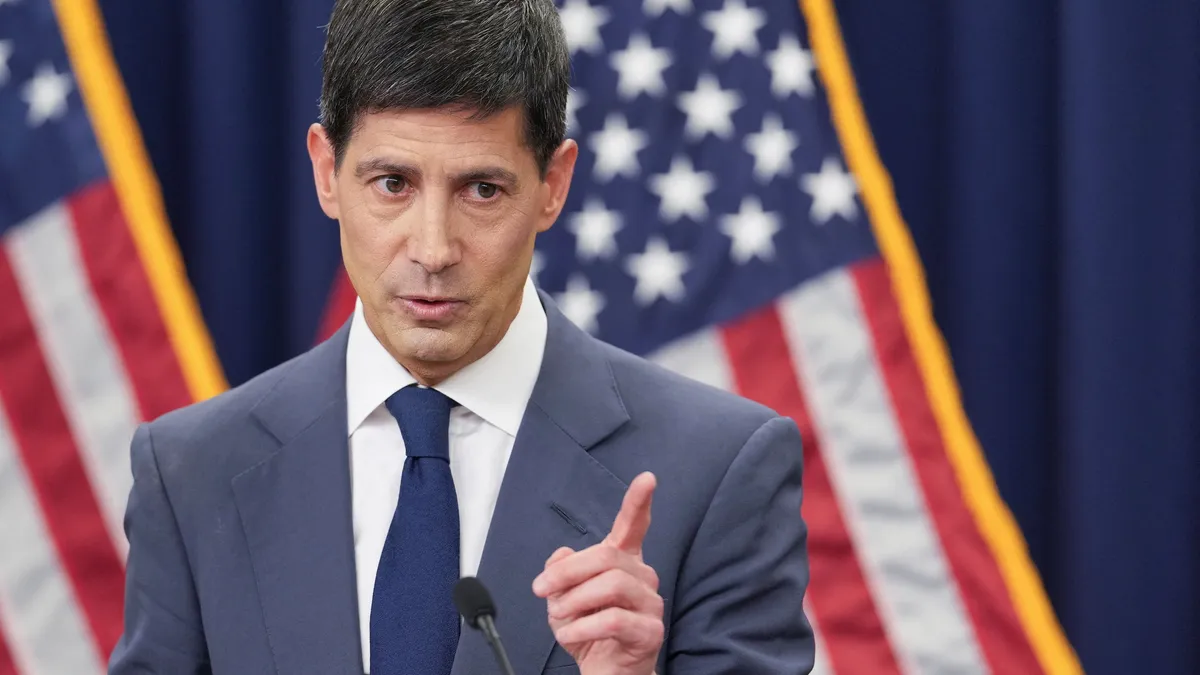
Kevin Warsh’s first Fed meeting could bring unwelcome news for Trump

Kevin Warsh’s First Fed Meeting Could Signal Shift in Monetary Policy
President Trump’s Parting Words to the New Chair
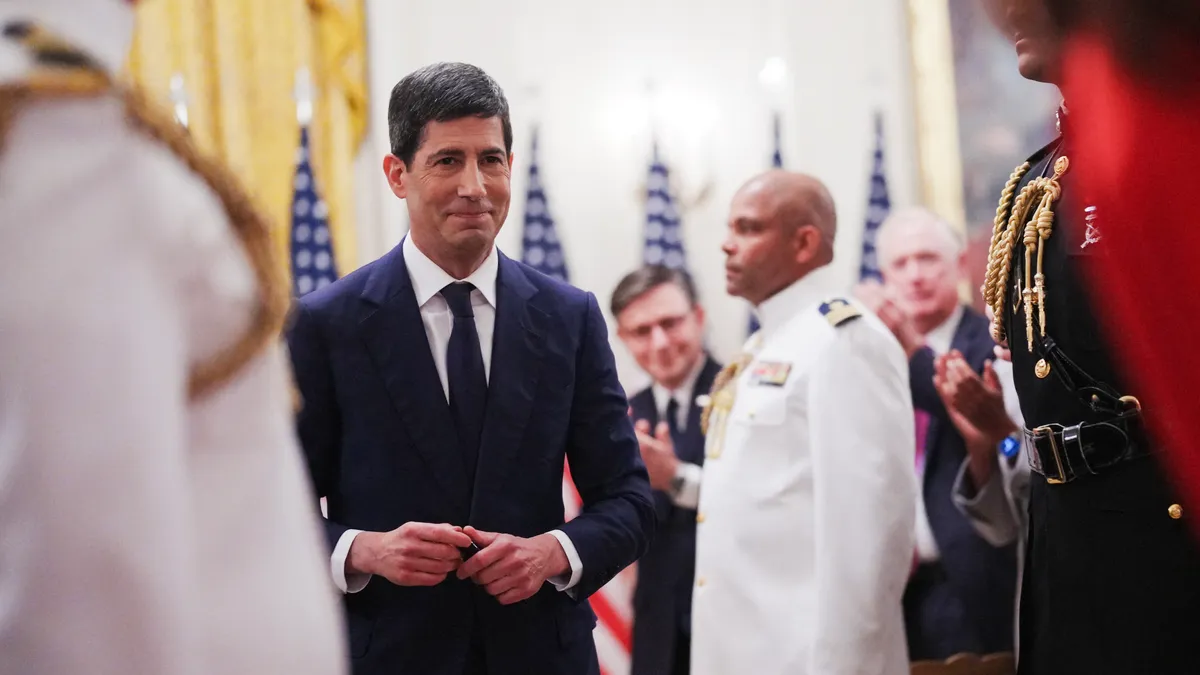
Cybersecarmor.com – At the swearing-in ceremony for Kevin Warsh as the new Federal Reserve chair, President Donald Trump emphasized the importance of independence for the central bank. He urged Warsh to “do your own thing and do a great job,” leaving no room for political influence. This directive, however, may face challenges as Warsh prepares to address the economic landscape in his initial meeting as head of the Fed.
Market Anticipation and Policy Outlook
Despite Trump’s calls for lower interest rates, market analysts are predicting no change in the Fed’s benchmark rate at the upcoming June 16 meeting. This decision would mark the second consecutive rate-hold since the beginning of the year. Economists argue that recent economic data, including strong job growth and inflationary pressures from the Iran conflict, have limited the central bank’s flexibility to cut rates. The prevailing sentiment is that the Fed will maintain its target range of 3.5% to 3.75% unless a significant economic shock emerges.
Fed’s Rate Decision Framework
The Federal Reserve typically adjusts interest rates in response to specific economic conditions. Lower rates are often used to stimulate borrowing and investment during periods of weak labor market performance, while rate hikes aim to curb inflation by reducing consumer spending. When the Fed maintains rates steady, it usually signals confidence in the current economic balance or a desire to observe more data before making a move.
Uncertainty Over Policy Direction
Comerica Bank’s Chief U.S. Economist Bill Adams told USA TODAY that rate cuts would require “a new negative shock to the job market,” such as a deterioration in the Middle East or unforeseen challenges from AI-driven disruptions. “If that doesn’t happen, the Fed will have a hard time justifying a rate cut in the current environment,” Adams said. This uncertainty contrasts with Trump’s recent assertion that there is “no reason” to raise rates, highlighting a growing divide between the administration and the central bank’s independent mandate.
Warsh’s Background and Policy Stance
Kevin Warsh, a former Fed governor from 2006 to 2011, built a reputation as a staunch inflation fighter, favoring rate increases to stabilize prices. However, his nomination as chair reflects a shift toward a more dovish approach, emphasizing the potential of AI-driven productivity gains and a shrinking Fed balance sheet to moderate inflation. This contrasts with his past views, raising questions about his evolving economic philosophy.
Challenges for a New Leadership
As the Fed navigates its next phase under Warsh’s leadership, the central bank faces both internal and external pressures. Darius Dale, founder of 42 Macro, noted that the institution’s members are still “human beings” and may be influenced by their new chair’s public criticism of previous Fed policies. “He’s been basically lambasting them for years,” Dale said, “which could make it difficult for him to earn their trust as he leads the committee.”
Economic Indicators and Inflation Metrics
Current inflation data continues to shape the Fed’s decision-making. The latest Personal Consumption Expenditures (PCE) Price Index, released by the Bureau of Economic Analysis, showed a 3.8% annual increase in April, with core PCE rising to 3.3%. Meanwhile, the Consumer Price Index (CPI) reported a 4.2% year-over-year surge in May, driven by soaring gasoline prices. Core CPI inflation, which excludes volatile food and energy costs, increased by 2.9% in May, though this was slower than the 0.4% rise in April. Analysts view these figures as mixed signals, with the core CPI suggesting a potential slowdown in inflationary pressures.
Warsh’s Vision and FOMC Dynamics
Warsh’s appointment introduces a new vision for monetary policy, one that may differ from the current FOMC members’ approaches. His mentors, Stanley Druckenmiller and Milton Friedman, offer contrasting perspectives on economic management, which could influence his decisions. “He’s going to be talking about things we haven’t heard from American central bankers in decades,” Dale observed, pointing to the potential for fresh ideas on inflation control and growth strategies.
Market Response to Communication Shifts
Analysts also anticipate changes in the Fed’s communication style under Warsh. Thrivent’s Chief Financial Officer David Royal noted that Warsh might favor less forward guidance, a departure from the norms of past chairs like Jerome Powell. “Everyone expects him to be less communicative,” Royal said, adding that this could create market instability if investors perceive ambiguity in the Fed’s policy direction.
The Path Forward for the Fed
With the June 16 meeting looming, the Fed’s policymakers will need to balance conflicting priorities. While the labor market remains robust, inflationary risks persist, particularly from energy prices and global events like the Iran conflict. The central bank’s challenge lies in navigating these dynamics without alienating either the president or the broader economic community. Warsh’s ability to articulate a cohesive strategy will be critical in determining the Fed’s next steps.
Unanswered Questions About the Fed’s Role
Warsh’s tenure as Fed chair will be closely watched for signs of a shift in the central bank’s approach. His critics argue that his public criticism of past Fed policies could undermine his authority, while his supporters see it as a reflection of his commitment to economic independence. As the meeting unfolds, the focus will remain on whether the Fed can maintain its credibility while addressing the administration’s expectations for lower borrowing costs.
Ultimately, the outcome of this meeting will depend on how the Fed interprets incoming data and how effectively it can communicate its rationale. With the economy showing signs of resilience but inflation remaining a concern, the central bank is poised to make a statement that could redefine its relationship with the White House and the public. The next few weeks will be pivotal in shaping the trajectory of U.S. monetary policy and the role of the Fed in the Trump administration’s economic agenda.