Trump gets credit for U.S. Presidents Cup win at trophy ceremony

Daftar Isi
U.S. Completes Presidents Cup Rally as Trump Joins Trophy Celebration at Medinah
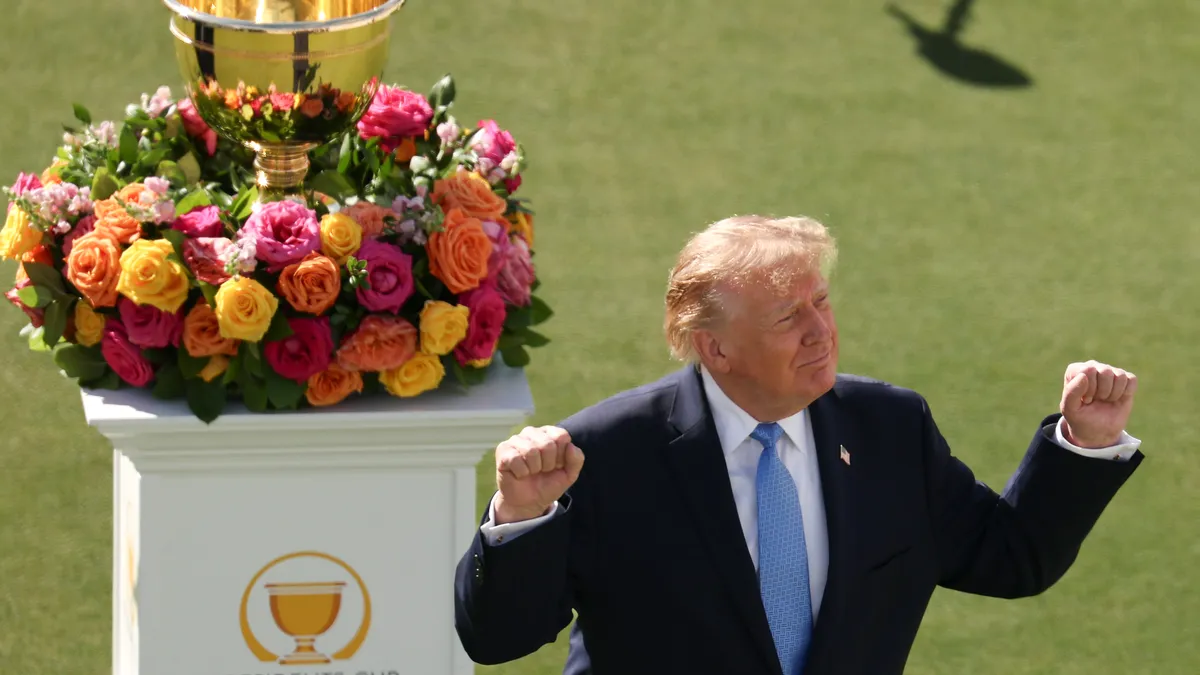
Cybersecarmor.com – The United States turned the final day of the 2026 Presidents Cup into a decisive comeback at Medinah Country Club, capturing its 11th straight victory in the biennial international team competition. President Donald Trump, serving as the event’s honorary chairman, arrived for the trophy presentation after the American side secured the win.
Sunday’s singles session changed the direction of the competition. The U.S. won nine of the 12 individual matches, overturning its deficit and taking control before the closing ceremony on the 14th green. The presentation unfolded in front of Medinah’s distinctive Byzantine-style clubhouse, where Trump’s motorcade arrived shortly after the Americans clinched the cup.
Trump greeted and shook hands with each U.S. player and vice-captain before presenting the Presidents Cup trophy to captain Brandt Snedeker. PGA Tour CEO Brian Rolapp stood alongside Trump during the ceremony.
Snedeker credits energy from the honorary chairman
Snedeker said Trump’s presence had added to the atmosphere surrounding the final day and playfully credited him with helping inspire the Americans’ surge.
“It’s really special because I got to meet President Trump today on the first tee,” Snedeker said as Trump watched on with PGA Tour CEO Brian Rolapp. “As he told me this morning, he brought some juice for us today and I told him if it turned out our way, I was going to give him credit. He definitely brought the juice. He deserves a lot of the credit for what happened today.”
The captain’s remarks came after a long day in which the U.S. transformed the singles matches into a commanding response. In Presidents Cup competition, the final-day singles format gives every member of both sides a chance to contribute individually, while the collective point total determines the eventual winner. The Americans made that format work in their favor at Medinah.
The result extended a remarkable run for the U.S. in the event, which pits an American team against an International team drawn from countries outside Europe. The Presidents Cup is staged every two years and is one of golf’s major global match-play gatherings, bringing PGA Tour players together in a team format that differs sharply from the sport’s usual individual tournaments.
Trump opens final day at first tee
About eight hours before the celebration, Trump appeared near the first tee to offer short pre-match remarks. Rolapp introduced him roughly 30 minutes before the opening singles match, with a large crowd assembled in the grandstand and along the opening fairway.
Trump said he would keep his comments brief because spectators had come to watch the competition rather than a speech. He also joked about potential coverage of his reception and criticized the “fake news media.”
“Brian said could you make a short speech and I said, ‘No, I don’t have the courage to make a speech. These people want to see golf. They don’t want to hear speeches,’” Trump said to the crowd. “I will say this, our country is doing great, better than ever before. And now I want to watch the greatest players in the world go at it today and play your hearts out. It should be a very impressive day of golf.”
He then greeted players from both the United States and International teams as they prepared to begin their matches. The first hole at Medinah includes a grandstand capable of holding up to 5,000 people, and fans packed the seating area while others lined the fairway for the first groups.
The visit marked Trump’s first trip to the Chicago area during his second White House term. It also placed an active U.S. president at one of the tournament’s most visible moments, from the start of the deciding session through the post-match trophy ceremony.
Security tightened for presidential visit
PGA Tour officials introduced added security measures and restrictions around Medinah, located outside Chicago, in advance of Trump’s arrival. Fans entering the first-tee grandstand went through TSA-style screening as part of the enhanced security plan.
The presidential travel also affected nearby aviation activity. The Federal Aviation Administration issued a temporary ground stop for departing flights at O’Hare International Airport because of a “VIP” movement. Air Force One was visible above Medinah shortly after the gates opened Sunday morning.
Trump had been named honorary chairman of the 2026 Presidents Cup in August and had already said he planned to attend. This was his second time in that ceremonial role. During his first presidency, he hosted the 2017 Presidents Cup at Liberty National Golf Club in New Jersey.
Six other presidents have served as the Presidents Cup honorary chairman: Joe Biden, Barack Obama, George W. Bush, Bill Clinton, George H.W. Bush and Gerald Ford. The role is largely symbolic, but it gives the tournament a connection to a long tradition of presidential involvement in the event.
For the American team, the day’s central achievement remained the comeback itself. After falling behind before Sunday, the U.S. claimed nine singles points and left Medinah with the cup once again, continuing its lengthy streak in the competition and closing the 2026 edition with a high-profile ceremony on the 14th green.
Related Reading
Frequently Asked Questions
What is Trump gets credit for U S Presidents?
Trump gets credit for U S Presidents is the main topic of this guide. The article explains the context, practical details, and next steps readers should understand.
Why does Trump gets credit for U S Presidents matter?
Trump gets credit for U S Presidents matters because readers are looking for a useful answer, not just a short summary. Good content should match search intent and help them decide what to do next.