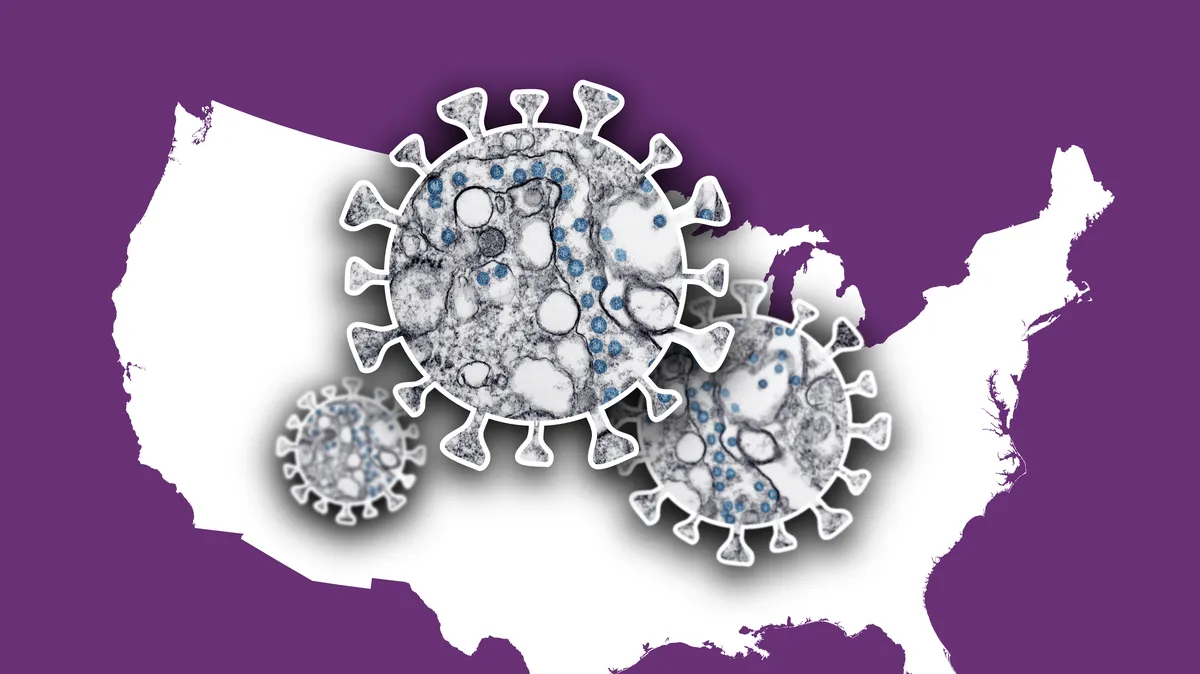
COVID cases are rising in some states. See the map

Daftar Isi
COVID-19 Activity Climbs as Respiratory Virus Season Approaches
Cybersecarmor.com – As cooler temperatures arrive and daylight hours shorten, signs of the yearly respiratory illness season are becoming more visible across the United States. COVID-19 transmission is increasing in parts of the country, though the intensity of activity varies widely from one region to another.
The Centers for Disease Control and Prevention currently classifies nationwide COVID-19 viral activity in wastewater as low. That national picture, however, masks higher readings in several states. Areas of the South and West have shown especially elevated activity, with some locations reaching high or very high levels.
“Right now, the picture is quite different depending on where you are: The West is seeing a substantial increase, activity is also rising in parts of the Midwest and Northeast, while the South appears to be further along in its wave,” said Dr. Anne Rimoin, professor of epidemiology at the UCLA Fielding School of Public Health and director of the Center for Global Health Security.
CDC information showed that at least 12 states had moderate, high or very high COVID-19 activity. The uneven regional pattern is not unexpected. Respiratory virus waves can develop on different schedules, meaning one part of the country may be seeing a rise while another is already moving beyond its local peak.
Why Wastewater Readings Matter
Wastewater monitoring has become an important early-warning tool for tracking infectious diseases. Samples from sewage systems can reveal evidence of viruses circulating in a community, including among people who have no symptoms, have not sought medical care or have not taken a diagnostic test.
That makes wastewater data useful for identifying shifts in community transmission before they are fully reflected in other measures. A rise in detected SARS-CoV-2, the virus that causes COVID-19, can alert health officials and residents that exposure risks may be increasing locally.
Another national wastewater surveillance effort, WastewaterSCAN, has found higher COVID-19 activity across the country and a sharp increase over recent weeks. Its tracking showed viral levels falling to a spring low before beginning to rise in July, then increasing more quickly through August and September.
“In September, national COVID-19 levels in wastewater are up 55% compared to August,” said Amanda Bidwell, WastewaterSCAN Scientific Program Manager. “Sites are continuing to trend up across the country. In the West and South we’ve surpassed the COVID-19 concentrations observed during the winter peak (2025-2026).”
Differences between national surveillance systems can reflect the places, populations and methods covered by each program. For readers, the practical takeaway is that local conditions can matter more than a single nationwide label. Checking public health updates for a state or community can offer a clearer sense of nearby viral activity.
Transmission Is Growing in Many States
CDC Rt estimates, which are used to assess how quickly seasonal respiratory viruses are spreading, indicated that COVID-19 infections were growing or likely growing in 27 states. Transmission was declining or probably declining in 13 states, while 10 states showed no major change.
The estimates reinforce the fact that COVID-19 does not always follow the same seasonal rhythm as influenza. It can produce waves at various times of year, including during late summer and early autumn.
“The regional variation is not particularly unusual,” Rimoin said. “We’ve seen this repeatedly with COVID. Waves don’t necessarily move across the country in a uniform way or peak everywhere at the same time.”
For families, schools, workplaces and health care providers, a rising local trend can be a reminder to pay attention to symptoms and take reasonable steps to reduce the spread of illness. People who feel sick can limit close contact with others, particularly those at greater risk of serious complications, and consider testing when appropriate.
COVID-19 and Flu Can Look Similar
COVID-19 and influenza share many symptoms, which can make it difficult to tell them apart based on how a person feels alone. Fever, cough, fatigue, sore throat, congestion, body aches and headache can occur with either infection. The timing and severity of symptoms can differ from person to person, and testing may help clarify which virus is involved.
Health professionals continue to recommend COVID-19 vaccination for everyone ages 6 months and older during flu season. Vaccination is particularly relevant when multiple respiratory viruses are circulating at the same time. An illness can put stress on the immune system, potentially leaving someone more susceptible to other infections.
Flu vaccination remains another seasonal consideration, since the two illnesses can overlap in communities and produce similar symptoms. Keeping up with recommended vaccines, staying home when ill when possible and paying attention to local health guidance can help reduce disruptions as respiratory virus activity changes.
“We’ve seen COVID increasing in late summer and early fall before, so an uptick at this time of year is not particularly surprising,” Rimoin said. “COVID is still a relatively new pathogen and has not really settled into the kind of predictable seasonal pattern we see with influenza. It continues to produce waves at different points throughout the year.”
With activity rising in several regions, wastewater surveillance and state-level trends will remain useful indicators in the weeks ahead. The national picture may be relatively low by one measure, but localized increases show why residents should remain aware of conditions where they live and work.
Related Reading
Frequently Asked Questions
What is COVID cases are rising in some?
COVID cases are rising in some is the main topic of this guide. The article explains the context, practical details, and next steps readers should understand.
Why does COVID cases are rising in some matter?
COVID cases are rising in some matters because readers are looking for a useful answer, not just a short summary. Good content should match search intent and help them decide what to do next.