
Carlos Slim: ‘Pemex crisis is Mexico’s main problem’
Carlos Slim: ‘Pemex crisis is Mexico’s main problem’
Carlos Slim – Mexico’s wealthiest individual, Carlos Slim Helú, estimates his personal fortune at approximately 125 billion dollars. During a recent interview, the tycoon highlighted the state-owned oil company Pemex as the central issue undermining the country’s economic stability. Slim, who founded América Móvil—the largest mobile operator in Latin America—has long been a key figure in Mexico’s business landscape, and his insights carry significant weight. According to him, the challenges facing Pemex are not merely operational but deeply rooted in systemic mismanagement that has eroded the nation’s fiscal health.
Pemex, the cornerstone of Mexico’s energy sector, is currently navigating a severe financial downturn characterized by declining production levels, insufficient capital investment, and a mounting debt burden. The company’s output has dwindled in recent years, with losses exceeding 2.5 billion dollars in 2025 alone. This financial strain has prompted the Mexican government to allocate substantial resources toward a bailout, including aggressive financial measures aimed at stabilizing the oil giant. Despite these efforts, Pemex continues to operate at a deficit, raising concerns about its long-term viability.
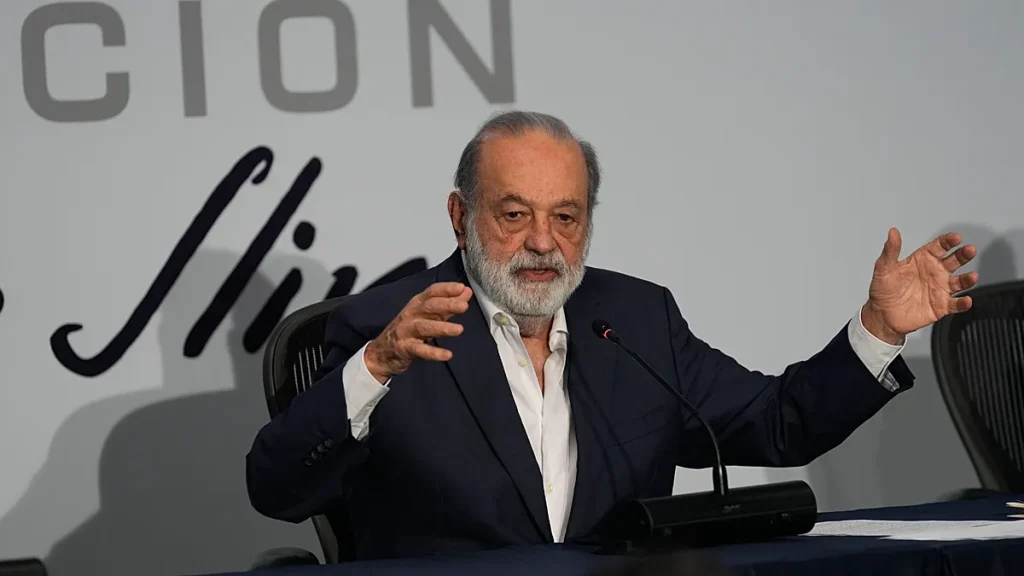
At a press conference held annually by Slim, he addressed a range of economic issues, including the state of Pemex. While acknowledging the government’s proactive stance, he criticized Moody’s decision to downgrade Mexico’s sovereign debt rating. Slim argued that the downgrade reflects a failure to recognize the country’s resilience, particularly in the face of Pemex’s ongoing crisis. He emphasized that strategic public and private capital injections could potentially boost daily crude production by approximately 800,000 barrels, a figure he believes is critical for reversing the decline.
“The Pemex crisis, he asserted, stands as the foremost challenge confronting the nation. It is a symptom of broader economic inefficiencies that have persisted for years.”
Slim’s critique of the financial sector comes amid a growing debate about the role of state-owned enterprises in Mexico’s economy. While Pemex remains a vital player, its struggles have exposed vulnerabilities in the country’s energy policy and fiscal planning. The company’s debt, now surpassing 85 billion dollars, has become a symbol of the government’s inability to balance public spending with economic growth. Slim pointed out that without immediate intervention, the crisis could spiral into a full-blown financial catastrophe, affecting not only the energy sector but also related industries such as refining and petrochemicals.
Despite his focus on Pemex, Slim also announced new investment initiatives for the year. He revealed that América Móvil would allocate around 5 billion dollars in capital for upcoming projects, though he did not specify the details. This announcement underscores his dual role as both a critic of national policies and a driver of private sector growth. While the government seeks to rescue Pemex through public funds, Slim is positioning América Móvil to capitalize on emerging opportunities in the telecommunications and digital markets.
The Mexican government’s support for Pemex has been a contentious issue, with some analysts arguing that the rescue package is necessary to maintain energy independence. However, Slim contends that the funds should be directed toward more efficient ventures. He cited the example of América Móvil’s success, which he attributes to its ability to innovate and adapt to market demands. “Public investment must be aligned with clear objectives,” he stated. “Otherwise, it risks perpetuating the very inefficiencies that are crippling Pemex.”
President Claudia Sheinbaum, whose administration has prioritized economic recovery, received praise from Slim during the press conference. He acknowledged the government’s efforts but stressed that more decisive action was needed to address the root causes of the crisis. “The administration has laid a solid foundation, but Pemex’s challenges require urgent attention,” Slim said. “Without resolving this, Mexico’s economic trajectory will remain uncertain.”
Slime’s comments reflect a broader discussion about the interplay between public and private sectors in Mexico’s economy. While Pemex’s struggles highlight the risks of over-reliance on state-owned enterprises, the private sector’s dynamism offers a counterpoint. Slim, however, remains vocal about the need for accountability, particularly in sectors where public funds are heavily invested. His call for increased oil production has sparked discussions about potential reforms to Pemex’s operational structure, including partnerships with international oil companies.
The Pemex crisis has also drawn international scrutiny, with investors and analysts questioning Mexico’s ability to sustain its economic model. Slim’s critique of Moody’s decision to lower the country’s credit rating suggests he views the downgrade as premature. “Mexico’s debt is not a sign of weakness but a reflection of its strategic investments,” he noted. “The government must demonstrate that these funds are being used effectively.”
As the debate over Pemex’s future intensifies, Slim’s influence as a business leader remains undeniable. His investment announcements and policy critiques serve as a reminder of the private sector’s potential to drive growth and innovation. However, his emphasis on Pemex’s crisis highlights the precarious position of Mexico’s energy industry, which has long been a source of national pride and economic stability.
Experts agree that Pemex’s challenges are multifaceted, requiring both short-term financial aid and long-term structural changes. Slim’s vision for increased production, backed by potential public-private collaborations, offers a path forward. Yet, the question remains: can Mexico’s government and private sector work together to transform Pemex into a profitable entity once again, or will the crisis continue to drain resources and stifle economic progress?
In conclusion, Carlos Slim’s outspoken stance on Pemex underscores the urgency of addressing the nation’s economic vulnerabilities. His call for renewed investment and operational reforms has sparked a dialogue about the future of Mexico’s energy sector. While the government’s bailout efforts provide temporary relief, the long-term solution will depend on the ability to restructure Pemex and align it with modern market demands. As Slim pointed out, the crisis is not just a financial issue—it is a test of Mexico’s capacity to adapt and innovate in an increasingly competitive global economy.

