CNN, MS NOW and Politico sue Trump over White House ban

Daftar Isi
Cybersecarmor.com – WASHINGTON — CNN, MS NOW and Politico are suing President Donald Trump and other administration officials in a bid to regain access to the White House after reporters from each outlet were denied entry over the weekend.
The news outlets, in a lawsuit filed Monday, Sept. 21, asked a federal court in Washington to immediately block a ban on the three outlets that Trump has started to enforce and to restore access to the reporters.
The suit argues the CNN, MS NOW and Politico reporters were denied their First Amendment rights to a free press under the Constitution and their right to due process under the 14th Amendment.
" President Trump has said in no uncertain terms that he would prefer only to be covered by news organizations and reporters who praise his administration," the lawsuit reads. "But the Constitution does not allow a president or any other government official to deprive the press of their First Amendment rights and liberty and property interests with no notice or process based solely on his dislike of the content of their reporting. The ban is unconstitutional and should be immediately restrained."
More: Reporters denied White House access as Trump enforces ban on 3 outlets
Other co-defendants besides Trump are White House communications aide Steven Cheung, White House Chief of Staff Susie Wiles and Secret Service Director Sean Curran.
The White House did not immediately respond to a request for comment.
More: Trump says he's banning CNN, MS NOW and Politico from the White House
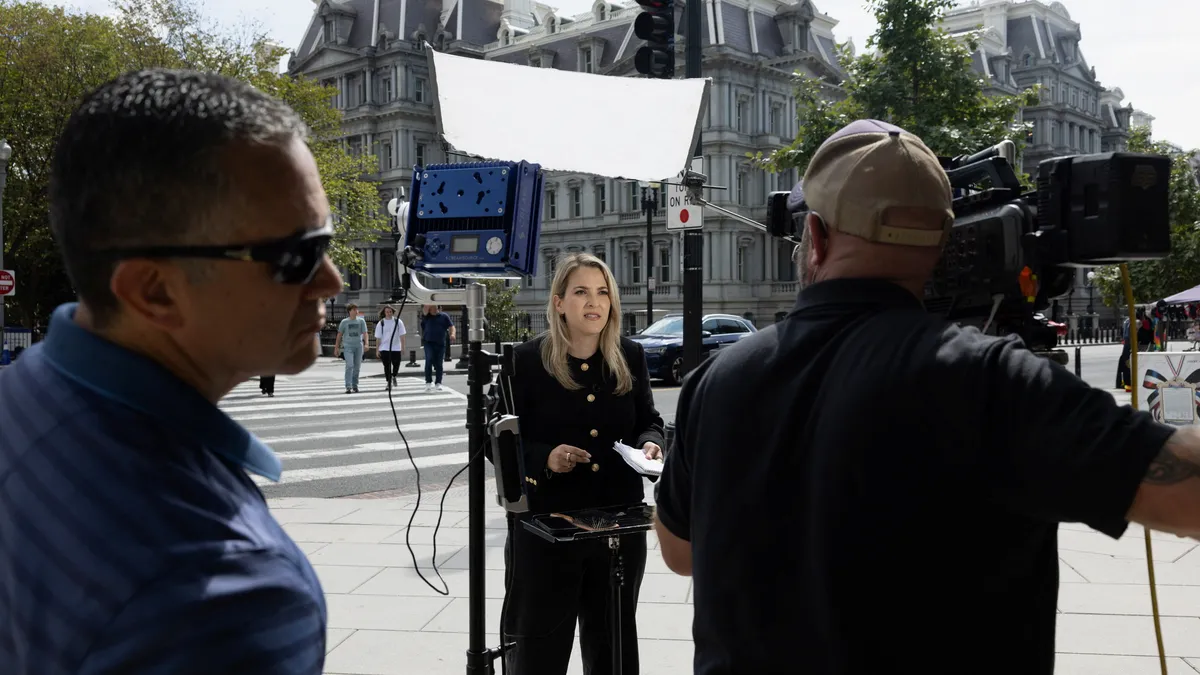
After Trump announced the White House ban on the three outlets last Friday, Sept. 18, reporters for CNN, MS NOW and Politico were blocked by security from entering the White House the next day and had their White House press passes confiscated. Reporters from the two television networks moved outside the White House to a nearby sidewalk to conduct their live shots.
As a precedent, the suit cites the 1977 Sherrill v. Knight case, when a federal appeals court ruled the White House cannot arbitrarily deny press passes to reporters based on the content of their coverage if the White House has voluntarily opened its doors to media and established facilities for the press.
"The White House press facilities are 'made publicly available as a source of information for newsmen' and serve the interests of 'the public at large' in receiving information 'gathered out of a multitude of tongues," the lawsuit says, taking quotes from the Sherrill v. Knight case. "Banning Plaintiffs, among the most prominent news organizations inthe country, based on their perceived viewpoints frustrates those purposes.
More: Is Trump's latest White House media ban legal? It could get complicated
"And the exclusion criteria here—that the President perceives a journalist’s reporting as 'fake' or 'negative'—are so vague and arbitrary that they cannot count as a 'sensible basis for distinguishing what may come in from what must stay out' and are thus unreasonable," the suit adds.
The suit also references Trump in 2018 pulling the press credentials of CNN correspondent Jim Acosta. A federal judge later ruled on the side of CNN and forced the White House to allow Acosta to keep his press pass.
Separate from the lawsuit, the five networks that make up the White House television pool ‒ ABC, CBS, NBC and Fox News, in addition to CNN ‒ said they are standing by CNN and will no longer send camera crews to Trump events designated as "pool coverage."
"This follows the White House's position preventing CNN from fulfilling its assigned pool duties," Bryan Boughton, Fox News D.C. bureau chief and chair of the television pool, said in an email to pool members obtained by USA TODAY. "There will be no replacement pool put in place."
The White House pool, which rotates daily, is a small group of reporters given close face-to-face access to the president during events. The pool includes one network's camera crew, which broadcasts a television feed that is shared with other networks.
With the networks backing out of pool coverage, no television crews are scheduled to travel with Trump as he heads to New York for the United Nations General Assembly on Monday.
Related Reading
Frequently Asked Questions
What is CNN MS NOW and Politico sue Trump?
CNN MS NOW and Politico sue Trump is the main topic of this guide. The article explains the context, practical details, and next steps readers should understand.
Why does CNN MS NOW and Politico sue Trump matter?
CNN MS NOW and Politico sue Trump matters because readers are looking for a useful answer, not just a short summary. Good content should match search intent and help them decide what to do next.