
Hungary’s Magyar heads to Brussels to reset EU ties and unlock frozen funds
Hungary’s Magyar Heads to Brussels to Reset EU Ties and Unlock Frozen Funds
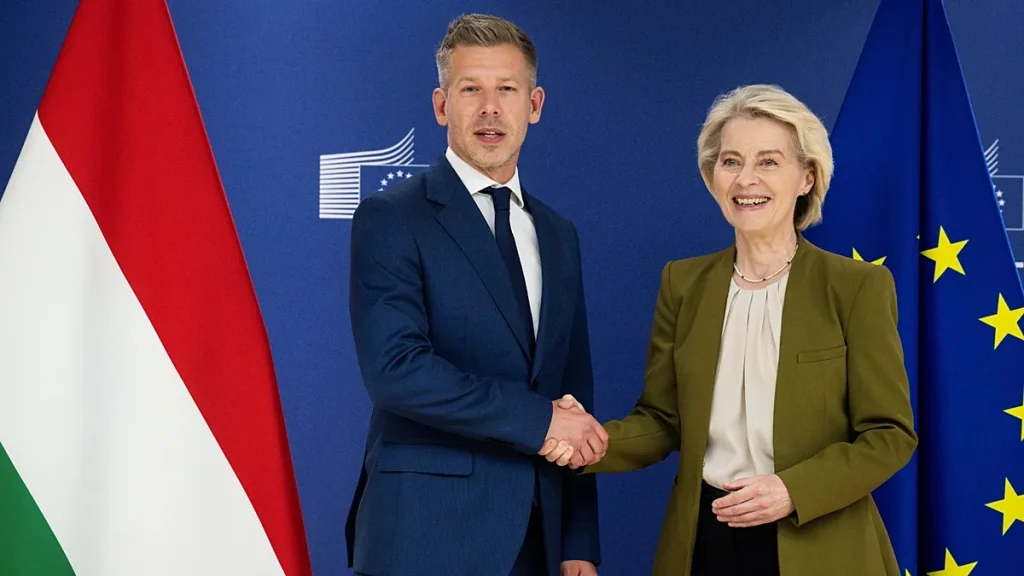
Hungary s Magyar heads to Brussels – Hungary’s newly appointed Prime Minister Péter Magyar is set to travel to Brussels this week, aiming to rekindle diplomatic relations with the European Union and secure the release of €17 billion in financial resources that have been temporarily suspended. His itinerary includes meetings with European Commission President Ursula von der Leyen on Friday, as well as engagements with Belgian Prime Minister Bart de Wever and NATO Secretary General Mark Rutte earlier in the week. These interactions are expected to focus on addressing concerns raised by the EU regarding Hungary’s adherence to democratic principles and legal frameworks, which have been central to the funding freeze.
The Political Shift in Hungary
The Tisza Party’s landslide victory in Hungary’s April parliamentary elections marked a significant turning point, ending the tenure of Viktor Orbán’s nationalist, Eurosceptic administration. With a mandate for reform, Magyar’s government has made it a priority to realign Hungary’s policies with EU standards, particularly in areas such as corruption and the rule of law. This shift comes as the EU has been increasingly critical of Orbán’s governance, which had previously resisted reforms and prioritized policies perceived as undermining European integration.
Magyar’s public announcement of his trip to Brussels was shared on social media, where he emphasized the importance of the mission. “Tomorrow I will meet with the NATO Secretary General and the Belgian Prime Minister, and on Friday I will engage with the President of the Commission in Brussels. Everyone is working to bring back the EU’s billions,” he wrote on his Facebook page. The message underscores the symbolic and practical stakes of the meetings, as the release of frozen funds is seen as a key step toward mending Hungary’s relationship with its European partners.
Unlocking the €17 Billion in EU Funds
The €17 billion in EU funds, which have been held in limbo due to concerns over corruption and rule-of-law deficiencies, is a central goal of Magyar’s visit. To unlock this amount, Hungary must fulfill all outstanding conditions by the end of August, with initial disbursements potentially available before the year concludes. A major portion of this package, €10.4 billion, is tied to the EU’s post-Covid-19 Recovery and Resilience Facility (RRF), a program designed to stimulate economic recovery across the bloc.
Magyar has specifically highlighted the RRF as a critical priority, noting that the timeline for accessing these funds is tightly constrained. If Hungary fails to meet the conditions by August, it risks losing the entire €10.4 billion allocation. The RRF consists of €6.5 billion in non-repayable grants and €3.9 billion in loans, with the European Commission previously advising Hungary to prioritize the grants due to its limited fiscal capacity. This strategy reflects the EU’s desire to provide immediate financial support while ensuring Hungary’s commitment to structural reforms.
Broader Challenges and the Path Forward
While the RRF is a primary focus, Magyar’s meetings with von der Leyen and other leaders also address a range of additional issues. Among them is the status of cohesion funds, which have been similarly frozen but may be released alongside the RRF. However, one specific tranche of these funds remains contingent on Hungary amending its anti-LGBTQ+ legislation and asylum laws, which have drawn repeated criticism from EU institutions. This conditional aspect adds complexity to the negotiations, as it requires Hungary to demonstrate political will to address long-standing concerns.
Magyar’s government is also revisiting the request to join the EU’s joint defense borrowing scheme, the Security Action for Europe (SAFE). The proposal, which had been stalled under Orbán’s leadership due to corruption allegations linked to his inner circle, is now under review. Magyar has hinted at potential adjustments to Hungary’s original €16 billion recovery program, suggesting that the scale of the initiative may need to be recalibrated to align with EU expectations and domestic financial realities.
Another pressing matter is the resolution of the Erasmus+ dispute, which has affected thousands of Hungarian students. Following the privatization of public universities, many students have been excluded from international exchange programs, sparking debates about educational equity and the EU’s role in safeguarding academic opportunities. Magyar’s meeting with von der Leyen is expected to explore pathways for reconciliation, ensuring that the program can resume without further disruptions.
Reforms and the Rule of Law
Restoring the rule of law is a cross-cutting requirement for Hungary’s EU funding ambitions. This includes measures to guarantee the independence of the National Judicial Council and reduce political influence over judicial appointments. These reforms are not only essential for accessing the €17 billion but also for positioning Hungary as a credible partner within the EU. According to Michael McGrath, the EU Commissioner for democracy, justice, and the rule of law, the new government’s efforts to expedite these changes are “encouraging,” though the pace and depth of implementation remain under scrutiny.
Magyar has acknowledged that Hungary may not fully access the €10.4 billion, stating, “Our goal is to bring the €10.4 billion that is stuck for Hungary. I am not saying we can bring all 100 per cent, but every euro cent that we can bring here is needed to jump-start the Hungarian economy.” This admission signals a pragmatic approach, balancing the need for EU support with the recognition of ongoing challenges in meeting all criteria. Sources familiar with the technical negotiations between Hungary and the EU described the discussions as constructive, though the short timeframe and Hungary’s fiscal situation create pressure for swift progress.
The Ukraine Connection
The EU’s opening of an accession negotiating chapter for Ukraine hinges on Hungary lifting its veto, a stance that had previously been held by Orbán’s government. The new administration, under Magyar, has indicated openness to this move, contingent on certain conditions being met. This development is significant, as it could ease tensions between Hungary and the EU while advancing the broader goal of integrating Ukraine into the bloc. The potential alignment on Ukraine’s membership bid also highlights Magyar’s efforts to project Hungary as a more cooperative and forward-looking member state.
As the meetings unfold, the focus will remain on demonstrating Hungary’s commitment to EU values. The success of these talks could pave the way for not only the release of frozen funds but also a renewed sense of partnership between Budapest and Brussels. However, the outcome will depend on Hungary’s ability to navigate the intricate web of reforms, political compromises, and economic priorities. With the clock ticking toward the August deadline, the government faces a critical test of its ability to meet the EU’s expectations and secure the financial lifeline it urgently needs.
Implications and Outlook
Magyar’s visit to Brussels is a pivotal moment for Hungary, symbolizing a departure from its previous Eurosceptic trajectory. The discussions will likely shape the country’s future engagement with the EU, influencing both domestic policy and international standing. While the release of funds is a tangible objective, the broader implications of these negotiations extend beyond economics, touching on Hungary’s political legitimacy and its role in the European project. The coming weeks will be crucial in determining whether Magyar’s government can successfully reset the relationship and deliver on its promises to rebuild trust with Brussels.
Ultimately, the meetings represent a strategic effort to align Hungary’s priorities with those of the EU. By addressing issues such as rule of law, corruption, and economic recovery, Magyar aims to reposition the country as a model for EU cohesion. The outcome of these talks may also serve as a barometer for Hungary’s ability to adapt to the evolving demands of European integration, setting the stage for a more collaborative future. With the stakes high and the timeline tight, the success of this diplomatic push will be closely watched by both Hungarian and European stakeholders.

