Shocked TV anchors confirm ‘NewsChopper4 went down’ in emotional video

Daftar Isi
NBC 4 Los Angeles Mourns After News Helicopter Crashes in Chatsworth
Cybersecarmor.com – An evening newscast in Los Angeles turned into an on-air moment of shock and grief Sept. 15 after NBC 4 Los Angeles confirmed that its own news helicopter had crashed in Chatsworth.
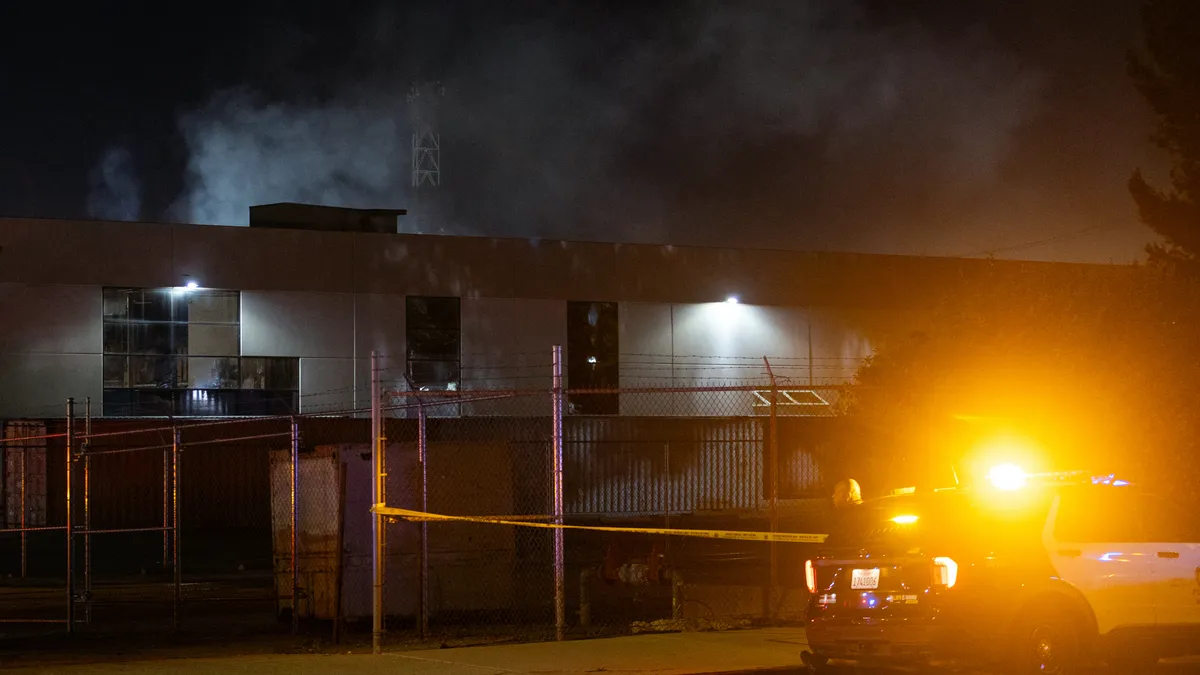
The helicopter went down shortly before 7 p.m. local time in the Los Angeles suburb, killing two people aboard and one person on the ground. Authorities also said at least two additional people were transported to a hospital, though their conditions were not immediately available.
Later in the evening, NBC 4 identified two of those killed as Angel City Air employees Eliana Moreno, an airborne journalist who worked for NBC 4 and Telemundo 52, and pilot George Marciniw. Authorities had not publicly identified the person who died on the ground.
Anchors Receive Confirmation During Broadcast
The station’s coverage unfolded in real time as anchors and reporters tried to determine what had happened. Colleen Williams told viewers that the newsroom had been gathering information after communication with the crew was lost.
“We’ve been telling you that we’ve been piecing it together here. We knew it was a news chopper, we knew we’d lost contact with our people out there, and we just received the confirmation that, in fact, NewsChopper4 went down just before 7 o’clock tonight in Chatsworth,” Williams said.
Williams then ended the broadcast after acknowledging the emotional weight of the confirmation for the station’s staff and viewers.
“We are going to take a couple of minutes to think about that, to process, and to regroup,” she said.
The confirmation came roughly two hours after the crash, following a rapidly changing scene involving emergency responders, witnesses and several news crews.
Crash Occurred While Station Covered Another Deadly Incident
NewsChopper4 had been covering an earlier and separate collision involving a Metro bus and another vehicle. Authorities said that crash had killed at least two people.
As NBC 4 covered the bus crash, the station began airing live images showing heavy smoke rising from a nearby area. Reporter Robert Kovacik and a camera crew had recently arrived when he heard what he described as a “very, very loud crash.”
At that point, the cause of the smoke was not clear. Williams told viewers the activity from police and fire personnel indicated that a serious emergency was developing.
“We know it’s something bad just judging from the smoke and the fact the (Los Angeles Police Department) and (Los Angeles Fire Department) peeled out,” Williams said during the broadcast.
Initial uncertainty was evident as crews on the ground attempted to establish whether the incident involved a helicopter and, if so, whose aircraft it was. Kovacik said another television colleague was visibly distressed by the possibility that a news helicopter had gone down.
“We don’t know where this chopper is from,” Kovacik said. “We don’t know if it even is a chopper. We don’t know if it’s a news chopper.”
Not long afterward, NBC 4 said it was unable to reach the helicopter assigned to the bus-crash coverage. The station later confirmed that the aircraft was NewsChopper4.
A Dangerous Assignment Turns Into a Loss for a Newsroom
Television news helicopters are commonly used to provide live aerial images of traffic collisions, fires, police activity and other breaking events across the Los Angeles area. Their crews operate in rapidly developing situations, often while coordinating with reporters and producers on the ground.
In this case, the crash brought an abrupt and devastating change to coverage that had already centered on another fatal event. The station’s live broadcast captured the difficult transition from reporting an unfolding emergency to learning that members of its own extended team were involved.
Moreno’s work placed her in the air to report for both NBC 4 and Telemundo 52, while Marciniw was piloting the aircraft. Their deaths, along with the death of the person on the ground, made the Chatsworth crash a tragedy affecting both the newsroom community and people at the scene.
The identities and medical conditions of those taken to a hospital were not immediately known. Authorities also had not released the identity of the third person killed.
What Remains Known
The crash occurred just before 7 p.m. Sept. 15 in Chatsworth, Los Angeles County. Three people were killed: Moreno and Marciniw in the helicopter, along with one unidentified person on the ground. At least two other people were hospitalized.
For viewers, the broadcast showed how quickly facts can emerge during a major breaking-news event. Early reports reflected uncertainty about the smoke, the source of the crash and the helicopter’s identity. By the end of the evening, NBC 4 had confirmed the loss of NewsChopper4 and paused its newscast as staff members began processing the tragedy.
Related Reading
Frequently Asked Questions
What is Shocked TV anchors confirm NewsChopper4 went?
Shocked TV anchors confirm NewsChopper4 went is the main topic of this guide. The article explains the context, practical details, and next steps readers should understand.
Why does Shocked TV anchors confirm NewsChopper4 went matter?
Shocked TV anchors confirm NewsChopper4 went matters because readers are looking for a useful answer, not just a short summary. Good content should match search intent and help them decide what to do next.