How did Ohio State blow it? The anatomy of Buckeyes’ choke job vs Texas

Daftar Isi
Ohio State’s Fourth-Quarter Breakdown Turns Dominant Start Into Texas Stunner
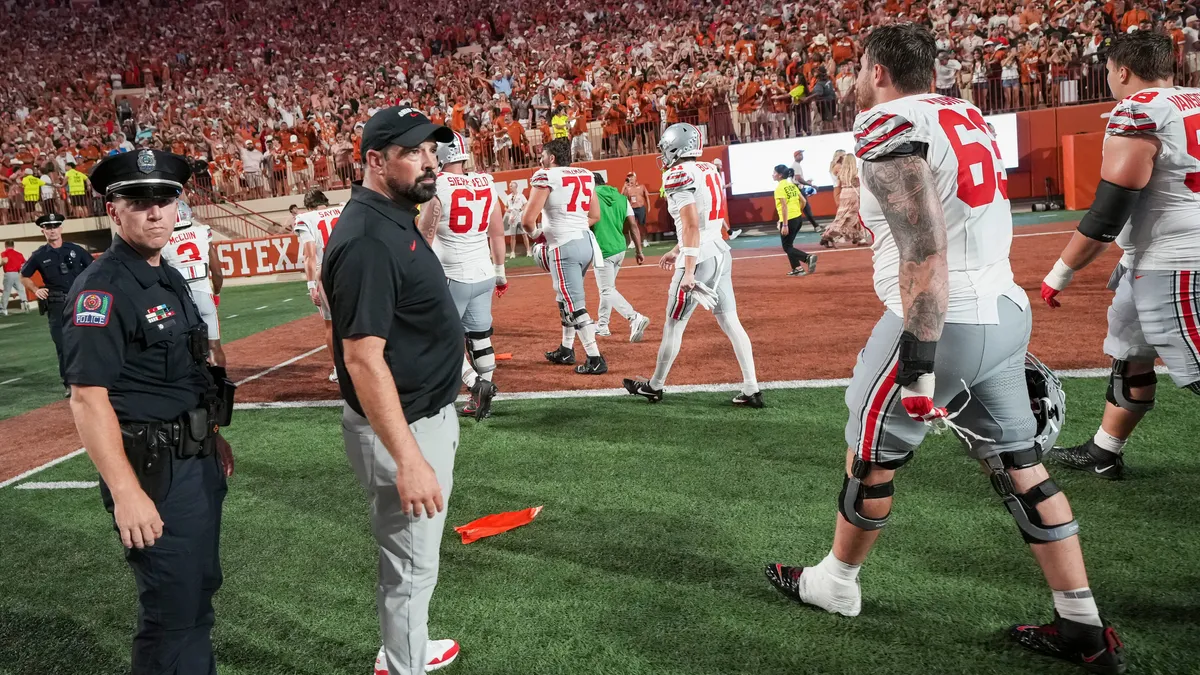
Cybersecarmor.com – Ohio State looked ready to validate its No. 1 ranking for most of the afternoon, building a 20-point advantage and controlling Texas through three quarters. Yet the final period produced a reversal few inside the stadium could have anticipated: Texas scored 21 unanswered points and escaped with a 24-23 victory.
The result was not simply the product of one remarkable Texas drive or a single Ohio State miscue. The Longhorns found ways to survive their own early errors, while the Buckeyes repeatedly missed opportunities to shut the game down. A lost fumble recovery, a failed fourth-down stop, a missed field goal and late clock-management consequences all helped transform a comfortable Ohio State lead into a painful defeat.
Texas Survived a Near-Disaster Before Its Rally Began
The decisive stretch began late in the third quarter, when Texas had just forced an Ohio State punt with fewer than six minutes remaining. Returner Ryan Niblett muffed the kick deep in Longhorns territory, creating an immediate threat for the Buckeyes near the Texas 9-yard line.
Ohio State appeared positioned to deliver the kind of turnover that could have ended any hope of a comeback. Instead, Texas defensive back Kade Phillips recovered the loose ball, preventing the Buckeyes from gaining possession in scoring position.
That escape was followed by another break for Texas. After the Longhorns converted a fourth down, Emmett Mosley fumbled while the offense was operating in Ohio State territory. Cam Coleman fell on the ball, allowing the drive to continue rather than handing the Buckeyes another chance to bury the game.
Texas capitalized three plays later. Its first touchdown trimmed the deficit to 23-10 and gave the Longhorns something they had lacked for much of the game: momentum.
For Ohio State, the missed opportunities mattered because the margin was no longer wide enough to absorb another mistake. Recovering either of those loose balls likely would have changed the tenor of the closing quarter. Instead, Texas retained possession, found the end zone and began to pressure a Buckeyes team that had looked composed for three periods.
A Fourth-Down Conversion Kept Texas Alive
Ohio State’s offense then went three-and-out, returning the ball to Texas. The Buckeyes still had a chance to halt the rally when the Longhorns faced fourth down from their own 32-yard line.
Arch Manning delivered the conversion, finding Mosley for a 12-yard completion. The first down extended the drive and allowed Texas to continue attacking. The Longhorns eventually reached the end zone again, cutting Ohio State’s lead to 23-17.
That sequence changed the pressure of the game. What had once been a three-score lead had become a one-possession contest, and Ohio State’s next offensive series carried the burden of restoring breathing room.
The Buckeyes moved into field-goal range and had an opening to effectively settle the outcome. On third down, Julian Sayin targeted Jeremiah Smith deep downfield. A completion would have put Ohio State in position to drain more clock and likely finish the contest. The pass was incomplete, leaving the Buckeyes to attempt a 45-yard field goal.
Connor Hawkins missed wide left with 4:17 remaining. Rather than forcing Texas to overcome a two-score deficit, Ohio State left the Longhorns within one touchdown of the lead.
The Miss Opened the Door for a Final Texas Drive
Texas took advantage of the chance it had been given. The Longhorns drove into the red zone with about 90 seconds on the clock, putting Ohio State’s defense in a difficult situation. Coach Ryan Day used both remaining timeouts while Texas was threatening, but those stoppages became important as the drive moved closer to the goal line.
When Texas reached the 1-yard line, Ohio State had no timeouts remaining and 53 seconds were left. The Buckeyes then had to decide whether to continue trying to prevent a touchdown or concede a score quickly enough to preserve time for their own final possession.
Ohio State chose to defend the goal line. The approach succeeded on the first two plays, but Texas broke through on third down. Hollywood Smothers scored from one yard out, giving the Longhorns their first lead of the day at 24-23.
The timing was especially costly for the Buckeyes. Smothers’ touchdown came with 25 seconds left. A faster Texas score could have left Ohio State with considerably more time to attempt an answer. Instead, the Buckeyes began their final possession at their own 25-yard line, had no timeouts and needed both speed and a favorable break.
Neither arrived before time expired.
Why the Collapse Will Linger for Ohio State
Texas deserves credit for refusing to fold after its troublesome start. The Longhorns recovered from the muffed punt, survived Mosley’s fumble and produced an aggressive fourth-quarter response led by Manning and an offense that found its rhythm when the stakes were highest.
But Ohio State will be left examining the moments it could have prevented the comeback. The Buckeyes could not turn Texas miscues into decisive takeaways. They failed to stop a crucial fourth down. They missed a field goal that would have restored a two-score cushion. And their final defensive stand resulted in a touchdown with too little time left for the offense to respond.
That combination is what makes the 24-23 loss so striking. Ohio State did not merely lose control in one sequence; it allowed the game to narrow possession by possession until Texas had a legitimate path to the finish line.
For a team that spent three quarters playing like the nation’s top program, the final 15 minutes offered a harsh reminder of how quickly elite college football games can change. Against an opponent with Texas’ talent, every missed chance becomes an invitation. The Longhorns accepted each one.
Related Reading
Frequently Asked Questions
What is How did Ohio State blow it?
How did Ohio State blow it is the main topic of this guide. The article explains the context, practical details, and next steps readers should understand.
Why does How did Ohio State blow it matter?
How did Ohio State blow it matters because readers are looking for a useful answer, not just a short summary. Good content should match search intent and help them decide what to do next.